What do Bette Midler, Bruce Springsteen, Garth Brooks and Shawn Mendes all have in common?
Music superstars, yes. Preternaturally talented, yes. But most importantly, they each believe that the great legacy artists that came before them should get paid for their work.
Seems obvious, but for recording artists and musicians that isn't always the case. Due to a quirk in the law this basic principle only applies to recording artists and musicians who released a sound recording after Feb. 15, 1972.
That means Al Green's "Let's Stay Together," which was released two weeks prior to that cut-off date, is not guaranteed to collect any royalties, nor are any of the other thousands of classic and timeless treasures from the 40s, 50s, 60s — all of which are still enjoyed today.
Why? Well in 1971, Congress passed the Sound Recording Amendment Act, which provided, for the first time, federal copyright protections to sound recordings. But they did so prospectively, meaning it only applied to recordings released after the bill's effective date of Feb. 15, 1972. And subsequent legislative action never addressed this cutoff date, resulting in a patchwork of state law decisions, litigation, temporary settlements, and a lot of unhappy legacy artists and estates who just want to get paid.
Fortunately, this is all about to change, at least if Congress continues to listen to the artist community — you know, the ones most affected by the 1972 cut-off date who are clamoring to finally get paid fairly for their work.
The first step was accomplished on April 25, when the House of Representatives unanimously passed the Music Modernization Act (HR 5447), which contained, in its entirety, a pre-'72 solution known as the CLASSICS Act. The CLASSICS Act has also been introduced into the Senate, and it's looking likely that senators will have a chance to vote on the pre-'72 solution in the coming weeks.
And that means artists and estates, whose music is still widely enjoyed, will finally have the certainty to collect royalties for their older recordings. And these legacy artists will get this new royalty certainty without having to give up anything in exchange. No changes to existing copyright ownership statuses, term limits, termination rights. Just a new stream of much-needed, and long overdue, royalties.
Sounds great?
Not to everyone. You see, an outside group — who doesn't represent artists or have any ties to the music community — views CLASSICS as an opportunity to tack on unrelated copyright changes not germane to matters at hand. They claim to be helping artists, but really their efforts would do the opposite, crippling legacy artists' efforts to secure royalty payments.
That's why every artist group, from the Recording Academy to the unions, have rebutted this outside group's efforts and reaffirmed their support, artists' support, for the CLASSICS Act.
CLASSICS was intentionally crafted to avoid controversy. It is not intended to be a magical pill that solves every tangential copyright matter. Instead, it focuses on the simple notion that artists deserve to get paid for their work.
And that's something we should all believe in.
Tell Congress To Pass The Comprehensive Music Modernization Act
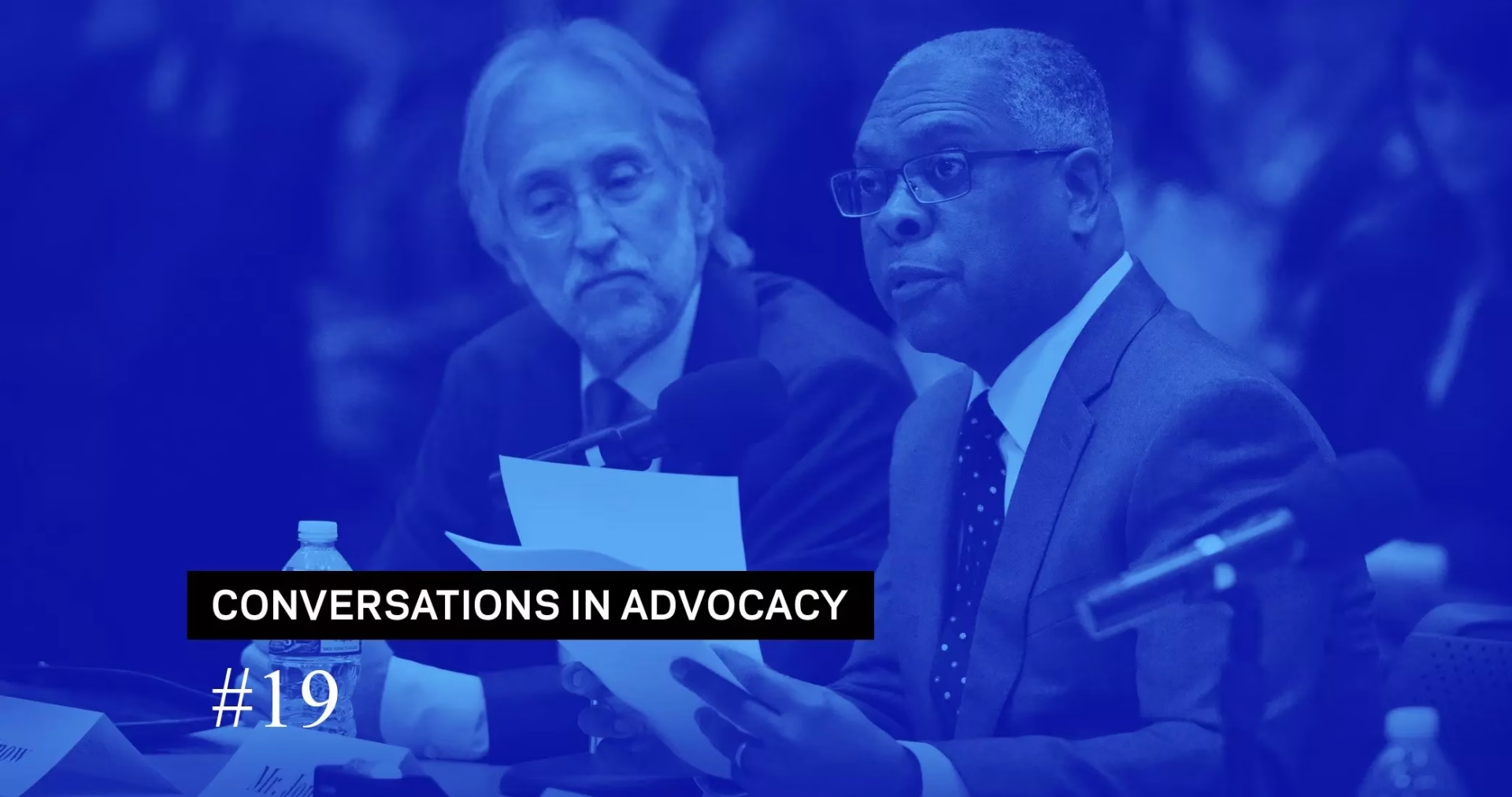
"Conversations in Advocacy" is your weekend digital tip sheet on music advocacy and the policies that affect music makers and their craft. New installments post every Friday.