
Recently, a diverse panel of music industry professionals representing various roles in the creative process testified at a Judiciary Committee hearing titled "Music Policy Issues: A Perspective From Those Who Make It." The committee worked closely with the Recording Academy to plan the hearing in New York City in coordination with the 60th GRAMMY Awards, during the week of events and celebrations known as GRAMMY Week leading up to Music's Biggest Night.
The panel included Recording Academy President/CEO Neil Portnow as the only business witness with the other five witnesses being music creators in various roles in the industry and two of the other five being Trustees of the Recording Academy. The hearing discussed several specific bills, including the Fair Play Fair Pay Act, the Music Modernization Act, the CLASSICS Act, and the AMP Act, and urged the committee to join them in their quest to make comprehensive updates to copyright law.
<iframe width="620" height="349" src="https://www.youtube.com/embed/SZdYHNhdW9Y" frameborder="0" allow="autoplay; encrypted-media" allowfullscreen></iframe>
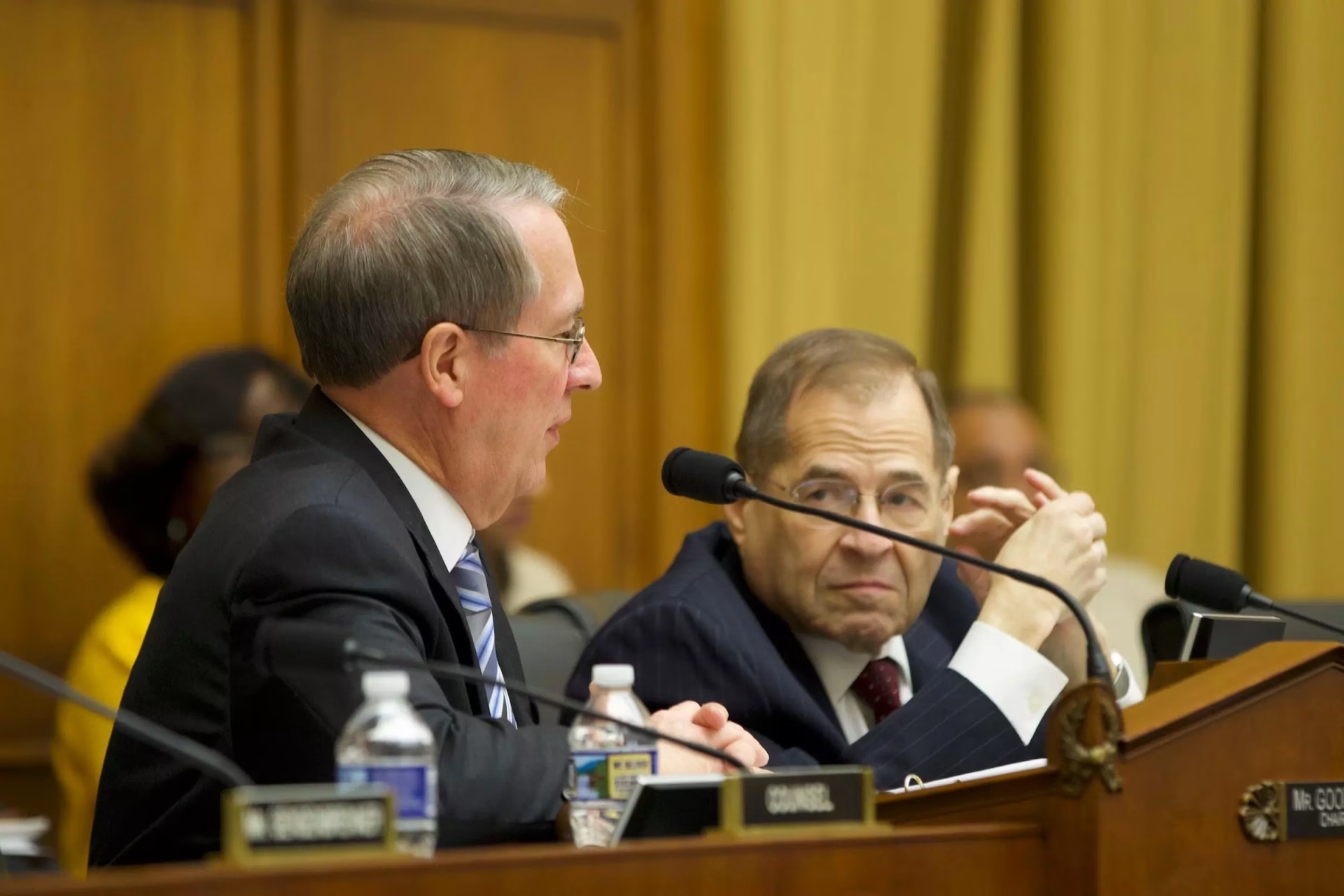
The hearing was led by Rep. Bob Goodlatte (R-Va.), Chairman of the House Committee on the Judiciary, who set the stage for the day's discussion and outlined Congress' role in this critical conversation.
"When crafting our current copyright laws governing music licensing, Congress could not have foreseen all of today’s technologies and the myriad of ways consumers engage with creative works," said Goodlatte. "[This] field hearing will be an excellent opportunity to hear directly from a wide of range of music professionals on the opportunities and challenges the music industry faces in the digital age.”
Ranking Member Jerry Nadler (D-N.Y.) was delighted to have the hearing — and Music's Biggest Night — take place on his home turf in New York City, but he was also determined to spur momentum for progress in the way of copyright reform.
<blockquote class="twitter-tweet" data-lang="en"><p lang="en" dir="ltr">So thrilled to be celebrating the <a href="https://twitter.com/hashtag/GRAMMYs?src=hash&ref_src=twsrc%5Etfw">#GRAMMYs</a> on the West Side of NYC! Thanks to <a href="https://twitter.com/GRAMMYAdvocacy?ref_src=twsrc%5Etfw">@GRAMMYAdvocacy</a> for everything they do for the music in our lives.</p>— (((Rep. Nadler))) (@RepJerryNadler) <a href="https://twitter.com/RepJerryNadler/status/957771944736251904?ref_src=twsrc%5Etfw">January 29, 2018</a></blockquote>
<script async src="https://platform.twitter.com/widgets.js" charset="utf-8"></script>
"There is widespread agreement that the music licensing system is in need of comprehensive reform," said Nadler. "This hearing will be an important step in our effort to update the music licensing system and examine the specific problems most in need of a legislative solution."
Several Congress members on the committee have previously shown their strong support for creators' rights, but hearing perspectives on these issues from inside the industry put faces and voices to the cause. As the witnesses described the challenges they face in monetizing their art and their craft, the interconnection between issues and the overarching need for reform began to snap into focus.
"I love the idea of combining the [bills] into a comprehensive statutory bill of rights for musical artists and songwriters, and other people in the music industry," said Rep. Jamie Raskin (D-Md.), who was quick to offer his support.
Taking the notion one step further, Rep. Ted Lieu (D-Calif.) contextualized the competitive advantage of incentivizing creativity, saying, "If you look at the various sectors of the economy, we can do very well in various sectors such as high-tech or agriculture, bio-tech, tourism, and one of those sectors is the creative economy. In California, where I'm from, one in 10 jobs are related to the creative economy. … It doesn't just happen, you need a legal framework to protect creators and also create incentives."
Passing all of these individual acts as a combined consensus bill would go a long way toward creating the incentives to which Lieu referred. The committee members asked many questions that delved into both how royalties are handled in the current catalogs of the creators on the panel, and how they as lawmakers can ensure future music professionals are entering a business climate set up to be as fair as possible.
"If some pay and others don't, we truly have an unfair competition problem by those who don't," said Rep. Darrell Issa (R-Calif.), noting that the committee has a broad jurisdiction, even beyond copyright, and that they are tasked with the responsibility to look to all types of law, including anti-trust and unfair competition, so business can develop their business models on a fair playing field."
However, there are many considerations in making any industry fair.
Presenting some of the alternate perspectives affected by these issues, Rep. Blake Farenthold (R-Texas), who started working as a DJ at a radio station at age 15, seemed less sympathetic to the performers, though somewhat open to considering the creators' perspective.
"You get complete sympathy from me that I believe songwriter, in particular,r are underpaid. I think the performers, I used to say, 'Well get out and play some more concerts and you can make some more money,'" said Farenthonld. "But I want to come up with a fair solution for everybody, and I really do like some of the bills that are out here."
Shifting the conversation to online, Farenthold spoke to the need for a consolidated database so that services like YouTube will know who to pay for the use of sound recordings. GRAMMY-nominated songwriter Tom Douglas pointed out that part of the MMA would essentially establish a collective clearinghouse for all songwriters and publishers that will enable proper payment of streaming royalties.
As the panel of witnesses divulged the tribulations of making a living in the recording industry, many Congress members couldn't help but express gratitude, no only for their time testifying on these crucial issues, but for the music they've given the world. The committee members were nearly all moved in some way by the life's work of the witnesses, whether it was GRAMMY-winning legend Dionne Warwick, GRAMMY-nominated singer/songwriter Aloe Blacc or multi-platinum producer Mike Clink, who turned heads in the room by revealing his integral role as producer for bands such as Guns N' Roses and Mötley Crüe.
"Thank you all for what you have done to make life better, and what you continue to do," said Rep. Val Demings (D-Fla.), weighing in as the newest member of the committee. "Music brings hope to some of the most hopeless people and children."
No doubt, the star power of the witness panel inspired a level of gratitude and awe in the committee, but these brave spokespeople truly represented the wide swath of creators and their rights. Ultimately, these issues go much deeper than the music's most successful musicians, songwriters and producers, and even go beyond music in terms of impacting all creative fields.
"I wouldn't want anyone to leave with the idea that this is just a situation that affects either the top musicians in the country as opposed to all musicians," said Raskin, "or just this industry because there are lots of people across the economy who are not getting the fair fruits of their labors and their participation in the economy."
Take Action: Tell Congress To Support Comprehensive Music Reform
