Lawmakers continue their work to refine their legislative relief efforts amidst the coronavirus pandemic. Thankfully, the Recording Academy and greater music community have also continued their advocacy efforts to ensure creators are considered and supported by these legislative updates to the Coronavirus Aid, Relief, and Economic Security (CARES) Act. Let's take a closer look at how Congress is doing this and what it means for music makers…
Paycheck Protection Program Gets Remixed
On June 5, President Trump signed the Paycheck Protection Program Flexibility Act (PPPFA) of 2020 (H.R. 7010) into law. The act had overwhelming bipartisan and bicameral support, passing the House by a landslide 417-1 vote and the Senate by unanimous consent.
The passage of this update is a welcomed sign for music creators, many of whom were struggling to understand the complex and ever-changing program and to use the paycheck protection loan to its maximum benefit. The technical fix alters the rules governing loan forgiveness by extending the spending requirement from eight to 24 weeks, lowering the percentage of the loan required to be spent on payroll from 75 percent to 60 percent, and pushing back the June 30 deadline to rehire laid-off workers.
Self-Employed Creators = Small Businesses
The CARES Act originally included self-employed creators in the benefits offered by the Small Business Administration (SBA). The Academy has been aggressively working on Capitol Hill to ensure that these new SBA programs remained funded and provided relief for self-employed workers, keeping creators in the mix.
Prior to the passage of the technical fix, Congress had already appropriated supplemental funding to ensure the program could meet the needs of as many small businesses as possible, including self-employed creators. And, to hold the SBA more accountable, the House Small Business Committee has been holding hearings on the PPP loans and the Economic Injury Disaster Loans (EIDL) special grant program.
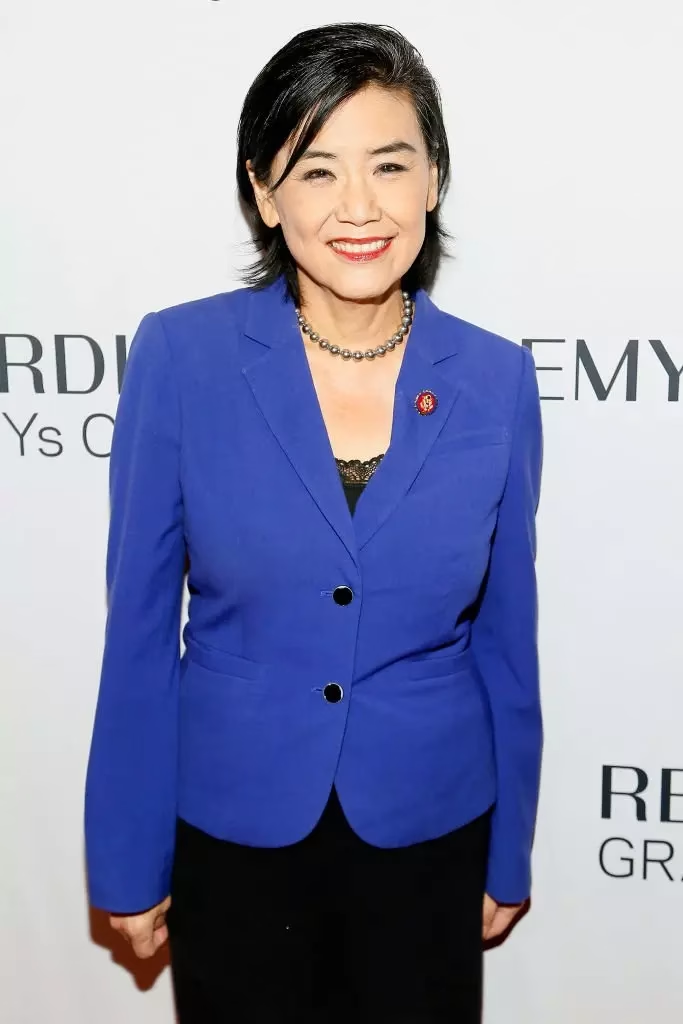
Reps. Judy Chu (D-Calif.) and Jimmy Gomez (D-Calif.) both expressed the importance of getting these SBA programs to work for the creative workforce and self-employed artists, including the of the Economic Injury Disaster Loans (EIDL).
"SBA's administration of EIDL has been unacceptable at a time when small businesses need this relief more than ever," said Rep. Chu. "Self-employed and independent contractors constitute a significant part of Southern California's economy and they have been adversely impacted by the SBA's cap on EIDL emergency grants of $1,000 per employee. This cap is just not reflective of Congressional intent."
<style>.embed-container { position: relative; padding-bottom: 56.25%; height: 0; overflow: hidden; max-width: 100%; } .embed-container iframe, .embed-container object, .embed-container embed { position: absolute; top: 0; left: 0; width: 100%; height: 100%; }</style><div class='embed-container'><iframe src='https://www.youtube.com/embed/KxsEpEQWEKg?start=5335' frameborder='0' allowfullscreen></iframe></div>
Rep. Gomez addressed the challenges creative professionals face in his district in securing relief.
"[Southern California] is home to many talented artists and creatives who allow our film, television and theatre industries to thrive," he said. "Like other freelancers and self-employed individuals, they're still waiting to apply for the pandemic unemployment insurance, and if they did apply for a paycheck protection loan, they were last in line."
"It must be improved by addressing the unique needs of the self-employed, like many of those working in the creative industries," Rep. Chu explained. "SBA's regulations limiting EIDL emergency grants to $1,000 per employee and requiring that 75 percent of loan forgiveness applies to payroll costs do not account for self-employed workers who may spend as much as more on expenses like health insurance or rent as they do on their salaries.”
These concerns are not limited to California's creative community. Similar concerns about PPP and EIDL have been brought up by lawmakers in other hearings with Senior Administration officials since May, including Sen. Sinema (D-Ariz.) who asked Treasury Sec. Mnuchin why the EIDL was shifted internally to only $1,000 per employee without Congressional approval. On June 10, Sen. Romney (R-Utah) asked Sec. Mnuchin at a separate hearing on the needs for additional stimulus funding, while Sen. Collins (R-Maine) brought up extending PPP for industries that are continuing to struggle.
Unemployment Solutions
For many music makers, earning a living in their craft requires career creativity in addition to artistic creativity. Many work several jobs and play several roles in the music economy. Thankfully, Rep. Chu and Rep. Adam Schiff (D-Calif.), along with more than 20 members of the House, sent a letter to House leadership asking for additional protections for independent workers with multiple types of income in future coronavirus legislation.
During last week’s Senate Finance Committee hearing, Labor Sec. Scalia echoed some of Reps. Chu and Schiff’s argument on behalf of multiple income workers. When asked by Sen. Warner (D-Va.) to confirm that underemployed freelancers are covered by the Pandemic Unemployment Assistance (PUA) program, Sec. Scalia applauded the inclusion of freelancer and gig worker protections in the CARES Act and stated that he does believe that the Department of Labor addressed problems freelancers were facing when initially applying for PUA benefits.
Sen. Cortez Masto (D-NV) also raised the issue of sustained high unemployment rate in the hospitality and entertainment industry, asking the Secretary about the department's plans for future financial assistance for gig workers. These protections are crucial, because as Recording Academy Chairman and Interim CEO Harvey Mason jr appropriately stated, "music is the original 'gig economy.'"
Obviously, there is still a long road ahead for the music industry and other creative industries to rebound from the economic devastation caused by COVID-19, but by staying active in advocacy, the Recording Academy is ensuring creatives are considered. You can add your voice to the chorus by contacting your lawmakers and ask for their support of creators during these trying times.
Take Action To Help Music Creators In Need Of COVID-19 Relief