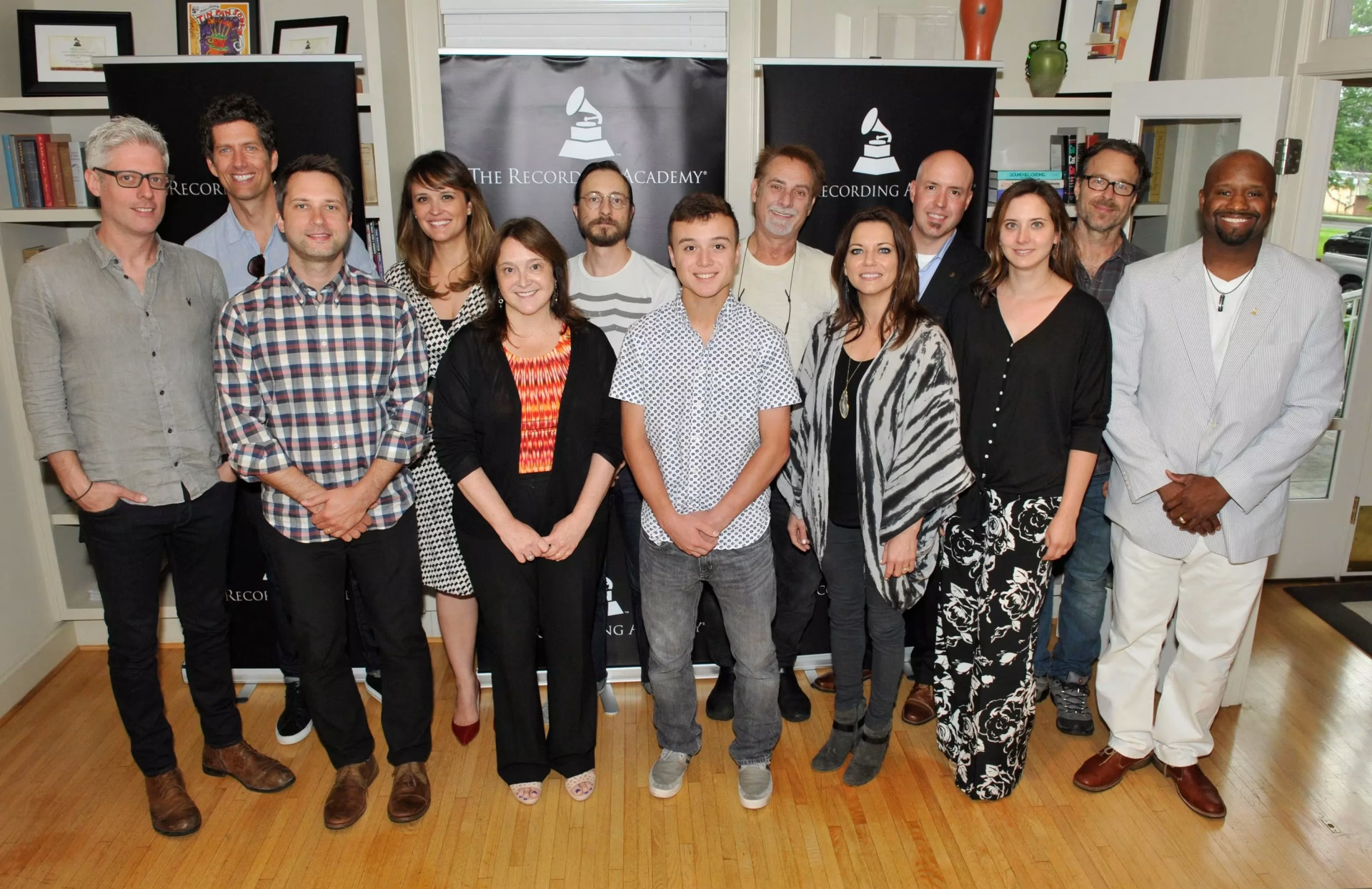
On June 24 The Recording Academy Nashville Chapter hosted a special guest as U.S. Register of Copyrights Maria Pallante continued her "creators tour." Through a roundtable discussion with music creators representing the diverse range of music made in Music City, Pallante heard directly from Martina McBride, Better Than Ezra's Kevin Griffin, Brandon Heath, Matt Maher, and Band Of Horses' Bill Reynolds, as well as producer John McBride, Academy Trustee Jeff Balding and Nashville Chapter President Shannon Sanders. Earlier this year during a congressional hearing, Pallante referred to The Academy roundtables as "the most inspiring part of the work" of copyright review.
The roundtables represent just one example of the Copyright Office's commitment to serving the interests of creators. That commitment was also demonstrated when the U.S. Copyright Office released "Copyright And The Music Marketplace," its comprehensive study of music licensing and how to improve the current system.
The study reflects many of the recommendations made by The Recording Academy on behalf of the songwriters, performers and studio professionals it represents. In both an initial filing and in subsequent reply comments, The Academy articulated bold principles that could help guide music reform and made several specific proposals to address the needs of music creators. That many of these recommendations were incorporated in the final study is evidence the Copyright Office takes seriously the needs and concerns of the creative community.
Broadly, the report embraces three fundamental principles The Recording Academy articulated as the foundation for music licensing reform. First, The Academy said songwriters, performers and producers should always receive fair market value for their work across all platforms. The Copyright Office agrees, asserting as a guiding principle that "music creators should be fairly compensated for their contributions." The report goes on to recommend a uniform market‐based rate-setting standard for all government rates approximating a willing buyer/willing seller standard, federalization of pre-1972 recordings and extension of the "public performance right in sound recordings to terrestrial radio broadcasts." Each of these recommendations mirror comments made by The Recording Academy, and are also embodied in The Academy-backed Fair Play Fair Pay Act (H.R. 1733).
In addition, the report highlights The Academy's call to establish a consistent and permanent process for paying producers the royalties they are due for digital streaming under the current statutory license. In our comments, we noted that producers were left out of the statutory license when it was created. The report endorses our proposal that producer payments should be codified, noting "the Office agrees that [The Recording Academy's] proposal to confirm the existing practice through a technical amendment of the statute merits consideration." This concept, thanks in part to the Copyright Office's support, became the foundation for the Allocation For Music Producers Act, or AMP Act (H.R. 1457), which was formally introduced on March 19, 2015, with The Academy's support.
Second, we asserted music licensing should be accomplished in the most efficient way possible that allows creators to seek maximum compensation for their work. Again, the Copyright Office adopted this as guiding principle, stating "the licensing process should be more efficient." In furtherance of this goal, the report agreed with several of The Academy's recommendations for improving the licensing process for songwriters, including allowing the bundling of public performance and mechanical rights for songwriters to streamline licensing. The report also echoes The Academy's comments that transparency for artists and songwriters, "especially in the context of direct deals negotiated by publishers and labels outside of the PROs and SoundExchange," should be addressed in any update to music licensing.
Third, and perhaps most importantly, the Copyright Office embraces The Academy's firm position that music licensing reform requires a comprehensive legislative solution. The report's preface states, "Moreover, the Office has underscored the need for a comprehensive approach to copyright review and revision generally. This is especially true in the case of music licensing — the problems in the music marketplace need to be evaluated as a whole, rather than as isolated or individual concerns of particular stakeholders." Later, before presenting recommendations for reform, the report stresses it "is also important that the proposals be contemplated together, rather than in isolation."
The Copyright Office solicited comments and input from a broad array of stakeholders in the music licensing sphere, all of which influenced its comprehensive report. As noted in The Academy's original comments, music licensing has become a confusing patchwork of legislative fixes that have accumulated over decades. Congress must take bold action to modernize music licensing for the future. As Pallante herself has eloquently stated, the interest of the creator is at the center of the public interest when it comes to copyright reform. As Congress contemplates updates to our music laws, we are grateful the Copyright Office has heard the voice of music creators and put their concerns at the center of its recommendations for fixing the music licensing ecosystem.