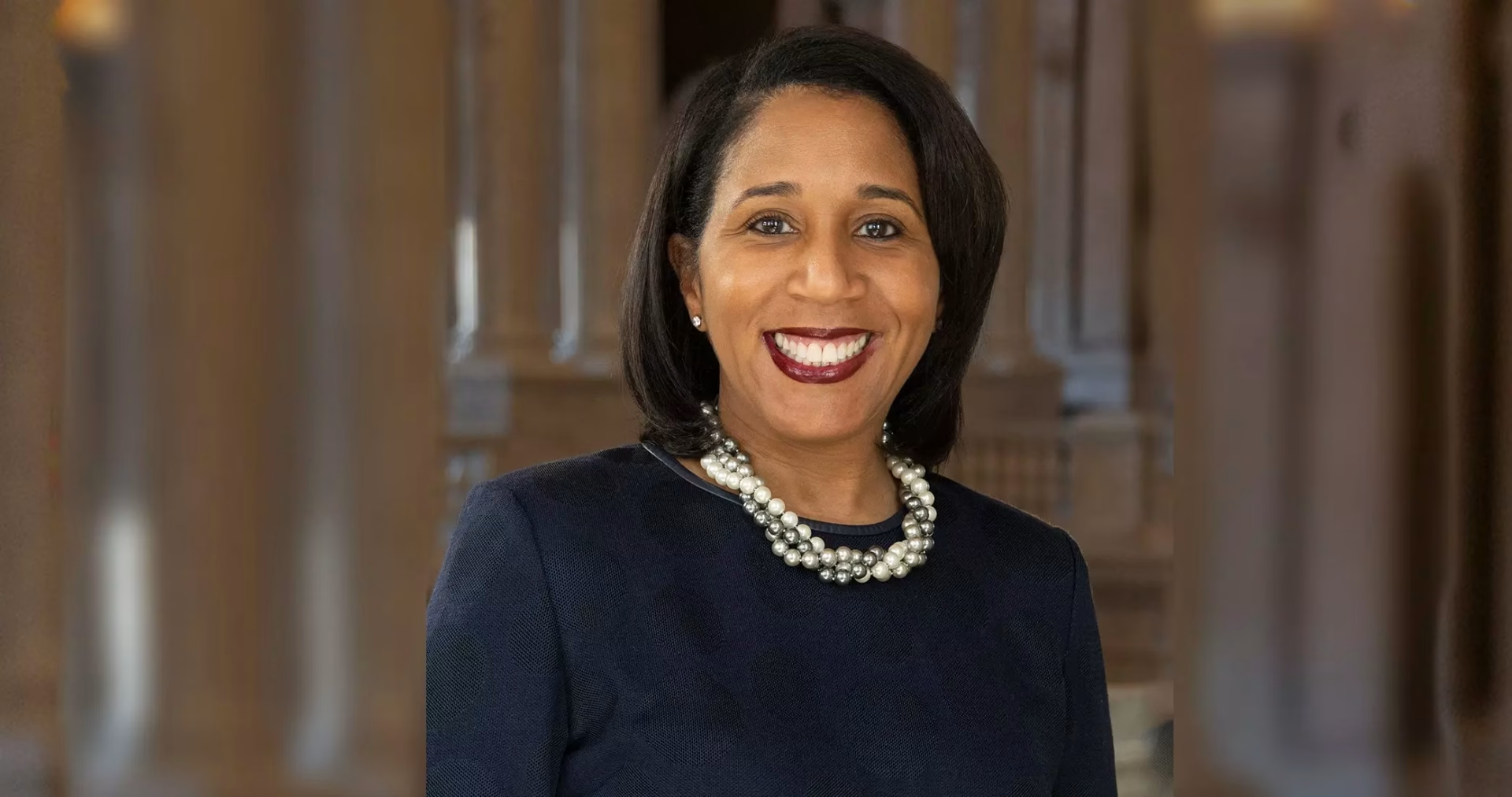
Since the historic passage of the Music Modernization Act, the Copyright Office has been busy implementing its provisions. That process, along with additional copyright updates, was the focus of today's House Judiciary Committee hearing with Karyn A. Temple, Register of Copyrights and Director of the U.S. Copyright Office as witness. In what has become a divisive committee of late, Democrats and Republicans put differences aside today to discuss the pending designation of the Mechanical Licensing Collective (MLC), active legislation like the Copyright Alternative in Small Claims Enforcement Act (CASE) Act, and other issues in the copyright space.
<blockquote class="twitter-tweet" data-lang="en"><p lang="en" dir="ltr">Thank you Chairman <a href="https://twitter.com/RepJerryNadler?ref_src=twsrc%5Etfw">@RepJerryNadler</a> for always fighting for songwriters’ and creators' rights. <a href="https://t.co/jgESeEpVoW">pic.twitter.com/jgESeEpVoW</a></p>— GRAMMY Advocacy (@GRAMMYAdvocacy) <a href="https://twitter.com/GRAMMYAdvocacy/status/1143991564550791169?ref_src=twsrc%5Etfw">June 26, 2019</a></blockquote><script async src="https://platform.twitter.com/widgets.js" charset="utf-8"></script>
Starting with the MLC, Chairman Jerry Nadler (D-N.Y.) entered a letter from Recording Academy President/CEO Neil Portnow and Chairman Harvey Mason Jr. into the hearing’s official record, using it to help frame his questioning for Temple regarding the Copyright Office’s views on how the MLC will distribute funds and ensure payments reach the songwriters who've earned them. The letter from the Academy’s leaders reinforced its formal comments on the MLC designation process. Last month, the Academy’s comments helped shape follow-up meetings between the Copyright Office and the two MLC candidates in which the Copyright Office posed many of the same questions recommended by the Academy regarding unmatched songs, unclaimed royalties, and songwriter outreach.
With the July 8 deadline for designating who will administer the MLC quickly approaching, many other committee members also raised questions on the process, including Rep. Martha Roby (R-Ala.), Rep. Ted Deutch (D-Fla), and Rep. Ted Lieu (D-Calif.), who represents the Recording Academy home office. All of these voices expressed similar inquiries on how the Copyright Office is ensuring all songwriters are paid properly, that data matching is robust, and that effective outreach and education to the songwriter community is conducted.
Rep. Karen Bass (D-Calif.) also urged the Copyright Office to ensure diverse representation on the MLC board. Looking ahead, Rep. Lieu asked about appropriate oversight and accountability of the MLC once it's up and running. Clearly, the Committee is highly committed to and invested in the MLC's success.
The other legislation taking the spotlight at the hearing was the CASE Act, a bill with strong bipartisan support that has already secured more co-sponsors than ever before—including more than half of the Judiciary Committee. The bill would allow creators without the resources to engage in expensive litigation the opportunity to protect their work via the creation of a new small-claims copyright court. Ranking Member Doug Collins (R-Ga.) kicked things off expressing strong support of the CASE Act to help small and independent creators protect their copyright. Likewise, Rep. Hakeem Jeffries (D-N.Y.), the bill’s lead sponsor and most recent recipient of the GRAMMYs on the Hill Award, also outlined the need for CASE. Throughout the hearing, Temple showed emphatic support for the bill
<blockquote class="twitter-tweet" data-lang="en"><p lang="en" dir="ltr">Register of Copyrights Karyn A. Temple testifies to the House Judiciary Committee. <a href="https://twitter.com/hashtag/CASEAct?src=hash&ref_src=twsrc%5Etfw">#CASEAct</a> <a href="https://t.co/J49mDiNVHg">pic.twitter.com/J49mDiNVHg</a></p>— Copyright Alliance (@Unite4Copyright) <a href="https://twitter.com/Unite4Copyright/status/1143895511377817602?ref_src=twsrc%5Etfw">June 26, 2019</a></blockquote><script async src="https://platform.twitter.com/widgets.js" charset="utf-8"></script>
Hopefully, the next big step forward for the CASE Act is a mark-up of the bill before the August recess.
There were also a number of questions regarding allowing the Sec. 119 STELAR compulsory license, which allows satellite providers to retransmit broadcast television content, to expire. Of course, and as we've reported, the National Association of Broadcasters (NAB) strongly opposes being forced to give their content to other video services without consent, an impossible stance to reconcile with their insistence on using artists' music without consent or compensation.
Overall, the hearing included a swell of healthy dialogue surrounding creators' rights, legislative collaboration and the future of Copyright law. As Recording Academy Senior Director of Advocacy Todd Dupler summarized the events in his live tweet thread of the hearing, "House Judiciary hearings have often been contentious & controversial this year, but today's hearing was a great reminder that lawmakers can still work together in a bipartisan fashion."
From Advocate To Board Chair: Harvey Mason Jr.'s Tireless Quest For Creators