Music creators deserve a modern copyright system that supports fair compensation for their work, but they can't do it alone. Fortunately, lawmakers have been working with the music community in a new way of late, and change is in motion with the implementation of last year’s historic Music Modernization Act, and new copyright initiatives teed up in the current Congress For the music creator relying on her craft to make her living, things are definitely looking up.
But with the complex process of policy making, gauging where we stand today with regard to real change can be a challenge. To that end, the Senate Committee on the Judiciary, Subcommittee on Intellectual Property held a hearing this week entitled “Oversight of the United States Copyright Office” aimed to help everyone involve understand how these changes are being made.
<blockquote class="twitter-tweet"><p lang="en" dir="ltr">Register Karyn A. Temple testifies today, July 30, 2019, at 2:30 PM ET to the Senate Judiciary Committee Subcommittee on Intellectual Property about U.S. Copyright Office oversight. Watch the webcast at <a href="https://t.co/oYn1FykJT4">https://t.co/oYn1FykJT4</a> <a href="https://t.co/Xt10rUa9UZ">pic.twitter.com/Xt10rUa9UZ</a></p>— US Copyright Office (@CopyrightOffice) <a href="https://twitter.com/CopyrightOffice/status/1156225437640658950?ref_src=twsrc%5Etfw">July 30, 2019</a></blockquote> <script async src="https://platform.twitter.com/widgets.js" charset="utf-8"></script>
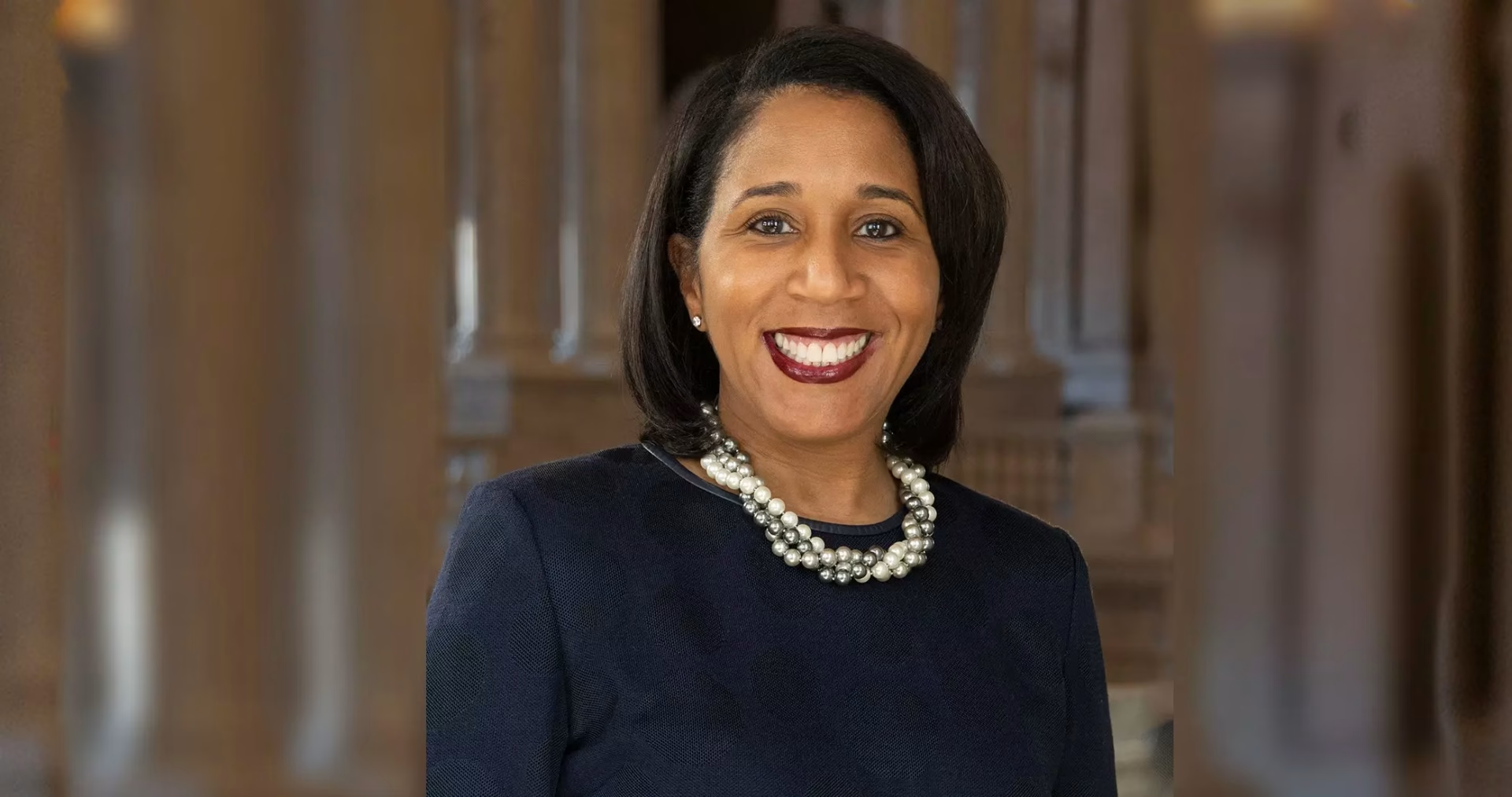
The hearing spotlighted Register of Copyrights Karyn Temple as its witness. Temple's testimony touched on many key issues in copyright relevant to music creators. Notably, she referred back Office’s recommendation to Congress for the adoption of a public performance right for sound recording, a long overdue right the music community and the Recording Academy have been pursuing for many years.
Temple also provided an update on two topics at the top of music makers' minds of late, the U.S. Copyright Office's implementation of the MMA, which was signed into law last fall and promises to modernize many of the outdated music licensing policies, and the next steps with the recently designated Mechanical Licensing Collective, the entity that will manage the new blanket mechanical license and handle royalty collection and distribution as established by the MMA.
At this critical stage of setting up the MLC for success, Temple emphasized the Copyright Office has made it their top priority to conduct public outreach to all songwriters and ensure proper matching of songs to minimize unclaimed royalties, a stance the Recording Academy's comments argued for during the process of selecting an entity to oversee the MLC. These same comments were called out by the U.S. Copyright office in their final selection as being especially helpful in reaching their Final Rule.
Temple also addressed the Copyright Office's work on drafting a best practices report for the MLC to be delivered to Congress, a topic she stressed in both her answers to the committee and written testimony:
"In addition, as required by the statute, the Copyright Office will be undertaking a policy study regarding best practices that the mechanical licensing collective may implement in order to identify, locate, and pay out royalties to musical work copyright owners with unclaimed accrued royalties held by the collective."
The hearing also discussed the CASE Act, which the Copyright Office endorses and was recently marked-up by the Committee. Temple used her time to refute some of the arguments against the small claims proposal.
"One key concern that has been raised is the possibility that such a forum could be weaponized by bad faith litigants or would be utilized to resolve disputes that are outside the competency of the Copyright Claims Officers," Temple's testimony reads. "The Copyright Office takes these concerns seriously. For this reason, I am pleased to note that the legislation that was recently passed out of the full Senate Judiciary Committee contains several provisions to help address these concerns."
Temple was also asked about the ASCAP/BMI consent decree review by Department of Justice. The Recording Academy is strongly engaged in revisiting these 75-year-old decrees.
With so much progress being made toward a fair music licensing system for music creators, we are reminded of how diligent work can create meaningful change. We are also reminded of the work left ahead, and this week's intellectual property hearing serves as an encouraging example of how copyright issues are being addressed in D.C. and how important it is for the Recording Academy and music community to stay vigilant in the fight for creators' rights. Remember, they can't do it alone.
Let Your Members Of Congress Know You Stand In Support Of Music Creators' Rights