
Recently, The Recording Academy joined with a cross-section of organizations representing the music community to submit comments to the office of the U.S. Intellectual Property Enforcement Coordinator. These comments will help shape the IPEC's next long-term strategic plan to protect the work and livelihood of American creators. One area of emphasis in our comments was the notice and takedown process of the Digital Millennium Copyright Act.
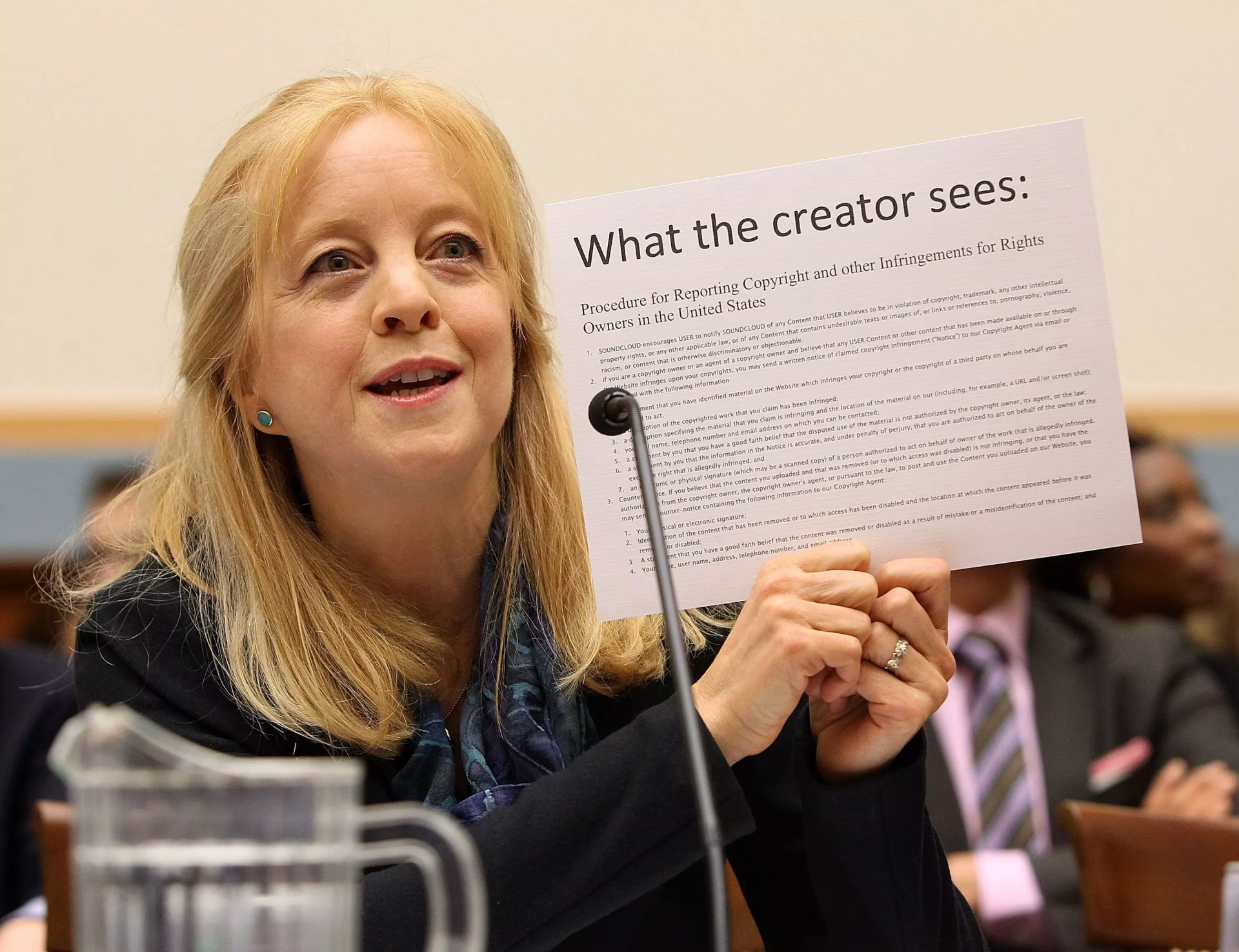
Educating policymakers on the burden the notice and takedown process places on independent creators has been a priority for The Academy. In March 2014 GRAMMY-winning jazz and classical composer Maria Schneider testified before the House Judiciary Committee on behalf of The Recording Academy about the frustrating, time consuming and ultimately ineffective process of combating online infringement.
"The DMCA creates an upside-down world in which people can illegally upload my music in a matter of seconds," she said. "But I, on the other hand, must spend countless hours trying to take it down, mostly unsuccessfully. It's a world where the burden is not on those breaking the law, but on those trying to enforce their rights."
More recently, a mother's YouTube video featuring her infant dancing while a Prince song plays in the background has triggered a major federal court decision that increases the burden on creators like Schneider rather than on exploiters and potential infringers. In a decision that bolsters the fair use doctrine, the Ninth Circuit Court of Appeals' Sept. 14 in Lenz v. Universal Music ruling has succeeded in making rights holders, including thousands of independent music creators, appear greedy and unreasonable for simply enforcing their rights. And that isn't fair.
At first glance, the ruling in Lenz v. Universal Music seems to be a victory for the average online user, allowing them leeway to use music or other copyrighted content for personal use without fear of being targeted by major entertainment corporations aggressively wielding the DMCA's notice and takedown process. But the ruling places a burden on all rights holders — not just corporations — by requiring them to make a good faith determination of whether offending posts fit the parameters of fair use before issuing a takedown notice, or else face a court action themselves. This has profound negative implications for smaller, independent rights holders.
Preventing a major music publisher with ample resources from putting a notice and takedown lean on one seemingly innocuous video featuring copyrighted music may seem justified, but this scenario doesn't represent the reality or scope of copyright infringement online. Large music publishers, record companies and movie studios employ legal teams to scour the Internet for infringing content. Yet, individual music creators and independent artists, without comparable finances or staffing, suffer the most from online infringement given the loss of both revenue and valuable time in which to create. These rightsholders simply do not have the capacity to abuse the system with frivolous takedown notices.
Now independent creators like Schneider not only bear the burden of policing the Internet to stop infringement, but the Lenz v. Universal Music decision forces them to become psychics able to assess the intent of the infringer, and legal experts able to parse the broadest interpretation of fair use. The threat of facing actionable judgment for misrepresenting an unauthorized post as infringement is chilling — many creators may be afraid to pursue a notice and takedown for fear of being sued.
As disturbing as the outcome of Lenz v. Universal appears to be, many anti-copyright groups such as the Electronic Frontier Foundation don't believe the ruling goes far enough to weaken creators' rights. The EFF filed a petition on Oct. 20 to have the case reheard on the grounds takedown notices infringe on fair use and free speech.
While much of the conversation about copyright reform has focused on music licensing and how creators get paid for their work, fixing the DMCA's notice and takedown system so it works for independent artists is critical to a copyright system that works for all creators. Until reforms are made, individual creators continue to find themselves playing an ongoing game of Whac-A-Mole, removing infringing content from a site today only to see it pop up again tomorrow, while Internet service providers remain blameless due to the DMCA's safe harbor provisions. Thanks to the Lenz decision, rights holders face another subjective hurdle in the already cumbersome notice and takedown process.
And there's nothing fair about that.
Watch Maria Schneider's testimony before the House Judiciary Committee's hearing on music licensing here.
