
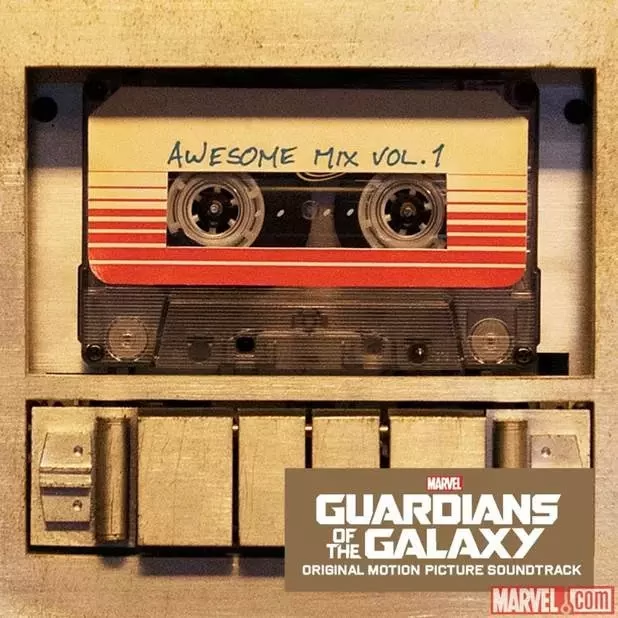
Perhaps the biggest surprise box office hit of 2014, so far, is Marvel’s sci-fi epic Guardians Of The Galaxy. The movie’s success can be attributed to a canny blend of big-budget special effects, humor and a healthy dose of '80s nostalgia aimed at Generation Xers who are now old enough to bring their own kids to the multiplex. The latter is perhaps best embodied in the indispensable accessory carried around by the film's hero Peter Quill (played by Chris Pratt) — a vintage Sony Walkman player containing a mixtape of familiar '60s and '70s hits. The mixtape is more than just a gag; it serves as the emotional touch point of the film as it represents Quill's only tangible link to his deceased mother.
The mixtape also inspired the soundtrack to the film, which itself became a surprise hit, spending two weeks at the top of the Billboard 200 in August. Last week it was certified gold, selling more than 500,000 copies. The soundtrack features such classic songs as "I Want You Back" by the Jackson 5, "Ain't No Mountain High Enough," performed by Marvin Gaye and Tammi Terrell, and "O-o-h Child" by the Five Stairsteps. Unfortunately, while these songs have enjoyed resurgence at the top of the sales charts, that success does not extend to digital radio formats. As we've covered in this blog previously, digital radio services such as SiriusXM, Pandora and iHeartRadio don't compensate artists or copyright owners for the use of sound recordings created before 1972, relying on a perceived loophole in federal copyright law.
But that may be changing soon. On Sept. 22, a federal court in California ruled against SiriusXM in a lawsuit filed by members of the band the Turtles regarding the public performance of their pre-1972 sound recordings. The court decided that such recordings are protected under California state law and services such as SiriusXM must obtain permission before using them. The ruling affirms the principle that all creators should be compensated fairly for the use of their music, regardless of when the work was created.
This is potentially historic news, but we know the fight isn't over. The court decision will likely be appealed, and similar lawsuits are still pending around the country. And the pre-1972 loophole is just one of several obstacles that prevent all music creators from receiving fair compensation. Broadcast radio defiantly refuses to pay for the use of any sound recordings, regardless of when it was recorded. At the same time, songwriters wrestle with outdated consent decrees to establish fair royalty rates for their work. This is why The Recording Academy continues to call on Congress to pass comprehensive legislation to address the many inequities that the music community faces. A world where music creators are paid fairly may feel like it can only exist in a galaxy far, far away, but rest assured that The Recording Academy will continue to be a steadfast "guardian" for creators' rights and compensation.
