
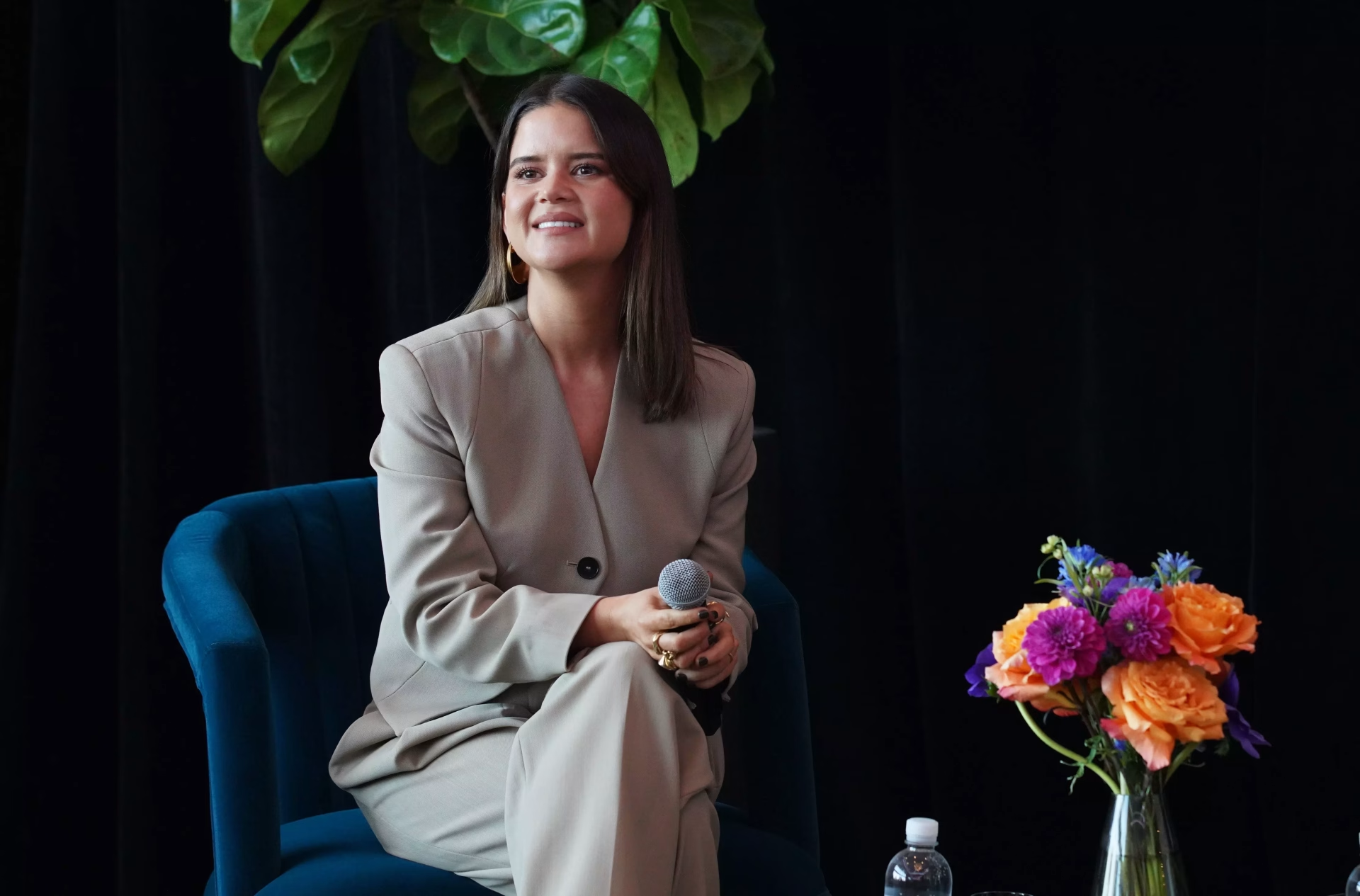
On a sunny Saturday morning in the heart of Beverly Hills, music creators, advocates, members of Congress, leaders of the Recording Academy and others gathered in the ballroom of the Waldorf Astoria for the 4th annual GRAMMY Fund Brunch, a fundraiser for the GRAMMY Fund for Music Creators, the Recording Academy's Political Action Committee.
Held by the Academy’s Advocacy & Public Policy team, the annual event helps raise funds to support Congressional candidates that support music makers and the issues that affect them, including copyright protection, fair compensation for songwriters and artists, free expression, and other key music industry issues that impact creators.
Since music streaming began overtaking the sales of physical media in the 2000s, artists have faced an uphill battle for fair compensation. And after decades of advocating for music licensing reform, the activists and artists of the Recording Academy — with the support of elected officials who champion creators’ rights — helped advance the Music Modernization Act of 2018 into law. But there’s much more work to be done to ensure fair pay for all creators.
At the GRAMMY Week event, Todd Dupler — the Acting Chief Advocacy & Public Policy Officer at the Recording Academy — sat down with past GRAMMY winner and 2023 GRAMMY-nominated country artist Maren Morris to discuss the fight for fair pay and how artists can use their voices to pushback against these inequities.
When she started out as a songwriter in Nashville a decade ago, Morris never planned to become an artist and struggled to facilitate publishing deals as a newcomer in the music business. But now, as a singer-songwriter, she chooses to use her platform to raise awareness about the issues that impact all songwriters.
"It’s really not my prerogative — or anyone’s in this line of work — to shut up and sing. We mirror the world and what we go through and put it into song," Morris said. "For me, we’re not free until we’re all free. And that means a lot of things."
For Morris, the fight for fair pay requires a full-throated effort and a choir of voices who are willing to use their platforms to spread the word and make change.
"You can dip your toe in at your own comfort level. But ultimately, what we all want, songwriters, publishers, we want to work with dignity and be able to put food on our tables, take care of our employees and be paid fairly for our work," Morris explained. "And especially when it’s something as soulful and precious, and at times — not to be hyperbolic — as life-saving as songwriting."
Providing artists with a way to get involved with advocacy work is a point of pride for the Recording Academy. "It’s so much more powerful when artists speak for themselves and don’t just rely on a lobbyist or government affairs professional to do it for them," Dupler noted.
The Academy leader took a moment to thank some of the policymakers in attendance who work closely with the Academy’s Advocacy team and members to advance key music issues on Capitol Hill.
For songwriters and artists, policy issues like unfair royalty rates pose an existential threat to their ability to make a living. While earning a fraction of a cent per stream is the norm for many creators, the recently reintroduced American Music Fairness Act — which would ensure that recording artists receive fair compensation for AM/FM radio play— is a beacon of hope. But it’ll take a concerted effort from creators and supportive elected officials to move the bill forward.
For some, the wait for fair compensation may be challenging, so the Recording Academy established the Songwriters & Composers Wing to support and elevate creators through education panels, retreats, networking opportunities and recognition. The Wing recently highlighted its dedication to uplifting creators by unveiling a new category, Songwriter of the Year, Non-Classical award, at the 2023 GRAMMYs.
Collaboration is key in the fight for creators’ rights and fair pay, "whether it’s with your label, your publisher, or the streaming services," noted Dupler. A key victory was scored in 2022, when streaming platforms and music publishers were able to lock in and increase streaming rates for songwriters.
"That’s the first time we were able to do that and not have to fight it in court," Dupler added. "We’re hopeful that that’s an example of the kind of cooperation that we need to do in the future. And hopefully, it’s the first step toward more cooperation."
As the tide begins to shift, it’s important for creators and elected officials to maintain momentum and continue doing the work by staying informed, being open about contracts and label deals with colleagues and educating emerging creators. "This affects everybody at the end. Top to bottom. You can’t just think about yourself." Morris said. "We pull magic out of our minds, and we deserve to be compensated for that."
Head to live.GRAMMY.com all year long to watch all the GRAMMY performances, acceptance speeches, the GRAMMY Live From The Red Carpet livestream special, the full Premiere Ceremony livestream, and even more exclusive, never-before-seen content from the 2023 GRAMMYs.
2023 GRAMMY Nominations: See The Complete Winners & Nominees List
