GRAMMYs on the Hill, the Recording Academy’s signature advocacy event, returned to Washington, D.C., for another impactful week of music, policy, and action. Through a series of high-level conversations and face-to-face meetings with lawmakers, GRAMMY winners, nominees, and Academy leaders advocated for legislation that supports the rights and livelihoods of music creators.
Washington D.C.’s Biggest Week in Music is made up of three core events: the GRAMMYs on the Hill Awards, Advocacy Day, and the Future Forum. But the impact of the event extends far beyond Capitol Hill — it’s helped push forward some of the most meaningful music legislation of the last decade.
Here are four powerful ways GRAMMYs on the Hill continues to shape the future of music policy:
Advancing Fair Ticketing Through the TICKET Act
At GRAMMYs on the Hill 2024, more than 60 GRAMMY winners, nominees, and Recording Academy executives met with congressional leaders to push for ticketing reform, including support for the TICKET Act.
The bipartisan bill promotes transparent, all-in pricing, curbs speculative ticketing, and ensures refunds for canceled events — protecting both fans and artists. Just two weeks after Advocacy Day, the U.S. House of Representatives passed the TICKET Act, marking a major win for music lovers across the country.
Read more: The House Of Representatives Has Passed The TICKET Act: Here's What You Need To Know
Defending Artistic Expression With the RAP Act
During GRAMMYs on the Hill 2023, the Restoring Artistic Protection (RAP) Act was reintroduced in the House. Backed by the Recording Academy, the RAP Act limits the use of song lyrics as evidence in criminal and civil court proceedings — a practice that disproportionately affects rap and hip-hop artists.
By establishing guardrails around the use of creative expression in the courtroom, the bill protects free speech and defends the integrity of storytelling in music.
Read more: The RAP (Restoring Artistic Protection) Act Has Been Introduced In The House
Using Music To Build Global Bridges With The PEACE Through Music Diplomacy Act
In 2022, the Recording Academy worked with GRAMMYs on the Hill honorees Rep. Michael McCaul (R-TX) and Rep. Ted Deutch (D-FL) to introduce the PEACE Through Music Diplomacy Act.
The legislation empowers the U.S. State Department to use music diplomacy programs to foster international connection and understanding. Following Advocacy Day meetings, Leahy and Tillis introduced a Senate version and in December 2022, President Joe Biden signed the PEACE Through Music Diplomacy Act into law.
The act directly led to the launch of the American Music Mentorship Program — a joint initiative between the Recording Academy and the State Department that brings international artists and professionals to the U.S. for mentorship and global collaboration.
Driving Historic Change With the Music Modernization Act
In 2018, Rep. Bob Goodlatte introduced the Music Modernization Act (MMA) one week before GRAMMYs on the Hill, with Senate leadership from Sen. Orrin G. Hatch.
During Advocacy Day, Recording Academy members urged congressional offices to support the bill, which included key reforms: improved compensation for songwriters, royalty payments for pre-1972 legacy artists, and official recognition of producers and engineers in copyright law.
The bill passed unanimously in both chambers and was signed into law by President Trump on Oct. 11, 2018. As the most significant update to music legislation in over 45 years, the Music Modernization Act continues to benefit hundreds of thousands of music creators nationwide.
What’s Next? HITS Act & NO FAKES Act
This year, advocates returned to meet with nearly 30 Congressional offices on Capitol Hill to support two major policy efforts:
HITS Act: This year, advocates met with nearly 30 Congressional offices to urge legislators to support the Help Independent Tracks Succeed (HITS) Act. The bill would allow independent artists and songwriters to deduct up to $150,000 in music production costs in the year those expenses are incurred — leveling the playing field for self-releasing artists and updating the tax code to give music the same treatment as film, TV, and theater.
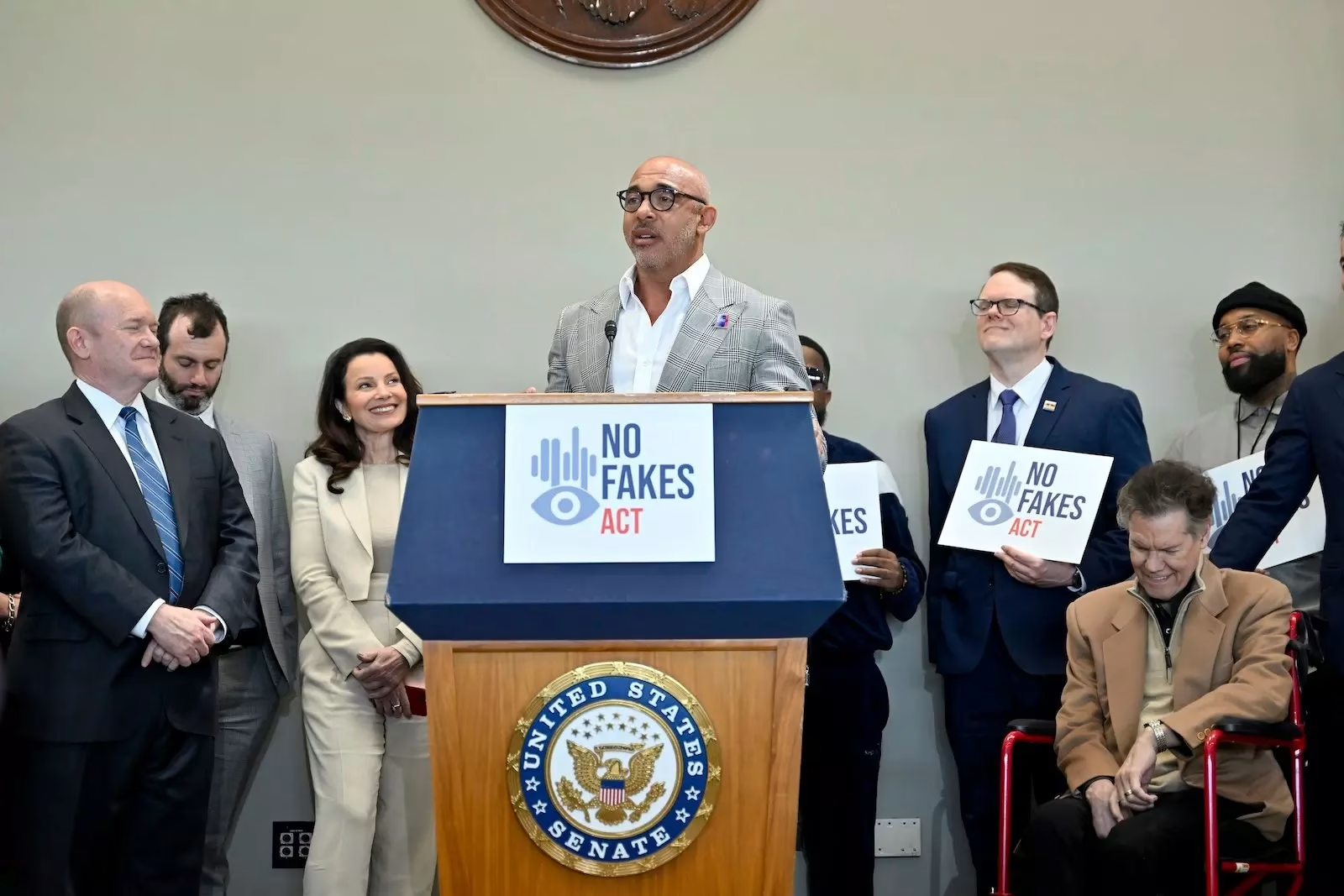
NO FAKES Act: The Nurture Originals, Foster Art, and Keep Entertainment Safe (NO FAKES) Act would create the first-ever federal protections for artists’ voice, likeness, and image from unauthorized AI-generated deepfakes. The bill would set a national standard to hold platforms and individuals accountable for digital impersonations.
The act was reintroduced at a press conference hosted during GRAMMYs on the Hill in partnership with Senators Chris Coons (D-DE), Marsha Blackburn (R-TN), Amy Klobuchar (D-MN), Reps. Madeleine Dean (D-PA) and Maria Salazar (R-FL), and leaders from the Recording Academy, SAG-AFTRA, the MPA, RIAA, Warner Music Group, and YouTube.
Want To Get Involved?
Contact your representatives and urge them to support the HITS Act, the NO FAKES Act, and increased arts funding. Download our official GRAMMYs On The Hill social media toolkit and join the conversation online to support the HITS Act, the NO FAKES Act, and vital investments in the arts.
For more updates and ways to take action, visit the Recording Academy Advocacy page.
How The 2025 GRAMMYs On The Hill Awards Fought To Promote, Protect & Preserve Music