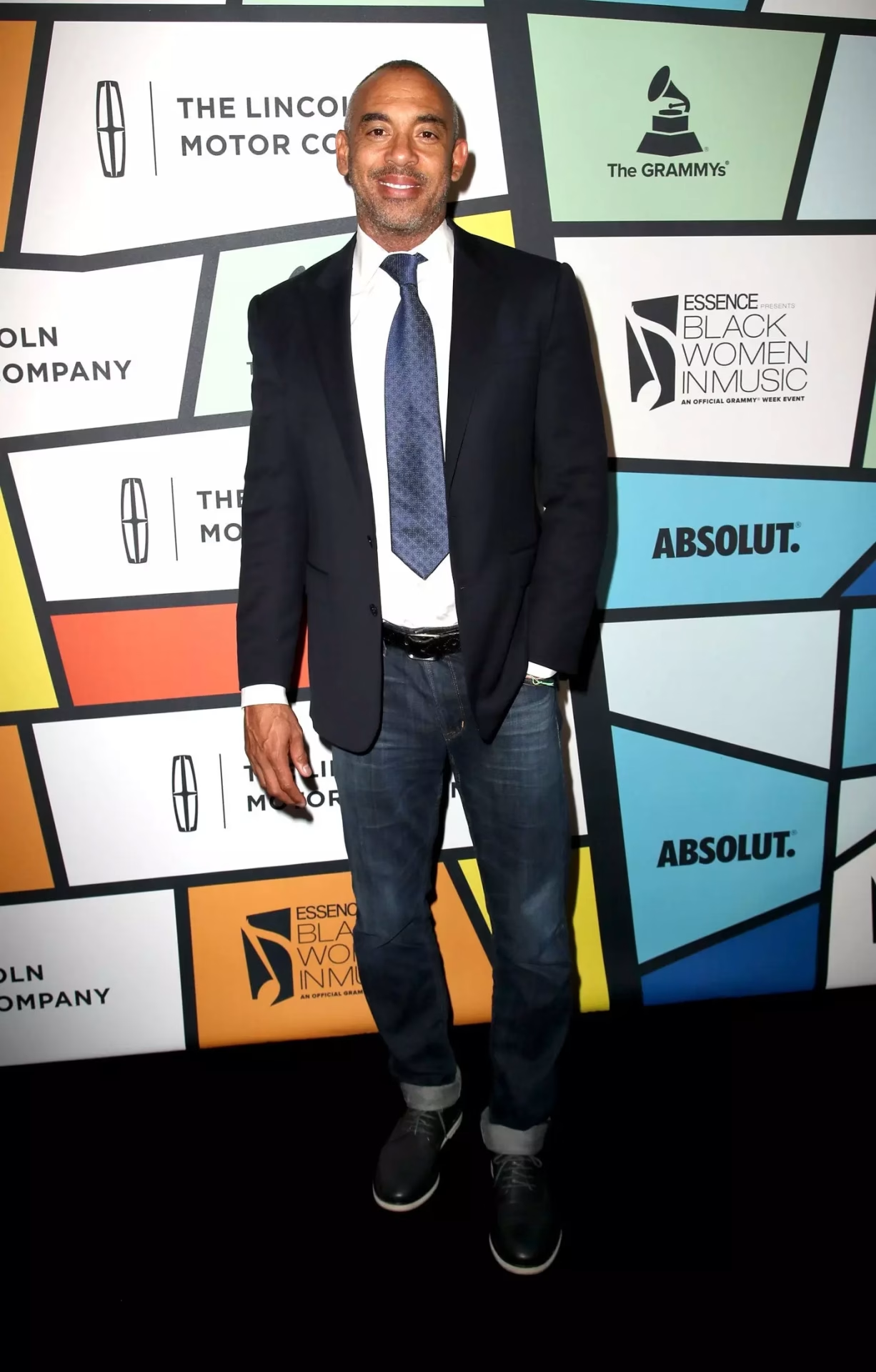
Since August when the Recording Academy announced Mindi Abair and Harvey Mason Jr. as co-chairs of the National Advocacy Committee, the push for the Music Modernization Act (MMA) to pass the Senate has grown especially urgent. With one vote away from moving forward, September is an especially important month. While Abair spoke with the Recording Academy recently about how falling royalties have impacted her as a musician, Mason comes from a different angle as a producer and composer and shares his perspective with us in an exclusive interview.
From GRAMMY-nominated Dreamgirls to Pitch Perfect and Sing, Harvey Mason Jr. has produced music for many blockbuster movies. This year's Jesus Christ Superstar Live in Concert had millions of viewers feeling the power of his music production as well, winning him and others, including John Legend, an Emmy.
For Mason, September is important for his work spanning eight years as an activist in the music space. As a producer it is especially pertinent that the Allocation for Music Producers Act (AMP Act) within the MMA will give producers and engineers copyright protection for the first time in history. The AMP Act was introduced in the Senate this past March, to protect studio engineers and producers' creative work in the music industry. Its provisions are folded into the comprehensive version of the MMA, which aims to protect all music creators in today’s digital landscape.
What would it mean to you to have producers and engineers mentioned in copyright law for the first time?
I would be very happy and also proud. We are not currently protected or represented as the laws stand now. This adversely impacts our ability to collect income that we are due. I have been working with the Academy advocating for music makers for eight years and this would be a huge step.
How has the growing digital landscape and the streaming era affected your business?
It has been both harmful and helpful. Obviously, the reduction in royalties generated has affected our bottom line, but the opportunity to release more music faster and more efficiently has been a huge benefit.
Why do you support the Music Modernization Act?
Because it's the fair and it's the right thing to do. Music is such a valuable part of our society and our country's culture. Creators need to be treated fairly. People who make music shouldn't have to be concerned if they are ever going to get the money that they are owed.
What would you say to your fellow music makers and fans who are thinking about getting involved in advocacy?
I would say, "Get to it." If you are in the music business and not paying attention to advocacy and what the [Recording] Academy is doing, you are sleeping. Unless you are doing music as a hobby, everyone should be putting energy into advocacy. Don't leave it up to someone else. Get involved and make a difference for your career, and maybe more importantly, for the next generation of music creators.
Could you tell us what you're working on now?
Right now I'm in the middle of producing music for a couple of films including Sing 2 for Universal and Bad Times At The El Royale for Fox. I'm also working with new and established artists on new music for their records. Next, I'm developing and releasing artists through my label Hundredup. Finally, I'm producing the Aretha Franklin biopic.
Contact Your Senators: Tell Them To Support Comprehensive Music Reform