
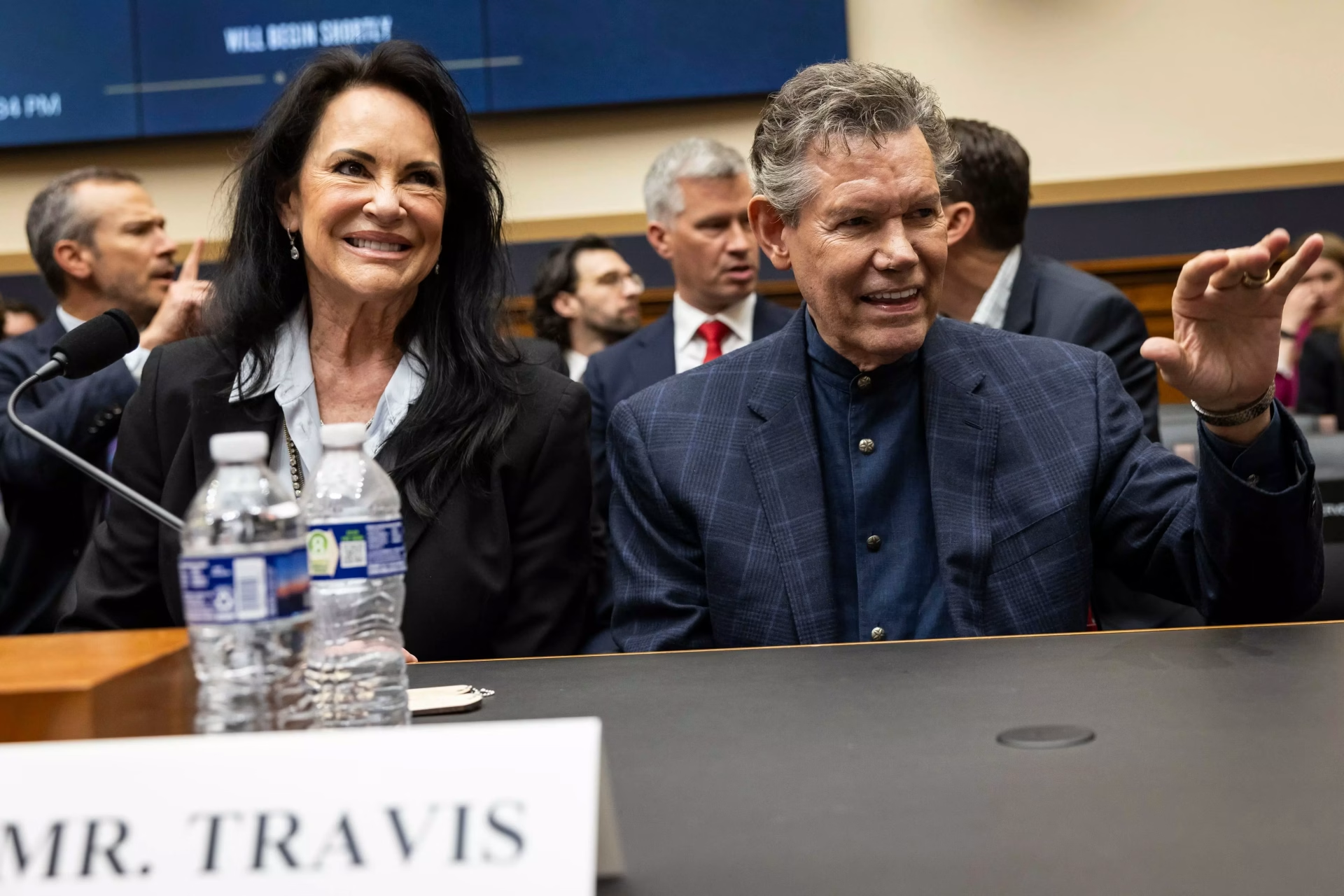
On Wednesday, June 26, the House Judiciary Subcommittee on Courts, Intellectual Property, and the Internet held a hearing titled "Radio, Music, and Copyrights: 100 Years of Inequity for Recording Artists." The aim of this hearing was to examine an injustice affecting the music community: creators not receiving royalty payments for public broadcasting of their sound recordings on terrestrial radio.
The hearing explored the legislative proposal, the American Music Fairness Act of 2023, which would require a license for broadcasting sound recording via AM/FM radio, and ensure that music creators receive compensation for their work no matter the platform. You can watch the deliberations below:
The hearing witnesses included country legend Randy Travis, who boasts seven GRAMMYs and 16 nominations; Curtis LeGeyt, the President and Chief Executive Officer of the National Association of Broadcasters; Michael Huppe, the President and Chief Executive Officer of SoundExchange; and Eddie Harrell Jr., the Regional Vice President and General Manager of Radio One, Inc., in Cleveland.
As Travis had a stroke 10 years ago that limits his ability to speak, his wife, Mary Travis, testified on his behalf. Her testimony wrapped with, "We ask your help in righting the wrong… ensure that artists are paid for their work, their identity is theirs alone, and the soundtracks of our lives continue to play on… Forever and Ever, Amen!" evoking one of her husband's most iconic tracks.
Mary Travis: “We ask your help in righting the wrong…ensure that artists are paid for their work, their identity is theirs alone, and the soundtracks of our lives continue to play on… Forever and Ever, Amen!” pic.twitter.com/CgwcjCiuuR
— musicFIRST (@musicFIRST) June 26, 2024
The Recording Academy is a long-term proponent of the American Music Fairness Act. Sponsored by Rep. Darrell Issa (R-CA) and Rep. Jerry Nadler (D-NY), the AMFA is a balanced solution that ensures music creators are fairly compensated when their songs are played on AM/FM radio, but with carefully crafted exemptions to protect small and local broadcasters.
During the hearing, several members of the subcommittee expressed strong support for the American Music Fairness Act, and many encouraged the radio industry to work with artists and record labels on reaching a solution to end the century-long injustice.
The bill recognizes the property rights of creators, while supporting community broadcasters across the United States. For close to a century, performers, musicians, and studio professionals have been denied the basic right to receive compensation for their work when their music is played by AM/FM radio.
From the foundational performers of the past to today's iconic stars and the thousands of indispensable backing vocalists, instrumentalists, producers, engineers, and mixers, precisely zero dollars have gone to the creators behind the music played on the radio.
To make matters worse, the United States is one of the only countries in the world– a distinction it shares with countries like Cuba, North Korea,and Iran– where this inequity exists, costing artists hundreds of millions of dollars in lost reciprocal royalties overseas in addition to the royalties that aren't paid at home.
The Recording Academy has been championing this issue for almost two decades — and they're far from alone. In December of 2022, during the 117th Congress, identical legislation passed out of the House Judiciary without any recorded opposition — just another reason why the Recording Academy has faith that the AMFA has legs.
\
Click here for ways to support the American Music Fairness Act and get involved in the advocacy for music creators, and stay tuned for more information about the Academy's continued fight for all music people.
