
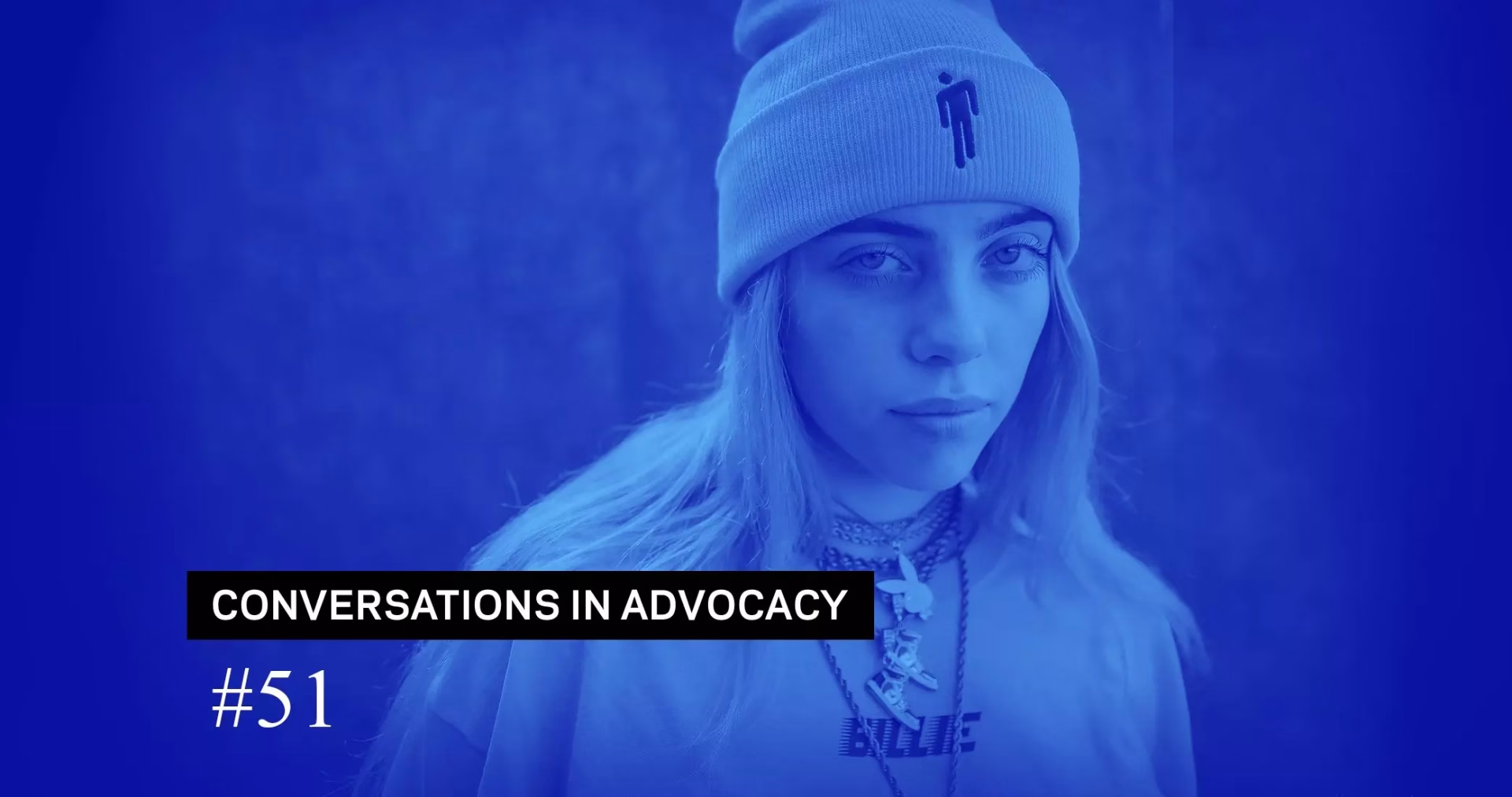
"Music sales are up, streaming is booming, and if Billie Eilish's new album is any indication, young listeners are streaming full albums – so why are streaming companies still fighting so hard to underpay for their product? It is time to fairly compensate music creators for their work." — Conversations In Advocacy #51
Numbers don't lie. Global music sales increased by 9.7 percent in 2018 and nearly half came from streaming, according to the IFPI's annual Global Music Report. What's more, young music consumers are still interested in streaming full albums—under the right conditions. This means as streaming grows toward becoming the majority income generator for music worldwide, so does the importance of fair royalty rates to encourage and support music creation.
Take breakout alt-pop sensation Billie Eilish's debut full-length, When We All Fall Asleep, Where Do We Go?, which arrived last Friday after much anticipation. The album, which is expected to be the second-biggest album drop of the year so far, landed at No. 1 on Apple Music in 96 markets worldwide and garnered nearly 56 million Spotify streams on its first day alone. Remarkably, Apple Music listeners streamed an average of 81 percent of the album's duration, and a similar effect was felt on Spotify.
Not all blockbuster albums see this level of equilibrium. Drake's 2018 effort Scorpion, earned over 60 percent of its plays from just three tracks: "God's Plan," "In My Feelings" and "Nice For What." Granted the rollout of these two smash hits was quite different. As Music Business Worldwide points out, Eilish's album was marketed to streaming audiences as a comprehensive body of work, at least by Apple Music, and that may have made the difference.
“While most services focus the majority of their efforts around playlists, Apple Music still emphasizes albums because we understand their value as a storytelling tool for artists,” said Oliver Schusser, Apple Music.
Eilish's case study underscores young consumers' overall migration to streaming, a not-new phenomenon in music consumption. What is new—or at least is the latest in a long struggle to fairly compensate music creators—is the streaming services recent filing of notice to appeal the Copyright Royalty Board's increase in streaming rates paid to publishers. Since these platforms are making more money than ever, can't they work together with music makers to ensure that creation of the very product they pedal—music—is healthy and sustainable?
“For Billie in particular it’s really exciting because she is such a big part of the Apple artist community and someone the whole company has really rallied around. It’s amazing to see the positive reaction from our subscribers.”
These subscribers across all platforms amounted to 255 million paying listeners worldwide in 2018, and streaming accounted for 47 percent of the $19 billion in global music sales. If a fair amount of this income makes its way back to the music creators, everybody wins, not just the songwriters and publishers, but also the platforms who rely on new releases to stay relevant and ultimately the listeners willing to pay to enjoy the music they love.
Yolanda Adams & More GRAMMYs On The Hill Awards Honorees Announced
"Conversations in Advocacy" is your weekend digital tip sheet on music advocacy and the policies that affect music makers and their craft. New installments post every Friday.
