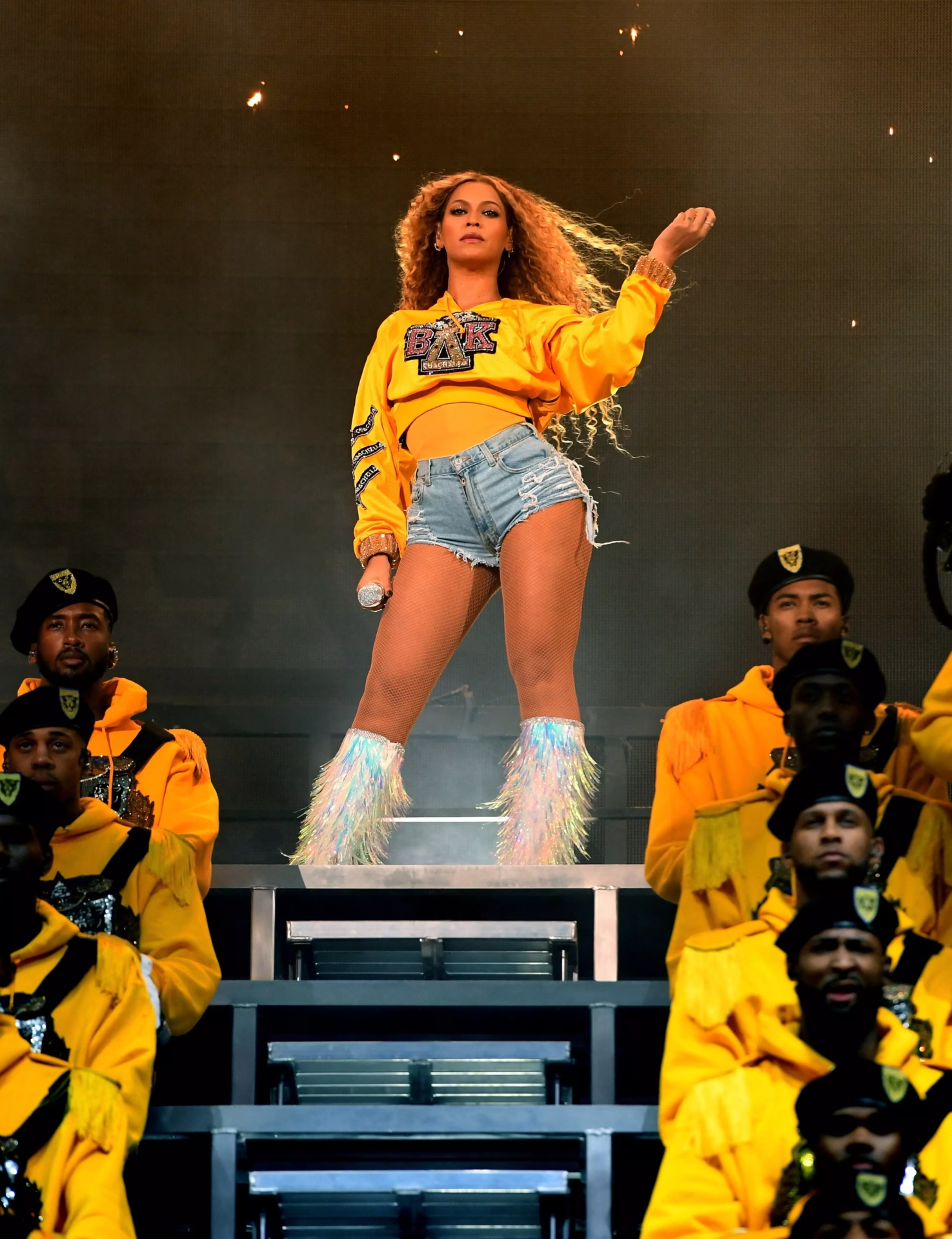
Imagine watching last year's historic #Beychella performance from the front row with microphone cables running across the stage everywhere – it simply wouldn't work. Whether music fans realize it or not, seeing your favorite artist roam the stage at a venue of any size with a wireless microphone involves a chain of behind-the-scenes technical logistics to pull off, starting with wireless frequencies at use in transmitting that all-important vocal signal.
The spectrum of available wireless frequencies is coned-off and traffic-controlled by the Federal Communications Committee (FCC), and with so many entities competing for bandwidth – from cellular to satellite to wi-fi and bluetooth– demand is high. But for music creators, ensuring they have the room they need to put on the music shows people love – and pay for – is a top priority. It’s also one of two pressing issues that the FCC is considering that will impact the music industry.
<blockquote class="twitter-tweet" data-lang="en"><p lang="en" dir="ltr">Wireless microphones are the backbone of live performances.<br>Here's how the FCC will help turn its tables on mics: <a href="https://t.co/CbIkv8d0wl">https://t.co/CbIkv8d0wl</a> <a href="https://t.co/AE5sTwb4S1">pic.twitter.com/AE5sTwb4S1</a></p>— GRAMMY Advocacy (@GRAMMYAdvocacy) <a href="https://twitter.com/GRAMMYAdvocacy/status/890708494965518336?ref_src=twsrc%5Etfw">July 27, 2017</a></blockquote><script async src="https://platform.twitter.com/widgets.js" charset="utf-8"></script>
In July 2017, the FCC made a step in the right direction advancing a proposed rule that would benefit performers and venues by protecting microphone frequencies for concerts at venues of all size—current FCC rules only accommodate large venues. Unfortunately, and despite repeated input and support from the Recording Academy, there has been no advancement on the proposed rule since comments closed in late 2017. The music industry stands waiting to see if 2019 will be the year the FCC finally delivers a rule.
Another hot issue at hand is that of media ownership, specifically addressing a rule proposed by the FCC to open up who can own radio stations in smaller markets. Because this rule would remove the existing cap on how many stations one entity can own per radio market, it poses a dangerous threat to the livelihood of small local stations, as they become highly susceptible to consolidations, acquisitions, and mergers.
Despite claiming to support local radio, the National Association of Broadcasters (NAB) is in favor of the rule. This is the same NAB who continue to fight tooth-and-nail to deny artists radio performance royalties, claiming payment of these royalties is beyond the means of small stations – the very stations the FCC's new rule threatens to obliterate. The misleading Local Radio Freedom Act, introduced in February with the NAB’s support, made similar threats to the future of both local stations and the fair payment of creators under the guise of saving the format.
<blockquote class="twitter-tweet" data-lang="en"><p lang="en" dir="ltr">New data shows that Americans across the country and from every background want to protect local radio. See the full survey here: <a href="https://t.co/n0Dry1Kgxp">https://t.co/n0Dry1Kgxp</a> <a href="https://t.co/0Jbcc7boZp">pic.twitter.com/0Jbcc7boZp</a></p>— musicFIRST (@musicFIRST) <a href="https://twitter.com/musicFIRST/status/1125776545153314816?ref_src=twsrc%5Etfw">May 7, 2019</a></blockquote><script async src="https://platform.twitter.com/widgets.js" charset="utf-8"></script>
In the face of these ominous proposals, silence is not an option. The Recording Academy and the music community continue to speak up as the true defenders of creators' rights through support of legislation that establishes a performance right and protects true local broadcasters. The solution is to balance the interests of small and local broadcasters while ensuring music creators are compensated for the use of their work.
The outcomes for both of these rules remain pending, but regardless of how the FCC acts they will have an impact on music creators, performers and fans. It’s just one more reason why the Academy and the music community needs to remain steadfast in speaking up for music creators—whether to Congress, in state houses, or agencies like the FCC—to ensure progress continues. Learn more about how you can speak up and take action with your local legislators.
How It Really Works: Songwriter Sam Barsh On Success In The Streaming Age