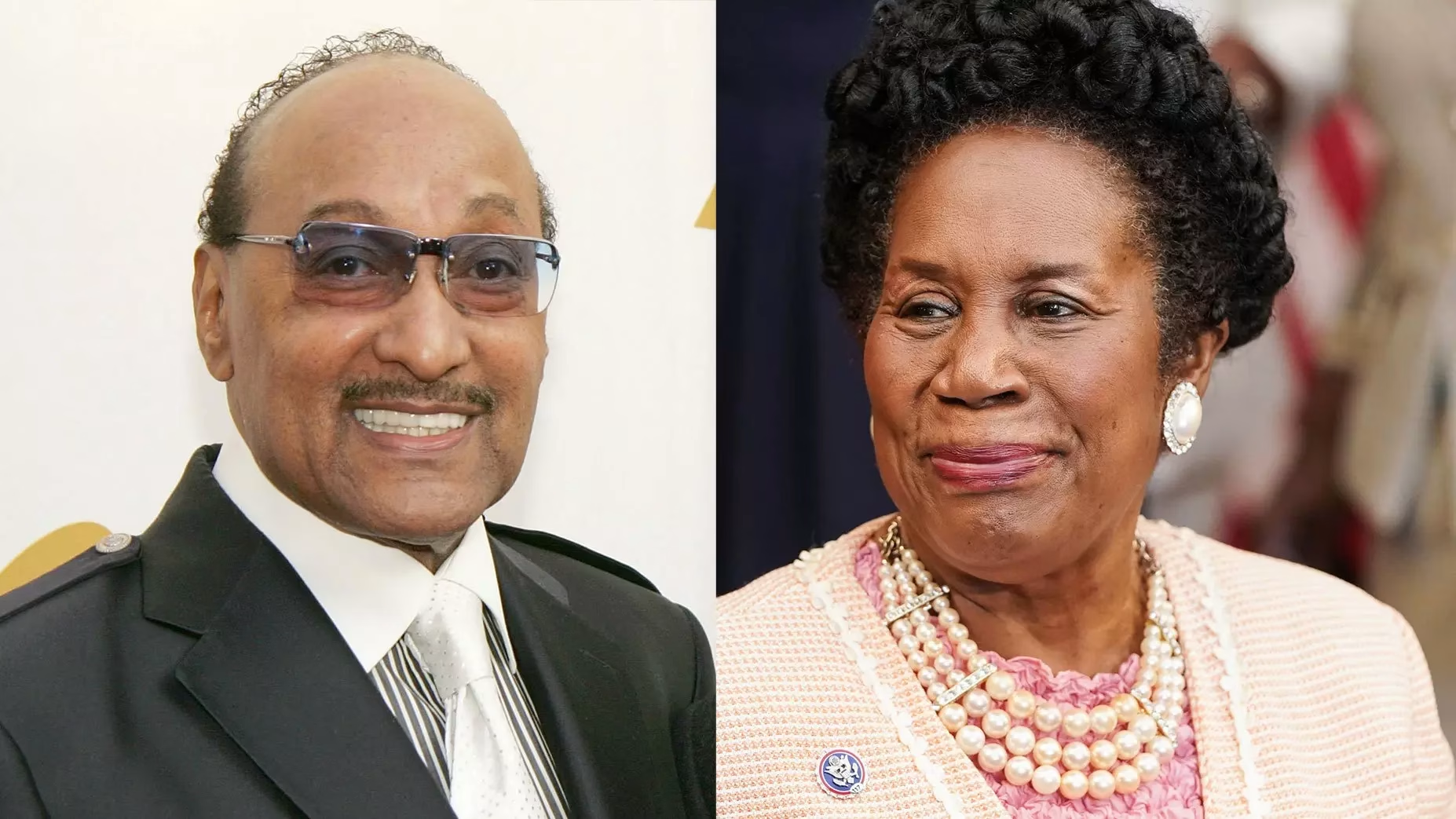
Over the past couple of weeks, the music community has lost two formidable advocates and friends of the Recording Academy: Rep. Sheila Jackson Lee and Abdul “Duke” Fakir. Both were passionate champions for creators' rights and made significant contributions to the music ecosystem, leaving it better than they found it. Their legacies will continue to inspire future generations of music advocates.
Sheila Jackson Lee
For nearly 30 years, Rep. Sheila Jackson Lee championed music policy on Capitol Hill. Sworn into the House of Representatives in 1995 to represent Texas’ 18th congressional district, which includes much of inner-city Houston, she was known for her strong advocacy on civil rights, healthcare, education, and social justice issues. Jackson Lee's influence extended to the House Judiciary and Homeland Security Committees, and her legislative efforts significantly impacted music activism, artists' rights, and fair compensation in the digital age.
A reliable champion for the Recording Academy’s Texas chapter, Jackson Lee frequently met with members both in their districts and on Capitol Hill. She collaborated with the Recording Academy to help immortalize the legacy of gospel music and was instrumental in various legislative initiatives:
-
In 2017, Jackson Lee reestablished the long-dormant Congressional Jazz Caucus, advocating for the economic and cultural development of the jazz community.
-
She introduced The National Jazz Preservation, Education, and Promulgation Act, aiming to preserve knowledge and promote education about jazz in the United States and abroad.
-
Jackson Lee introduced H.Con.Res 370, designating September as Gospel Music Heritage Month. She noted, “Gospel music is a historical American art form that has spanned hundreds of generations and both inspires and entertains across racial, ethnic, religious, and geographic boundaries. We must officially recognize the great contributions to American culture that have derived from the rich heritage of gospel music and its artists.”
-
An original cosponsor of the Music Modernization Act (MMA), Jackson Lee supported the legislation that updated copyright law, making it easier for artists to receive royalties from streaming services and ensuring more accurate payments to songwriters and producers.
Abdul “Duke” Fakir
Abdul "Duke" Fakir, born on December 26, 1935, in Detroit, Michigan, was a celebrated American singer best known as a founding member of the legendary Motown group The Four Tops. Known for hits like "I Can't Help Myself (Sugar Pie Honey Bunch)" and "Reach Out I'll Be There," The Four Tops played an instrumental role in shaping R&B music. Fakir, the last surviving original member of The Four Tops, ensured the group’s legacy endured in the music industry. His career spanned over six decades, earning numerous awards and accolades, including induction into the GRAMMY Hall of Fame in 1998 and receiving a GRAMMY Lifetime Achievement Award in 2009.
Fakir's advocacy work was incredibly impactful:
-
Serving on the Artist Rights Alliance’s Music Council, Fakir fought for an economically fair digital landscape for creators.
-
In 2017, Fakir joined the Recording Academy in Washington for GRAMMYs on the Hill, advocating for music licensing reform.
-
Fakir was a fierce advocate for performance rights for sound recordings broadcast on AM/FM radio. In 2016, he joined with the musicFIRST Coalition in D.C. to advocate for the Fair Play Fair Pay Act, which would establish a performance right for artists on radio.
-
He was also a leader in calling on Congress to fix the pre-72 loophole, which was addressed by the passage of the Music Modernization Act in 2018. Prior to the MMA, sound recordings released before 1972 did not receive any digital royalties. Since the passage of the MMA, legacy artists like Fakir and their estates have begun to receive fair compensation for their classic works played by services like SiriusXM and Pandora.
During GRAMMYs on the Hill in 2017, Fakir told WTOP News, "Ever since [we first started having records] I’ve been fighting for performance rights, not just for me, a singer, but for musicians, for everyone who’s on the record...they’re all a part of the creation.”
As we remember Rep. Sheila Jackson Lee and Duke Fakir, we honor their contributions and unwavering commitment to the music industry. Their legacies will continue to resonate, inspiring future generations of music advocates to carry forward their mission for a fair and equitable music ecosystem.