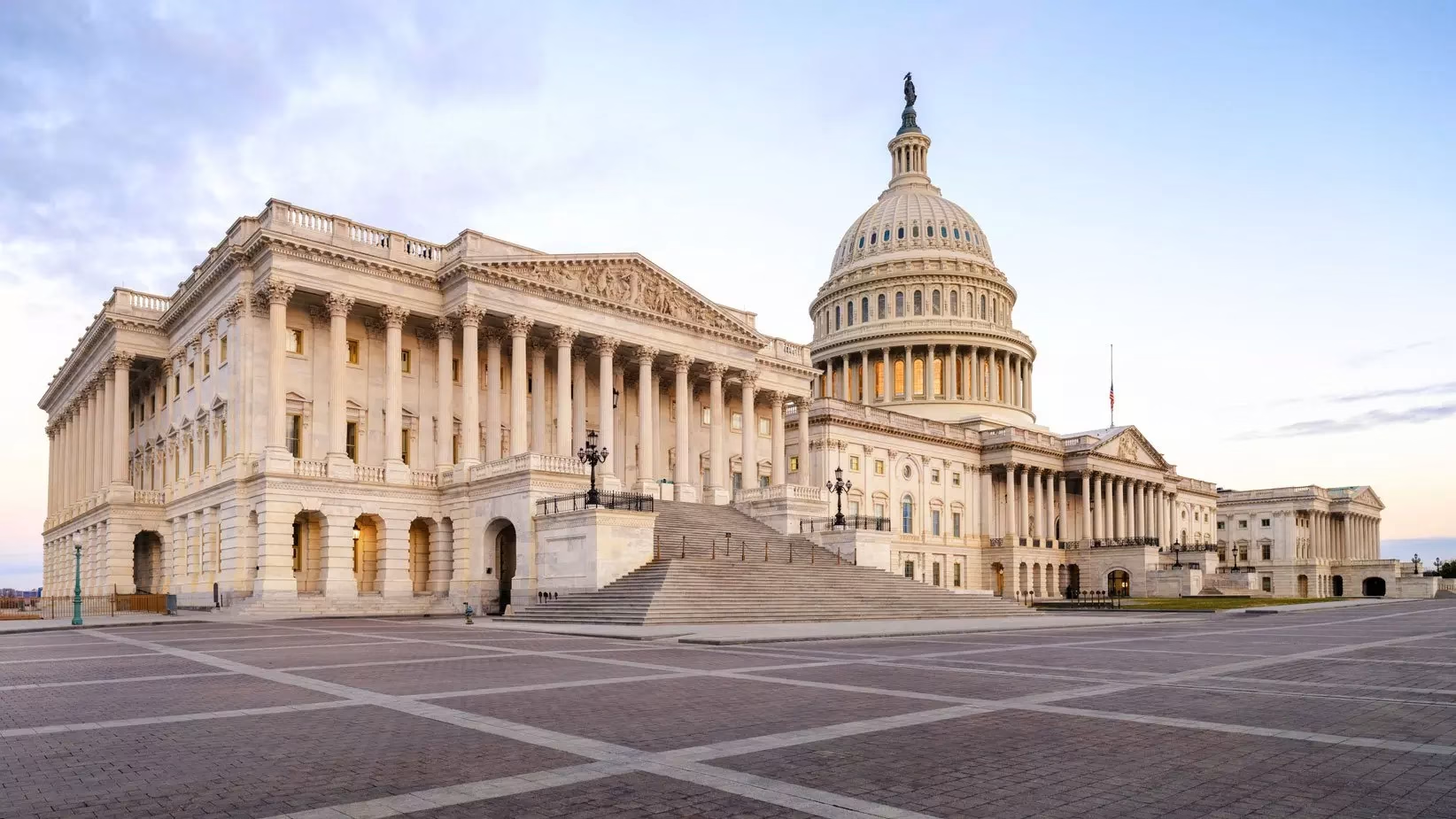
The 119th Congress is officially underway, and with it comes a renewed effort to advance policies that support music creators. As the Recording Academy continues to champion pro-music legislation, three key bipartisan bills have emerged as top priorities: the Helping Independent Tracks Succeed (HITS) Act, the American Music Fairness Act (AMFA), and the American Music Tourism Act. These bills, reintroduced early in the congressional session, seek to improve financial conditions for artists, ensure fair compensation, and recognition for their contributions to the economy and culture.
Helping Independent Tracks Succeed (HITS) Act
The HITS Act is designed to provide much-needed financial relief for independent artists, enabling them to deduct 100% of production costs — up to $150,000 — upfront rather than over multiple years. This sensible tax reform would significantly reduce the financial burden on artists and songwriters investing in new recordings, making it easier to create and release new music.
The bill was reintroduced in the Senate on January 22 by Sens. Marsha Blackburn (R-TN) and Catherine Cortez Masto (D-NV), and in the House on January 28 by Reps. Ron Estes (R-KS) and Linda Sánchez (D-CA). The Recording Academy has played a leading role in crafting and advocating for the bill, which has received strong bipartisan, bicameral support from policymakers and industry stakeholders.
In February, the Academy co-signed a letter with 25 music industry organizations urging Congress to pass the HITS Act. Recording Academy CEO Harvey Mason Jr. emphasized its importance, stating, "The HITS Act will provide common sense tax reform so that artists and songwriters are empowered to keep making new music."
American Music Fairness Act (AMFA)
For over a century, AM/FM radio stations have broadcast music without compensating the artists and producers behind the sound recordings. The American Music Fairness Act (AMFA) seeks to close this loophole, ensuring that performers and producers receive fair compensation when their music is played on terrestrial radio.
AMFA was reintroduced in the House on January 30 by Reps. Darrell Issa (R-CA), Jerry Nadler (D-NY), Mark Green (R-TN), and Tom McClintock (R-CA), and in the Senate on January 31 by Sens. Marsha Blackburn (R-TN), Cory Booker (D-NJ), Alex Padilla (D-CA), and Thom Tillis (R-NC). The act would align radio broadcasters with streaming services, satellite, and internet radio — ensuring a level playing field for music compensation while protecting small, local broadcasters with dedicated protections and exemptions.
The Recording Academy is a founding member of the musicFIRST Coalition, a leading advocacy group pushing for AMFA’s passage. In February, over 300 artists — including Aerosmith, Barbra Streisand, Celine Dion, Gloria Estefan, James Taylor, Jelly Roll, Lil Jon, Lin-Manuel Miranda, Mariah Carey, Miranda Lambert, Ozzy Osbourne, P!nk, Reba McEntire, and Stevie Nicks — signed a letter hand-delivered by Boyz II Men urging Congress to act.
Read more: From AI Protections to Ticketing Reform: How GRAMMY Nominees & Members Led 2024's Advocacy Wins
American Music Tourism Act
Music has long been a driver of tourism in the U.S., attracting visitors to iconic music hubs, festivals, and historic venues. The American Music Tourism Act aims to harness this potential by directing the Department of Commerce to develop a national strategy promoting music tourism. This includes identifying key music locations, festivals, and live music events across the country.
The bill was reintroduced on January 22 by Sens. Marsha Blackburn (R-TN) and John Hickenlooper (D-CO) and Reps. Diane Harshbarger (R-TN) and Nanette Diaz Barragán (D-CA). The Recording Academy has actively supported this initiative, recognizing its potential to boost local economies and elevate the visibility of American music culture.
Upon its introduction in the last Congress, Recording Academy Chief Advocacy Officer Todd Dupler voiced the Academy’s support of the bill, stating, "Music has long played an important role in our economy and culture. This bill will amplify the music community’s contributions to economic growth and increase understanding of music’s impact on the U.S. and the world."
Join the Fight for Music Rights
As Congress begins its work, the Recording Academy remains committed to championing policies that benefit the music community. You can take action today by urging your representatives to support these vital reforms. Send a message to Congress and stay tuned for more updates on how the Recording Academy is fighting for all music people.
Read more: 2025 GRAMMYs: 10 Winners & Nominees Who Champion Music Advocacy Across Genres