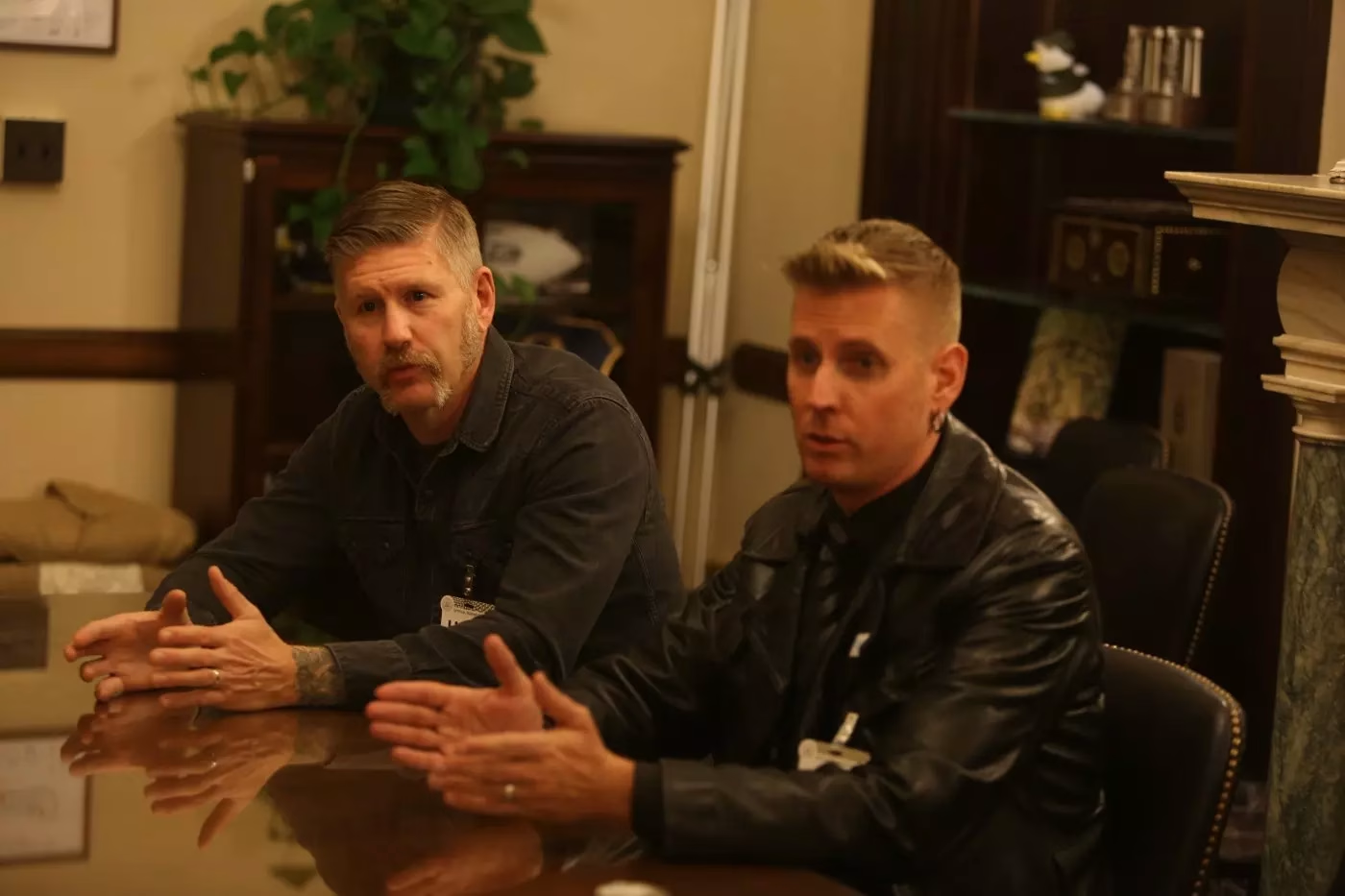
GRAMMY winning metal outfit Mastodon are closing in on two decades of hard work doing what they love: making great heavy music. But guitarist Bill Kelliher and drummer Brann Dailor are on a mission beyond recording and performing, as the two have added their voices to the chorus of music community support for fair compensation for artists.
Whether in Washington, D.C. talking with legislators, as the duo did during this year's GRAMMYs On The Hill, or speaking their minds more generally, as Kelliher did on a recent episode of Dean Delray's "Let There Be Talk" podcast, these are artists who have been richly rewarded in the intangibles — love, fame, respect. Speaking candidly about the financial side of music making, their concern is whether tangible compensation for artists makes it possible for their fellow creators to afford to make that kind of commitment to their own music.
Formed in 2000, the band began in Atlanta while working regular jobs to pay for practice space. Mastodon graduated to baloney sandwiches in their tour van and sleeping on people's floors as they traveled. Fast-forward to now, the band earned a GRAMMY for Best Metal Performance for "Sultan's Curse" at the 60th GRAMMY Awards and Rolling Stone wrote that they have become "one of the most beloved heavy bands on earth."
In the interview, Delray observed that Mastodon's struggles for success came just as the problem of illegal downloading and the digital economy changed the equation. "Who gets hurt in the end is the artist," said Kelliher, "because we aren't getting the fair pay … for these streams."
"We're not asking a lot, we're just asking it to be fair," he said. "If this continues, the artist is going to disappear because we cannot afford to go out here."
In light of the more than half a million dollars signed artists are fronted to make an album, and that they then owe the label as their music streams out on the internet nearly for free, Kelliher asked, "Where is the money to be generated to make that money back?"
"The only way to make any money is to get out here on the road and tour, tour, tour constantly," Kelliher said. He broke down the math for one well paid tour they did for three shows abroad where they wound up with negative $2,000 after management's cut and paying for crew and gear plus transportation. "It's just upside down," he said. "A lot of things have to change … It's 2018 and there is no revenue coming in from record sales. If there were, it would be a different story."
In so many ways that's what's at stake in copyright reform, to establish a fair market system for the digital age that can subsidize the years of sacrifice and investment — even if it's just in time off from paid work and having a practice space — to continue to pursue creating music in a system of fair compensation.
Shortly after coming to Washington for GRAMMYs on the Hill, the Music Modernization Act was passed by the House of Representatives. In the Senate, where Mastodon also met with key senators, the bill was more recently passed by the Judiciary Committee, advancing this landmark copyright reform legislation to the entire Senate for a vote. The Music Modernization Act will go a long way to update our outdated laws and create a better future for music creators and, ultimately, the fans and consumers who listen to their music.
Contact Your Senators: Tell Them To Support Comprehensive Music Reform