
Although GRAMMYs on the Hill 2025 has wrapped, the Recording Academy’s advocacy work continues nationwide. From tax credit improvements in Louisiana to creative rights protections in New York, Recording Academy members are mobilizing across the country to defend artistic expression and support a sustainable creative economy.
On May 27, members of the Recording Academy’s Memphis Chapter traveled to Baton Rouge to champion music policy at the state level. In a show of support, the Louisiana House and Senate officially declared May 27 “Louisiana Music Advocacy Day” — a day to recognize the state’s vibrant music legacy and explore new opportunities for industry growth.
That same day, Academy members met with the Office of Cultural Development under Louisiana Lieutenant Governor Billy Nungesser to discuss House Bill 653 (HB653), an Academy-backed bill designed to enhance Louisiana’s sound recording investor tax credit program. The legislation, which passed the Louisiana House on May 19, proposes several key improvements, including a longer application period, a higher project-based credit, and lower investment thresholds for Louisiana residents — all of which help expand access to capital and bolster the local music economy.
Shortly after Louisiana Music Advocacy Day, the bill cleared the state Senate as well, marking a significant win for Louisiana music creators. HB653 now awaits Governor Jeff Landry’s signature.
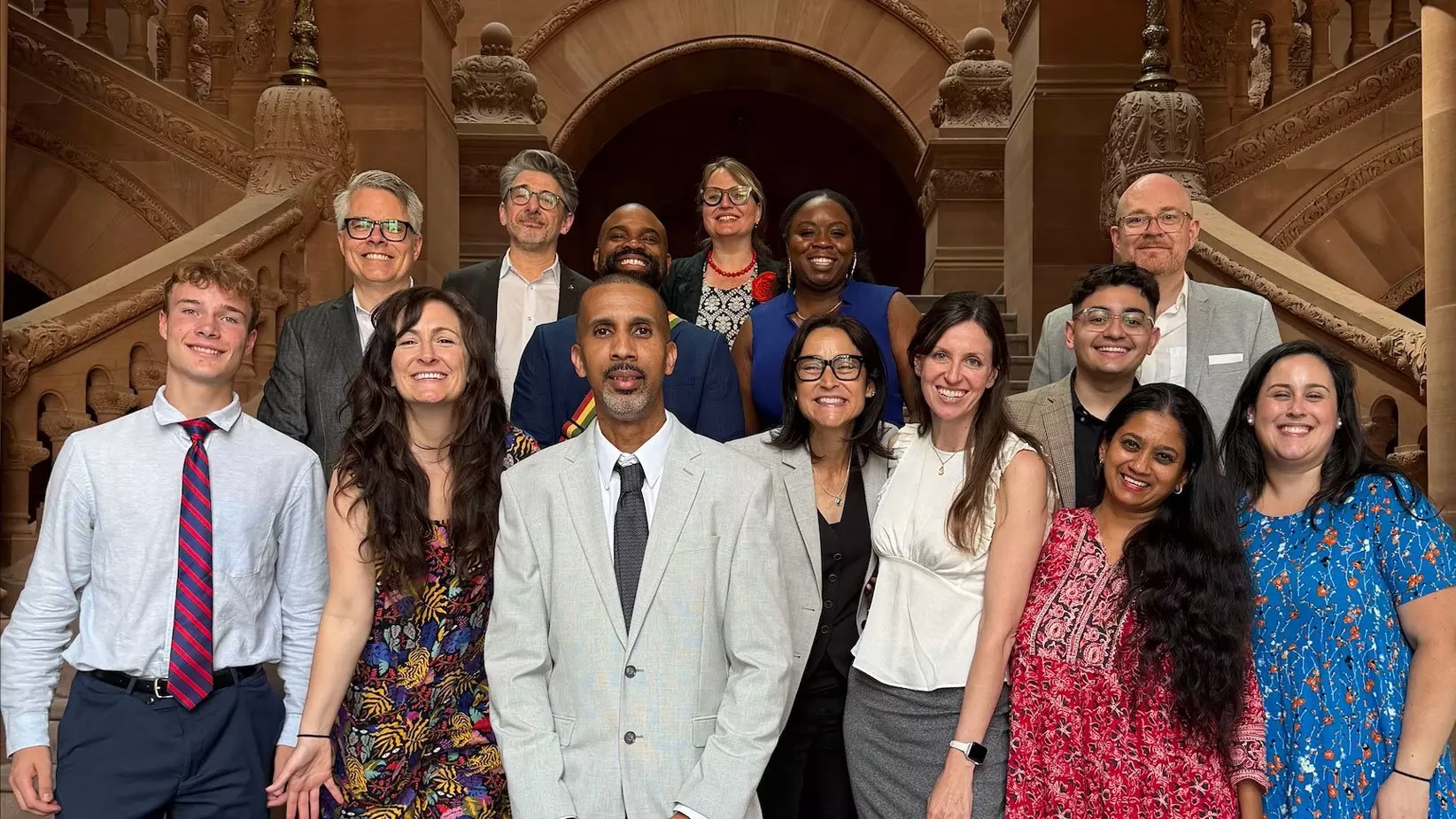
Meanwhile, on June 5, the Recording Academy’s New York Chapter convened in Albany for their own Advocacy Day, urging legislators to pass AB123 — a critical bill focused on protecting creative freedom in the courtroom.
For too long, music has been weaponized as "evidence" in criminal proceedings across the country, including in New York courtrooms.
🎶 In the effort to protect music creators from having their work used against them, @RecordingAcad members championed for AB123 to safeguard them… pic.twitter.com/b96FpbfXYk
— GRAMMY Advocacy (@GRAMMYAdvocacy) June 10, 2025
The legislation seeks to curb a troubling trend: the misuse of song lyrics as evidence in criminal trials. Across the country, and especially in New York, nearly 700 documented cases show prosecutors weaponizing creative works — often disproportionately targeting hip-hop and rap artists. AB123 would prevent artistic content from being admitted as evidence unless it is deemed directly relevant and admissible, establishing much-needed safeguards that uphold creative expression and reduce bias in the justice system.
A companion bill already passed the New York State Senate on March 3, signaling momentum for a more equitable legal standard for artists across all genres.
Whether in Washington, D.C., or at the state level, the Recording Academy remains deeply committed to advancing policies that uplift creators, protect free expression, and ensure a thriving future for music.
Want to make a difference in your state? Take action today.
