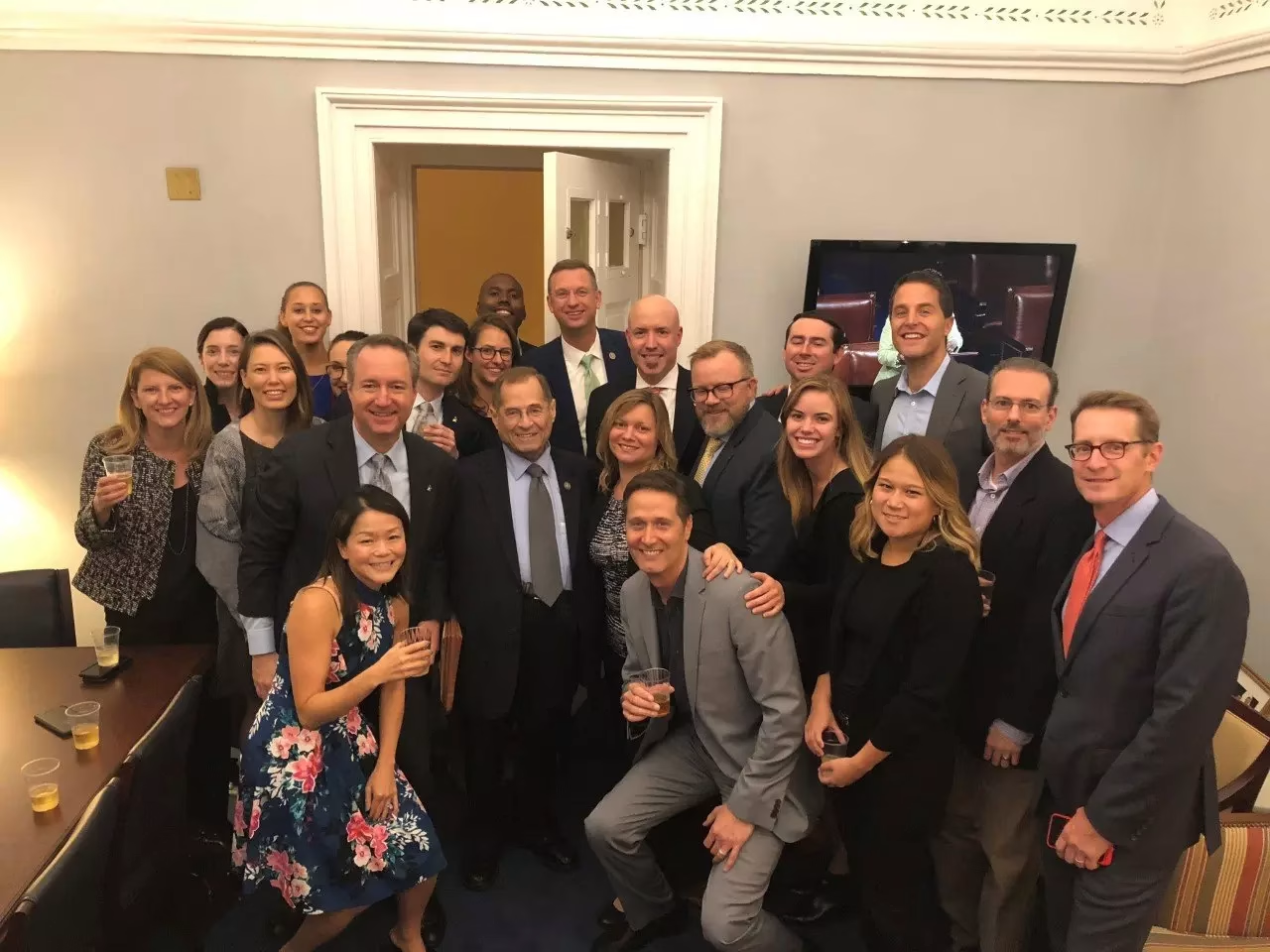
One year ago today, President Donald Trump signed H.R. 1551, the Hatch-Goodlatte Music Modernization Act, in the Roosevelt Room of the White House in Washington, D.C. The Recording Academy, along with an array of industry stakeholders and music creators, had championed the bill, which unites provisions from across the music community under one legislative umbrella to ensure advancement and protections for all music creators.
So, what has the Music Modernization Act (MMA) accomplished in the last 12 months? Here’s a glance:
For songwriters, the MMA creates a new and transparent collection entity to ensure that they always get paid for mechanical licenses when digital services use their work. It also lets ASCAP and BMI secure fairer rates for their songwriters and establishes fair compensation for songwriters when the government sets rates in Copyright Royalty Board (CRB) proceedings.
With the designation of the new Mechanical Licensing Collective earlier this summer, a better and fairer system for songwriters is well underway. The MLC opens its doors on Jan. 1 2020, and will begin payouts to songwriters on Jan. 1, 2021. The Recording Academy was instrumental in the designation of the MLC, and is continuing to work with the MLC and the Copyright Office to ensure all songwriters get paid fairly and timely.
“The Recording Academy congratulates the MLC, Inc. on its selection to run the new Collective, and thanks the Copyright Office for its diligence in its selection process that reflects attentiveness to the Academy’s comments," Recording Academy Chief Industry, Government and Member Relations Office Daryl Friedman said. "The Academy now looks forward to utilizing its Chapters and thousands of members to assist the MLC in songwriter outreach to ensure the Collective’s success."
As for artists, the MMA closed the "pre-1972 loophole," meaning that digital services are now paying legacy artists for sound recordings fixed before Feb. 15, 1972. The quirk in the law that had denied older artists fair compensation has been eliminated to ensure level compensation no matter when an artist first laid down a track. The Copyright Office issued final rules and regulations for “classic” recordings earlier this year. Artists of all ages will also benefit from the establishment of new fair market guidelines for government set royalty rates in future CRB proceedings.
Meanwhile, for studio professionals, the MMA grants copyright protection to producers, mixers and engineers for the first time in history, ensuring that those “in the booth” have a permanent right to collect their fair share of royalties. Copyright protection for studio professionals had long been a goal of the Recording Academy.
The Recording Academy first called for this comprehensive update to music legislation in 2014 during GRAMMYs On The Hill, with former President and CEO Neil Portnow testifying before Congress shortly after, encouraging stakeholders to work with lawmakers on the introduction of a consensus solution.
Since then, the Academy has been tirelessly advocating for its support.
District Advocate Day 2019: Music Creators Raise Their Voices Across The U.S.
"Conversations in Advocacy" is your weekend digital tip sheet on music advocacy and the policies that affect music makers and their craft. New installments post every Friday.