
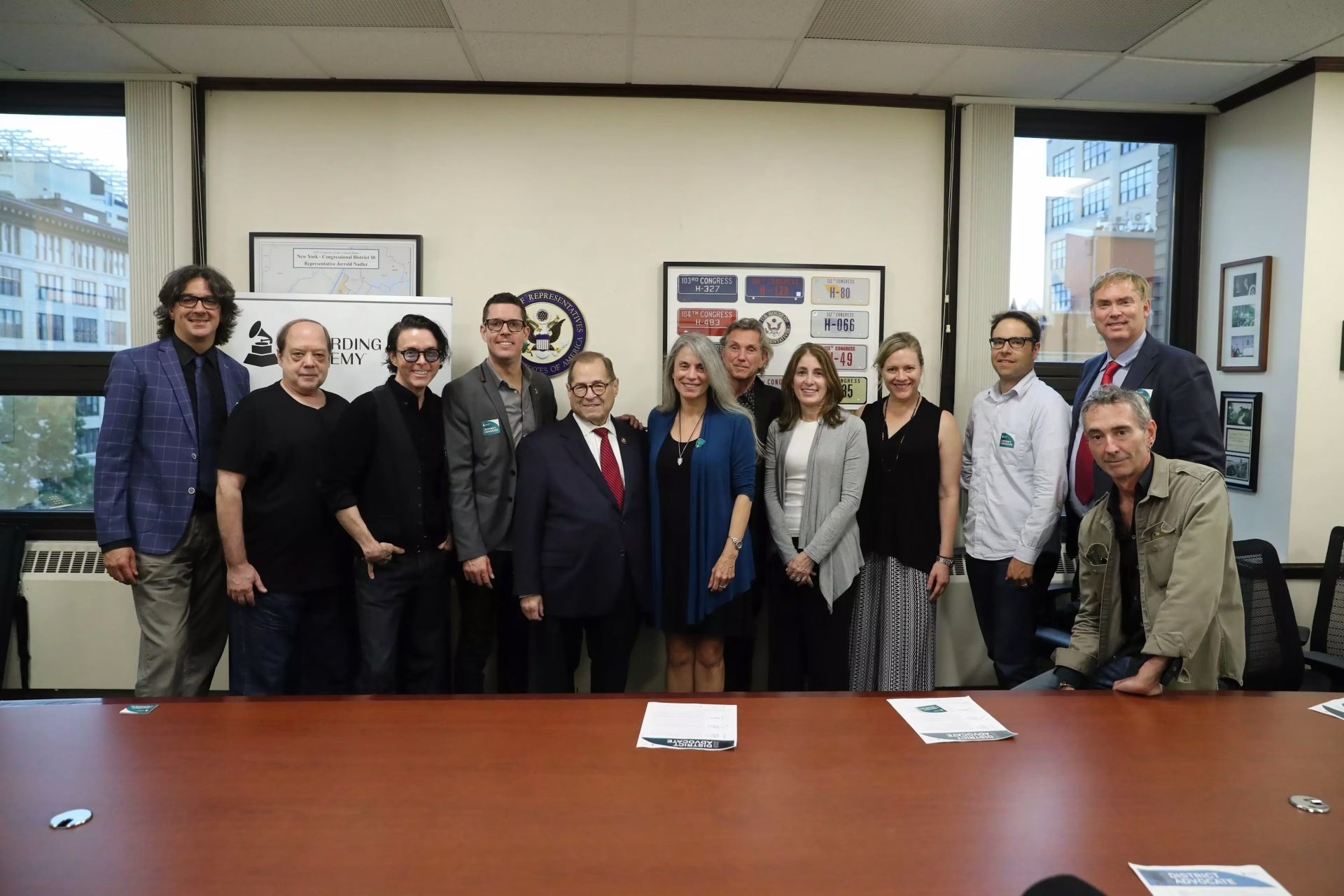
House Judiciary Chairman Jerry Nadler (D-N.Y.) addressed music creators’ next big challenge during his Oct. 3 visit to New York University last week: terrestrial radio and music performance rights.
The chair, who is known for championing the rights of music creators, spoke recently as a part of a new lecture series from NYU Steinhardt’s Business program named after Ralph S. Peer, renowned 1920s talent scout, music engineer, producer and publisher. The discussion was moderated by National Music Publishers’ Association president and CEO David Israelite.
Currently, AM/FM radio is the only music platform that does not pay artists, musicians or studio professionals for their sound recordings. They don’t even need to seek the artists’ permission before playing their music. As musicFIRST explains: “Music services like Spotify, Pandora and Apple Music pay performers for playing their songs, yet there is exactly one music platform in the U.S. (actually, in the entire developed world) where the principle of fair pay for one’s work does not apply: broadcast radio.”
Nadler said negotiations are underway with the National Association of Broadcasters (NAB), which has fought to keep the status of royalties on terrestrial radio the way they are.
“Although they haven’t come to an agreement, we’re still pushing those negotiations,” he said, according to Variety. “But at some point I think we will get some version of [performing rights], because the NAB and their people will see that their interest is less adversely effected than it was previously, and that’s an ongoing process.”
Nadler was one of the key forces behind the passing of the Music Modernization Act last October, which brought comprehensive reforms to music licensing.
The chair made it clear that unity was essential to its passing and that music creators’ rights "don't tend to fall along party lines," Billboard reports.
In terms of performance royalties for AM/FM radio, which was not included in the Music Modernization Act, Nadler is hopeful.
"I certainly hope we can win this fight," he said. "As terrestrial radio becomes relatively less important and streaming becomes more, the question is the extent to which broadcasters will see their interests as less opposed to performance rights. At some point, I do think we will get some [agreement], because the National Association of Broadcasters (NAB) and their people will see that their interests are less adversely affected than previously."
