Let's get this straight… the National Association of Broadcasters (NAB) wants to have it both ways: the right to play others’ sound recordings for free and without consent while requiring for consent and payment for retransmission of their own programming. It doesn't add up.
At a pair of Congressional hearings this week, NAB president and CEO Gordon Smith testified on behalf of broadcasters, fighting back against already below-market licensing rates while defending the rights of those making creative works for television. The catalyst for the discussion at hand is Congress' debate over the reauthorization of the Satellite Television Extension and Localism Act (STELA), which allows satellite companies to license and transmit broadcasters' content to underserved markets via a compulsory license. The situation set an ironic – if not blatant – stage for calling the NAB's hypocrisy on copyright into direct question.
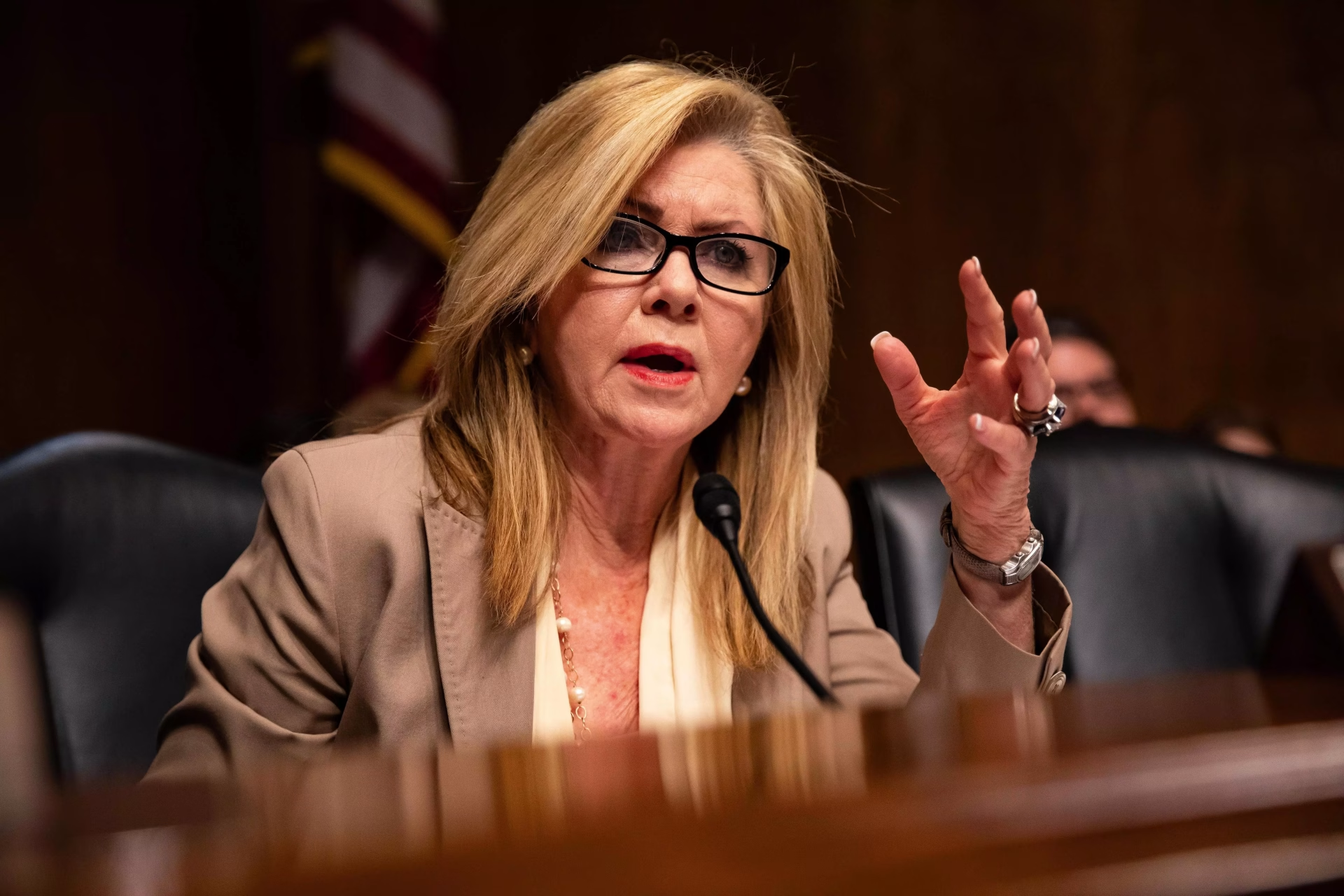
Senator Marsha Blackburn (R-TN) raised the pressing question, asking Smith, "Could you help me understand why you think that consent should be required for retransmission of TV broadcast but not also for radio transmission of sound recordings where the copyright is owned by third parties?"
Smith's answer attempted to both dodge the question, saying, "Congress certainly has the ability to change that [law] if it will," and play the age-old free promotion card, claiming, "We provide tremendous value in terms of advertising for new songwriters." but Sen. Blackburn was able to quickly bring the focus of the debate back to the position held by the NAB.
"Shouldn't your position be that it should be like policy for like policy," Sen. Blackburn asked, point blank, "and both [television broadcasts and music sound recordings] should be protected by copyright?"
Of course, Smith and the NAB's answer to this is hinged on serving the economic needs of "mom and pop" radio stations, painting a skewed picture of the $17 billion radio industry where big radio corporations, owning hundreds of stations across the country, control half the revenue.
Ironically, the NAB complains that STELA treats their creators' rights the same way they treat music creators' rights. "The time has come to stop subsidizing billion-dollar satellite companies," they write. But broadcast radio's current subsidy shields billion-dollar radio broadcasters from paying music creators for their work.
Fair is fair, and it is time for to level the playing field and hold terrestrial radio to the same standards as other music listening services (such as Spotify, Pandora and Apple Music), cable and satellite radio, all of whom pay performers for playing their songs, plain and simple. Or as Sen. Blackburn optimistically concluded her questioning, "I would hope that we can reconcile these positions."
How It Really Works: Songwriter Sam Barsh On Success In The Streaming Age