
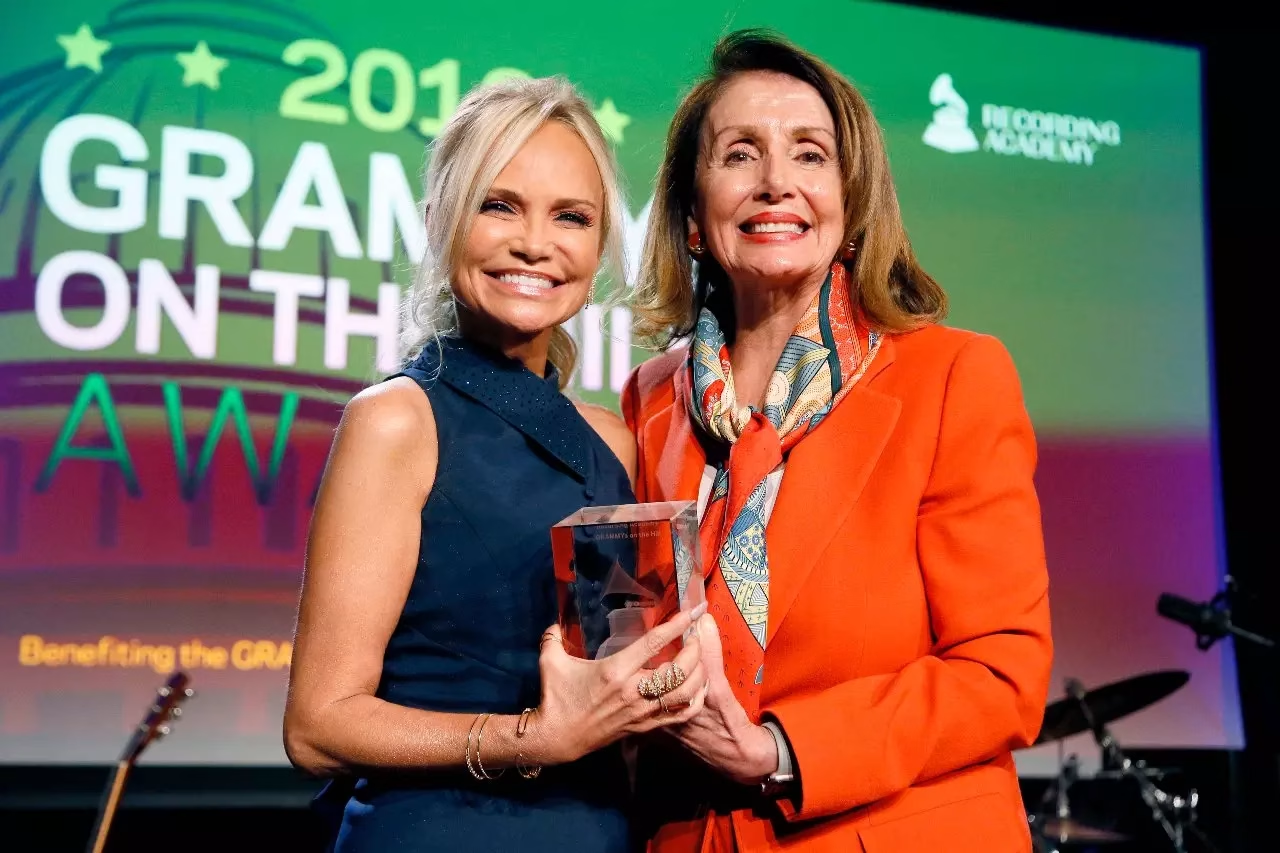
This January, not only will a new Congress begin, but so will a new era for Democratic Leadership. Speaker Nancy Pelosi (D-CA), who has served as leader of the Democratic party since 2003, announced on November 17 that she will step down from her role as head of the House Democrats, but will continue on to serve as Representative to the people of California's 12th District.
Despite her time as party leader coming to an end, the impact Speaker Pelosi had — especially on the music community — will continue to be felt for years to come.
Speaker Pelosi, a longtime champion for creator's rights, has been a crucial player in getting pro-music legislation passed in the House. The Speaker has also attended numerous Recording Academy Advocacy events such as the GRAMMYs on the Hill Awards Dinner, where she was honored in 2014 for her dedication to upholding the rights of music creators.
She has also participated in multiple GRAMMYs on the Hill Advocacy Days, including giving a welcome speech during her first Speakership in 2010 and meeting with Recording Academy members such as Yolanda Adams, Martina McBride, and Smokey Robinson to discuss issues relevant to the music community over the years.
While delivering her 2010 remarks, Speaker Pelosi expressed her support for ensuring that creators are compensated for their work.
Pelosi said, "In coming to Congress today, you are sending a message too often lost outside the recording studio, in the political debate, or on the airwaves — that ideas, music and imagination are as valuable as any material invention. And artists deserve to be compensated for their work and rewarded for their contributions to our economy and our culture."
In Pelosi's most recent term as Speaker, she has continued to be a vocal supporter of the arts and has been pivotal to the passing of legislation benefiting music creators.
At the 2019 GRAMMYs on the Hill Awards, Speaker Pelosi commended the Recording Academy and its members for the "tireless advocacy work of artists...for the aid of America's music professionals" in the passage of the Music Modernization Act.
In 2019, she brought the Copyright Alternative in Small-Claims Enforcement (CASE) Act to the floor, which led to its passing through the House by a vote of 410-6. Ultimately, the CASE Act became law a year later after its inclusion in a COVID relief package — also under Pelosi's leadership.
Additionally, during Speaker Pelosi's leadership throughout the pandemic, multiple other relief packages that that included necessary aide for music creators were passed through the House and became law including the Coronavirus Aid, Relief, and Economic Security (CARES) Act and the American Rescue Plan, and the establishment of the Shuttered Venue Operator Grants (SVOG).
Combined, these important relief efforts poured billions of dollars of direct assistance into the music community in need — including unemployment for out of work music makers, loans for music small businesses, and grants for music venues and performance spaces.
With just a few weeks left in her tenure as Speaker, the Recording Academy knows that she will continue to fight for music makers in any final pushes to pass legislation —like the HITS Act and PEACE Through Music Diplomacy Act—into law in the waning days of the 117th Congress.
All this to say, the evidence is clear — Speaker Pelosi has had a vast impact on the music community and her legacy as a determined and successful leader will remain long after her time in leadership concludes.
