
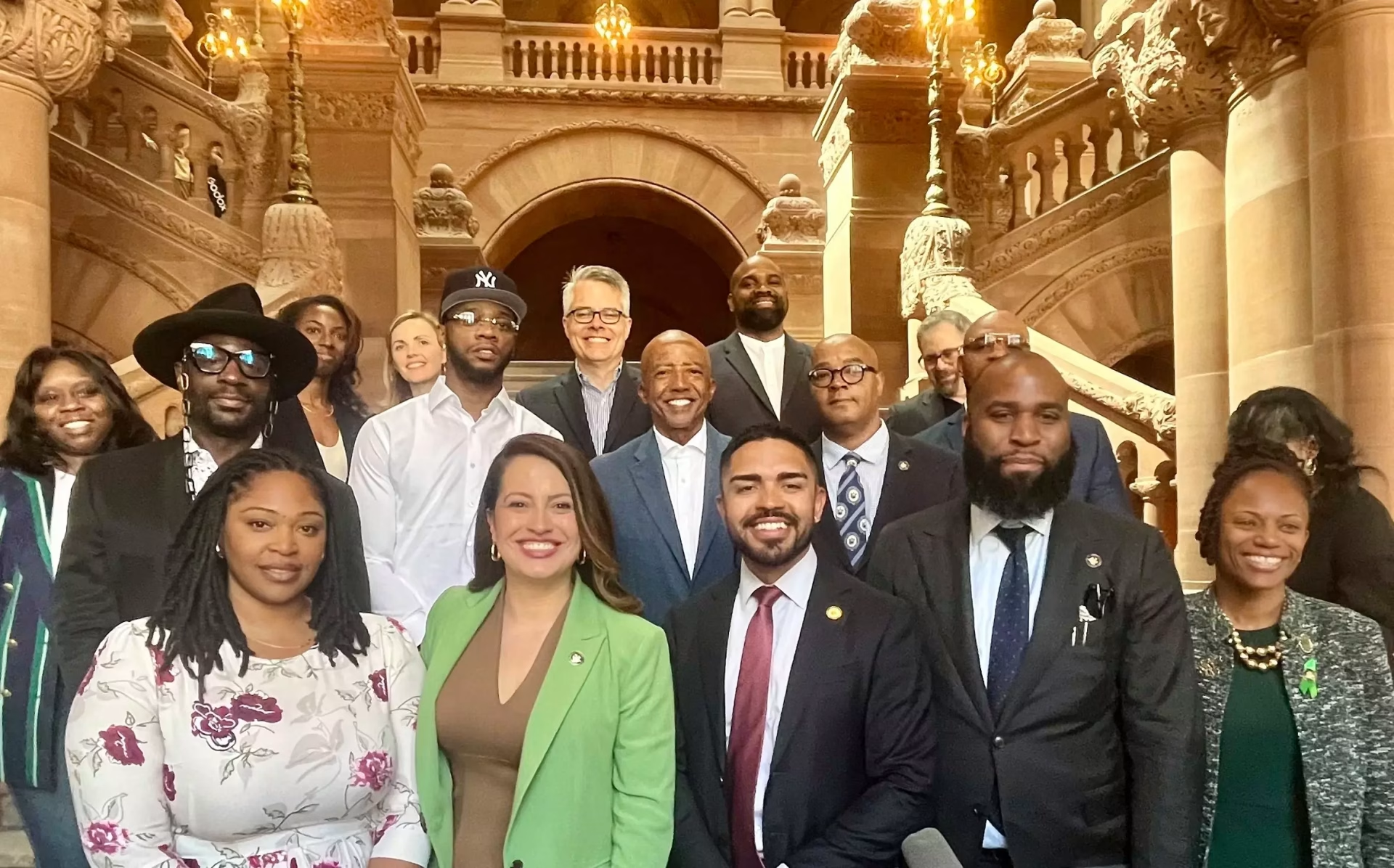
On Tuesday, May 7, members of the Recording Academy’s New York chapter took to the state capitol in Albany. Their mission? To advocate for the passage of A.127, a crucial piece of legislation designed to safeguard the creative works of artists across New York.
At the heart of A.127 is the protection of artistic freedom during legal proceedings. The bill, which has already passed in the Senate, seeks to create standards for when an artist's creative work may be used in criminal trials. If enacted into law, this measure would be a significant step towards ensuring that creators can express themselves freely without fear of their work being weaponized against them.
During the Albany Advocacy Day, Recording Academy advocates held meetings with the Assembly Speaker, Carl Heastie, Codes Chairman, Jeffrey Dinowitz, Assembly sponsor, Catalina Cruz, along with key members of the Assembly Codes Committee including, Gary Pretlow, Andrew Hevesi, Linda B. Rosenthal, John Zaccaro, Jr., Kenneth Zebrowski. In addition to these meetings, Recording Academy members met with Lieutenant Governor Antonio Delgado, the powerful Assembly Black, Hispanic, and Puerto Rican Caucus, and the Assembly Codes Staff. Many key Senators stopped by meetings to reiterate their support for the legislation, including Senate sponsor and Codes Chair, Jamaal Bailey.
Advocates included New York Chapter President Torae Carr, iconic rap artist and producer Papoose, producer and composer Ray Angry, and CEO of 300 Entertainment Kevin Liles. Additionally, Granville Mullins, GRAMMY Nominated Songwriter/Musician, Nathaniel Reichman, GRAMMY Nominated Producer/Mixer, Cassandra Kubinski, Singer/Songwriter, William Derella, Artist Manager and Lynn Gonzalez, Partner, Granderson Des Rochers, LLP were in attendance.
While leaving Albany, Papoose shared an impassioned plea to his followers on Instagram to support the effort.
Just one week later, on May 14, the Assembly Codes Committee advanced the bill out of committee to the Rules Committee, Chaired by the Speaker, priming it for full consideration by the Assembly in the coming weeks.
One of the key issues Academy advocates highlighted in their meetings regarding A.127 is the disproportionate impact that the current practices have on certain communities, particularly Black and Brown artists, who often find their work unfairly scrutinized and misinterpreted in legal settings. While the legislation is not genre-specific, it acknowledges the historical targeting of hip hop and rap artists and seeks to rectify this by requiring prosecutors to show the relevance and admissibility of creative works in court.
The significance of A.127 cannot be overstated, particularly in a state as culturally rich and economically influential as New York. The music industry is a large part of the state's economy, providing over 200,000 jobs and contributing close to $20 billion to its GDP. With a vibrant community of 129,000 songwriters, New York needs to enact this critical legislation that will protect the state's music community.
The Recording Academy’s continued advocacy for A.127 only further highlights the Academy’s dedication to protecting the rights of music creators and upholding the fundamental principles of free expression. As the bill moves forward, it is essential for lawmakers to recognize the importance of protecting creative freedom and ensure that New York remains a beacon of artistic expression.
