
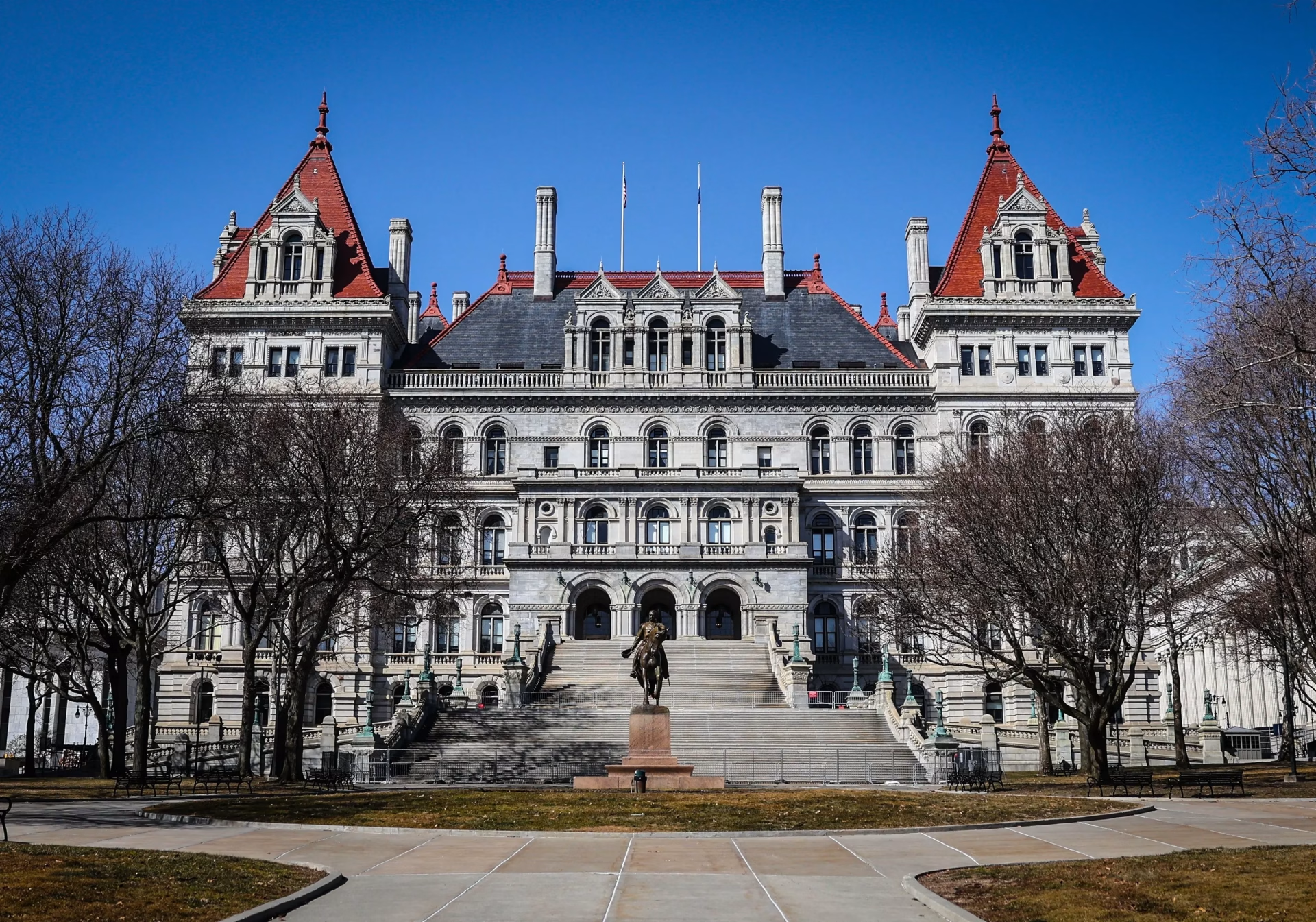
In a significant stride towards protecting musicians' creative expression, the New York State Senate passed S. 1738 on March 27. This bill is aimed at safeguarding the free speech of artists, a fundamental part of making music. The Recording Academy has been a staunch advocate of S. 1738, working to advance the legislation in the last two legislative sessions of 2022 and 2023.
Led by Senators Hoylman-Sigal and Bailey, the senate passage of S. 1738 continues the forward momentum for free expression in New York, signaling the state senate’s commitment to upholding the fundamental rights of creators to express themselves through their art. The legislation stipulates that a defendant's artistic works, such as song lyrics, cannot be used as evidence against them in a criminal trial unless it can be proven beyond reasonable doubt that these expressions are admissible.
Researchers have identified nearly 700 cases where lyrics have been used as evidence against hip hop artists, including several dozen in New York. Protecting the First Amendment rights of New York artists is critical to prevent a chilling effect on the state’s music community that plays a vital role in the economic landscape of New York. The music industry in New York contributes close to $20 billion to the state's GDP annually, supporting over 200,000 jobs. From iconic recording studios in New York City to vibrant music scenes in upstate cities like Albany and Buffalo, the state's diverse music community contributes to its reputation as a global hub for creativity and innovation. New York attracts millions of visitors each year to experience live performances, music festivals, and other events throughout the state.
The Recording Academy's support for this legislation in New York is part of a broader effort to champion similar legislation across the country at the state level. In California and Louisiana, the Recording Academy played a pivotal role in passing new laws that solidified the protection of creators' free speech rights. Additionally, in Maryland, Missouri, and Georgia, the Academy has been advancing similar legislation. A recent Advocacy Day in Annapolis, supporting the PACE Act, allowed Recording Academy members from Maryland to meet with legislators and urge them to protect creative and artistic expression.
At the federal level, the Recording Academy has been advocating for the Restoring Artistic Protection Act, also known as the RAP Act since its introduction. Just like at the local level, this legislation aims to protect the First Amendment rights of artists nationwide. Recording Academy CEO, Harvey Mason jr., and Chair of the Recording Academy's Black Music Collective, Rico Love, released a statement during the introduction of the RAP Act in 2022:
"Today's introduction of the RAP Act in the House of Representatives is a crucial step forward in the ongoing battle to stop the weaponization of creative expression as a prosecution tactic," they stated, “ and we will continue to work…to advance the protections in this bill that ensure all artists can create freely without fear of their work being criminalized."
Now, with the successful passage of S. 1738 in the New York State Senate the Recording Academy will continue to work with Academy members to help advocate for this necessary legislation, including bringing Academy members to Albany next month to advocate for the bill’s passage through the state assembly. Ultimately, the goal is to see S. 1738 signed into law, providing much-needed protections for musicians and affirming New York's commitment to upholding the principles of free speech and artistic expression.
As the legislative journey continues, Recording Academy advocates will continue to advance this critical piece of legislation and ensure that the voices of musicians are valued and protected in the state of New York.
A Victory In Tennessee: Governor Bill Lee Signs The ELVIS Act Into Law
