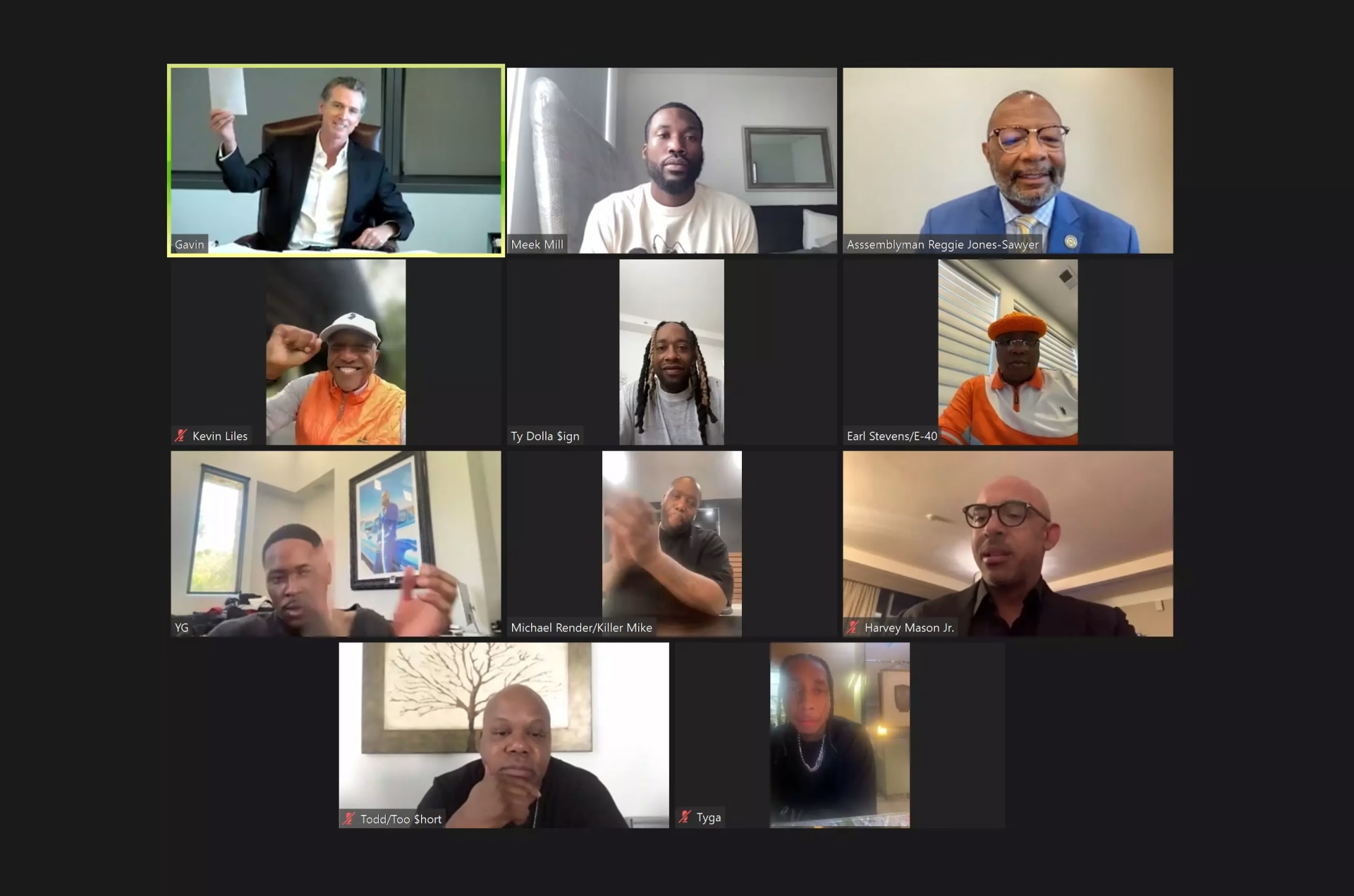
In a virtual signing ceremony on Sept. 30, 2022, California's Gov. Gavin Newsom signed AB 2799 — or the Decriminalizing Artistic Expression Act — into law. The act significantly limits the extent to which creative works can be used against their creators during civil and criminal proceedings.
Hip-hop artists Killer Mike, Meek Mill, Too $hort, Ty Dolla $ign, YG, E-40 and Tyga appeared at the virtual bill signing ceremony and spoke to the cruciality of AB 2799. Also joining the signing ceremony was Recording Academy CEO Harvey Mason jr.
This historic victory for all music people — unanimously approved by both the California Senate and Assembly — has a major impact beyond the ongoing fight for freedom of speech. More narrowly, it carries weight in the hip-hop community, protecting the rights of hip-hop artists to express themselves freely without fear of legal reprisal.
Under the new law, song lyrics will be inadmissible as evidence in court cases unless the words are directly relevant to the case in question and won't inject racial bias into the proceedings. Furthermore, the law requires that courts consider testimony from experts in the artistic field being considered by prosecutors, such as testimony that illuminates the racial biases against said fields.
"Today we celebrate an important victory for music creators in the state of California," said Harvey Mason jr., CEO of the Recording Academy. "Silencing any genre or form of artistic expression is a violation against all music people. The history that's been made in California today will help pave the way forward in the fight to protect creative freedom nationwide.
"We extend our gratitude to Assemblymember Jones-Sawyer for his leadership on this issue," Mason jr. continued, "and to Governor Newsom for recognizing the importance of protecting artistry and signing the Decriminalizing Artistic Expression Act into law."
CA is the 1st state to ensure creative content - like lyrics & music videos - can't be used against artists in court without judicial review.
Thanks, @JonesSawyerAD59 for your work & @yg @KillerMike @tydollasign @Tyga @MeekMill @E40 @TooShort for your dedication to the cause. pic.twitter.com/cpOSCiHh0X
— Governor Gavin Newsom (@CAgovernor) September 30, 2022
In a press release, the Black Music Action Coalition called the bill a "crucial step in the right direction," citing Young Thug and Gunna's lyrics being used against them in an ongoing RICO trial.
And for her part, Dina LaPolt, an entertainment attorney and co-founder of Songwriters of North America, stated, "This legislation sets up important guardrails that will help courts hold prosecutors accountable and prevent them from criminalizing Black and Brown artistic expression.
The road to the signing of the Decriminalizing Artistic Expression Act involved — among so many other points of public advocacy for championing AB 2799 — testimony from the Recording Academy's Acting Chief Advocacy and Public Policy Officer, Todd Dupler, delivered to a California Senate committee in June 2022.
"No matter the musical genre, whether rock, or punk, or country, or hip-hop, and no matter the medium, every artist should be able to express themselves freely without fear of reprisal from the justice system simply because of the content of their art or because of biases held against their chosen art form," Dupler stated.
"If left unchecked and unaddressed," he added, "this practice will create a chilling effect on all forms of artistic expression and cripple the crown jewel of California's economy."
About two months later, the Boards of Governors of the Los Angeles and San Francisco chapters of the Recording Academy sent a letter to Gov. Newsom on behalf of their 6,500 combined members, exhorting him to sign into law the Decriminalizing Artistic Expression Act.
"Music, literature, film, and other works of creative expression should be protected by the First Amendment," the joint letter read. "By signing AB 2799, California will not only take an important step in protecting the creative community, it will once again lead by example and set the standard for the rest of the nation."
The Decriminalizing Artistic Expression Act's signing into law in California paves the way for consideration of the federal RAP Act — or Restoring Artistic Protection Act — in Congress. The RAP Act would provide similar protection of artistic works in federal court. For more information on the RAP Act, click here.
The Recording Academy celebrates the historic passage of this bill, which will safeguard artists' right to free self-expression without fear of legal recourse — and looks forward to how similar bills, including the RAP Act at the federal level, will advance the fight for all music creators.