
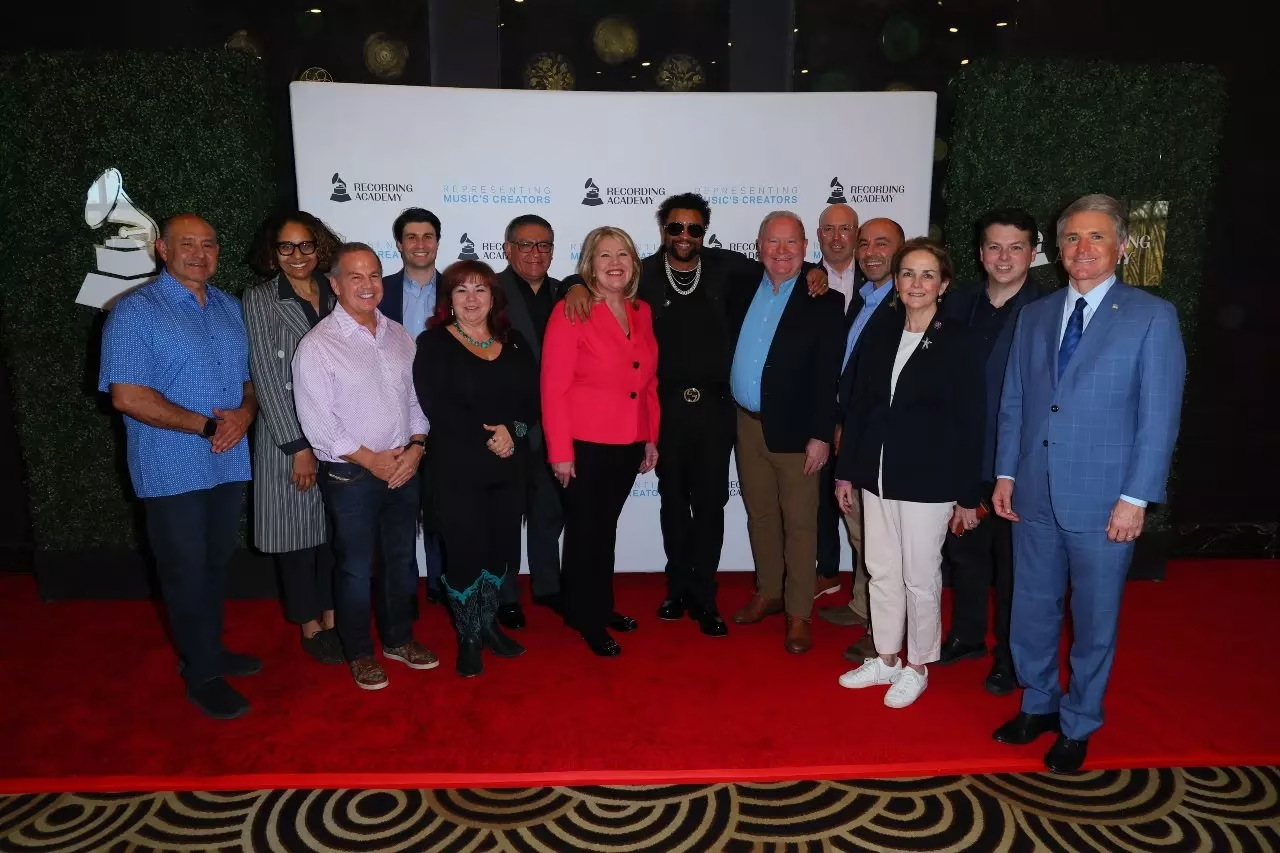
During this year's GRAMMY Week, the Recording Academy Advocacy team gathered with Members of Congress, congressional staff, and music creators for our annual congressional briefing series.
GRAMMY Week provides a unique chance for members of Congress to hear directly about the issues that affect the music community, leaving the bipartisan group with a firsthand look at what passing pro-music legislation, such as the American Music Fairness Act (AMFA) and the Help Independent Tracks Succeed (HITS) Act, could mean for the community.
This year, the Advocacy team had over a dozen Members of Congress join from both sides of the aisle, including House Foreign Affairs Chairman Michael McCaul (R-TX), Democratic Caucus Chairman Pete Aguilar (D-CA), Linda Sanchez (D-CA) and Larry Bucshon (R-IN).
First on the agenda was a songwriter panel including Songwriter of the Year nominees, Nija Charles and Laura Veltz, and Chair of the Recording Academy's Songwriters & Composers Wing, Evan Bogart.
The panelists discussed their individual careers, the hurdles that come with being a songwriter, and the determination necessary to succeed. However, in addition to determination, they stressed the importance for Congress to protect their rights so songwriters throughout the country can continue creating music and succeed in the industry.
Following the panel, Todd Dupler, Acting Chief Advocacy & Public Policy Office at the Academy, sat down with two-time GRAMMY winning artist Shaggy to discuss his impressive career as well as key pieces of legislation, including the HITS Act.
Shaggy's most recent album, Come Fly Wid Mi, was nominated for a GRAMMY this year, but what most people didn't know was that Shaggy, along with 17-time GRAMMY winner Sting, created this album without the backing of a record label.
This means they provided the funding for the album themselves — something independent and small artists do all the time. However, under current laws, these artists have to write off their expenses for tax purposes over a period of years, which makes an expensive project even more difficult to pull off.
The HITS Act, which is expected to be re-introduced later this month, would allow artists to fully deduct the cost of producing a new record in the year they incur the expenses rather than spreading them out over time. If the HITS Act became law, it would allow small artists to create more music by lessening the immense financial burdens that accompany the production process.
Shaggy and Dupler also discussed the American Music Fairness Act (AMFA), which was reintroduced in the House and Senate on Feb. 2nd – just days prior to the briefing. Sponsored by Reps. Darrell Issa (R-CA) and Jerry Nadler (D-NY) and Senators Padilla (D-CA) and Blackburn (R-TN), AMFA would end a decades-long loophole that allows AM/FM radio to play artists' music without compensating them.
The United States is currently one of three major countries that does not pay artists for radio play. In turn, American artists don't receive any money when their music is played on radio stations internationally. Shaggy — whose music is popular around the globe and has experienced this first hand — talked to lawmakers about how important it is to right this wrong.
The next day, Members of Congress and staff took a behind-the-scenes look at the preparations and production of the GRAMMYs telecast at Crypto.com Arena. Allowing them to witness the reality that music is more than just the famous names and voices behind the music we love but is made up of numerous backstage workers whose efforts are the reason a show like the GRAMMYs telecast is able to take place.
The weekend briefings left these congressional leaders with a better knowledge of the realities of the modern music industry, and the policies to support back in Washington to ensure a better future for all music makers.
The Senate Committee On The Judiciary Held A Hearing On Fair Ticketing: Here's What You Need To Know
