Fairly compensating music creators is a hot-button issue in the streaming era. Luckily, in 2021, some of the best minds are engaged in this conversation.
Last week, Americans for the Arts, a nonprofit organization that aims to promote the arts in the United States, held its annual National Arts Action Summit as a virtual event. The four-day summit featured a diverse slate of panelists and the Recording Academy was represented by Todd Dupler, the Academy’s Managing Director, Advocacy & Public Policy, and Michael Lewan, the Academy’s Director of Government Relations.
Also participating in the event were Reps Alma Adams (D-N-C.), Suzanne Bonamici (D-Ore.), Debbie Dingell (D-Mich.), Derek Kilmer (D-Wash.), Grace Meng (D-N.Y.), and Chellie Pingree (D-Maine), Annette Bening (Actress), Brian Stokes Mitchell (Actor/Musician), Mitch Glazier (Chairman and CEO, RIAA), and Kevin Erickson (Director, Future of Music Coalition), among others.
On Tuesday, April 6, Lewan gave music creators a voice during his panel, which was titled "Expanding Arts and Technology," and had a robust conversation with Erickson of the Future of Music Coalition and Glazier of RIAA. Lewan examined how music licensing laws impact how music is distributed across technological mediums and how unfair loopholes can result in artists and performers not being compensated for AM/FM radio play. The Recording Academy has long championed policies to establish a performance right for sound recordings on AM/FM radio, and continues to lead the fight in the current Congress.
Meanwhile, Glazier stressed the need to modernize the DMCA and detailed current efforts to increase payment for use of music on digital platforms. The panel implored attendees to contact their lawmakers and ask them to stand against the Local Radio Freedom Act (LRFA)—a misleading resolution pushed by the radio lobby that denies artists the right to receive compensation for their music played on radio.
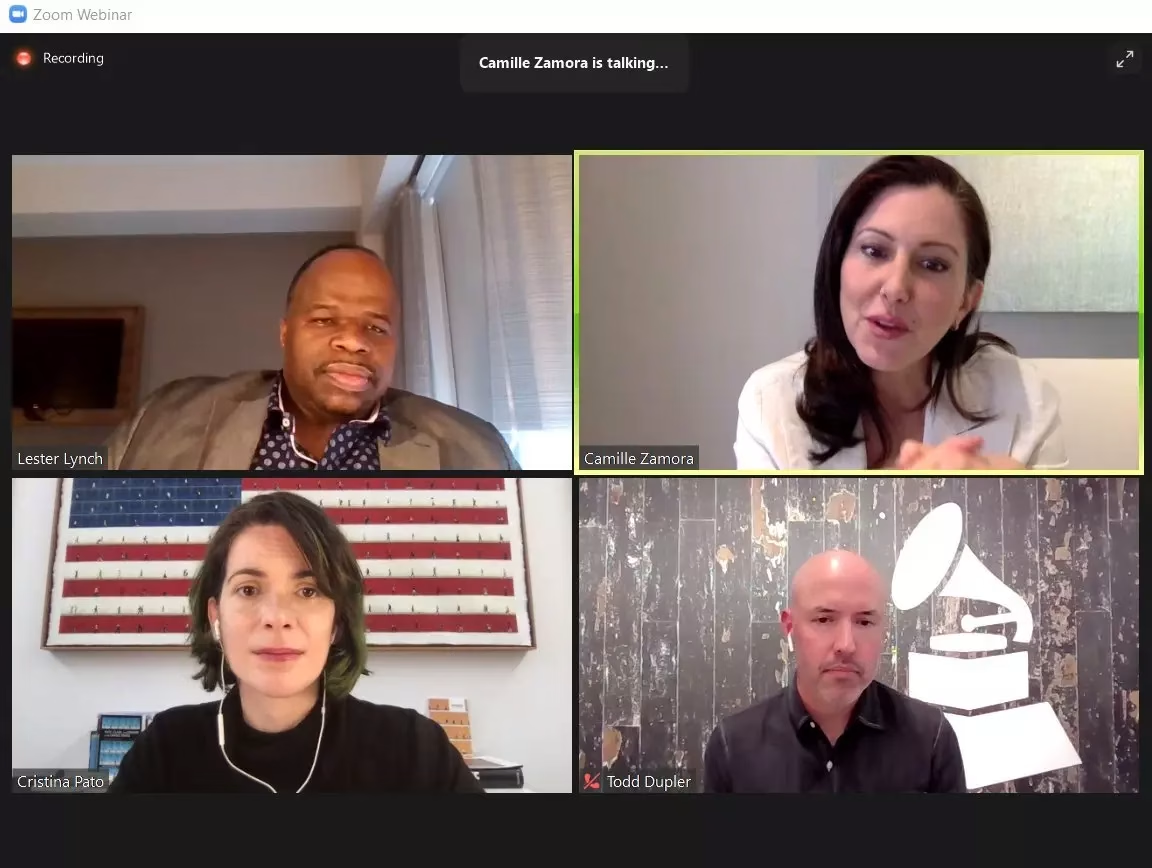
On Friday, April 9, Dupler’s panel, titled "Supporting Cultural Exchange and Visas for International Artists," included artist/writer/educator Cristina Pato, Camille Zamora of Sing For Hope, and Lester Lynch of Operatic Baritone. The four discussed the cruciality of cultural diplomacy in promoting global harmony and goodwill.
To this end, Duper underlined the need to increase funding for cultural exchange programs at the State Department and to streamline the visa process for artists traveling to the United States through passage of the Arts Require Timely Service (ARTS) Act. Pato, Zamora and Lynch gave real-world testimony as artists, touching on cultural exchange and how visa delays have hampered them in various regards.
The Recording Academy is a proud of the National Arts Action Summit, which has long given artists and organizations a platform to advocate on behalf of all music creators and form coalitions of support for creator-friendly legislative action—whether it be germane to digital media or visa reform for artists as discussed this year, or to many other top priorities affecting the arts communities like taxes, NEA funding, and arts education. The Academy thanks the Americans for the Arts for hosting this illuminating panels, and looks forward to joining their in-person National Arts Action Summit next year.
More information on the National Arts Action Summit can be found here.
Shuttered Venue Operators Grant Program Opens For Applicants