
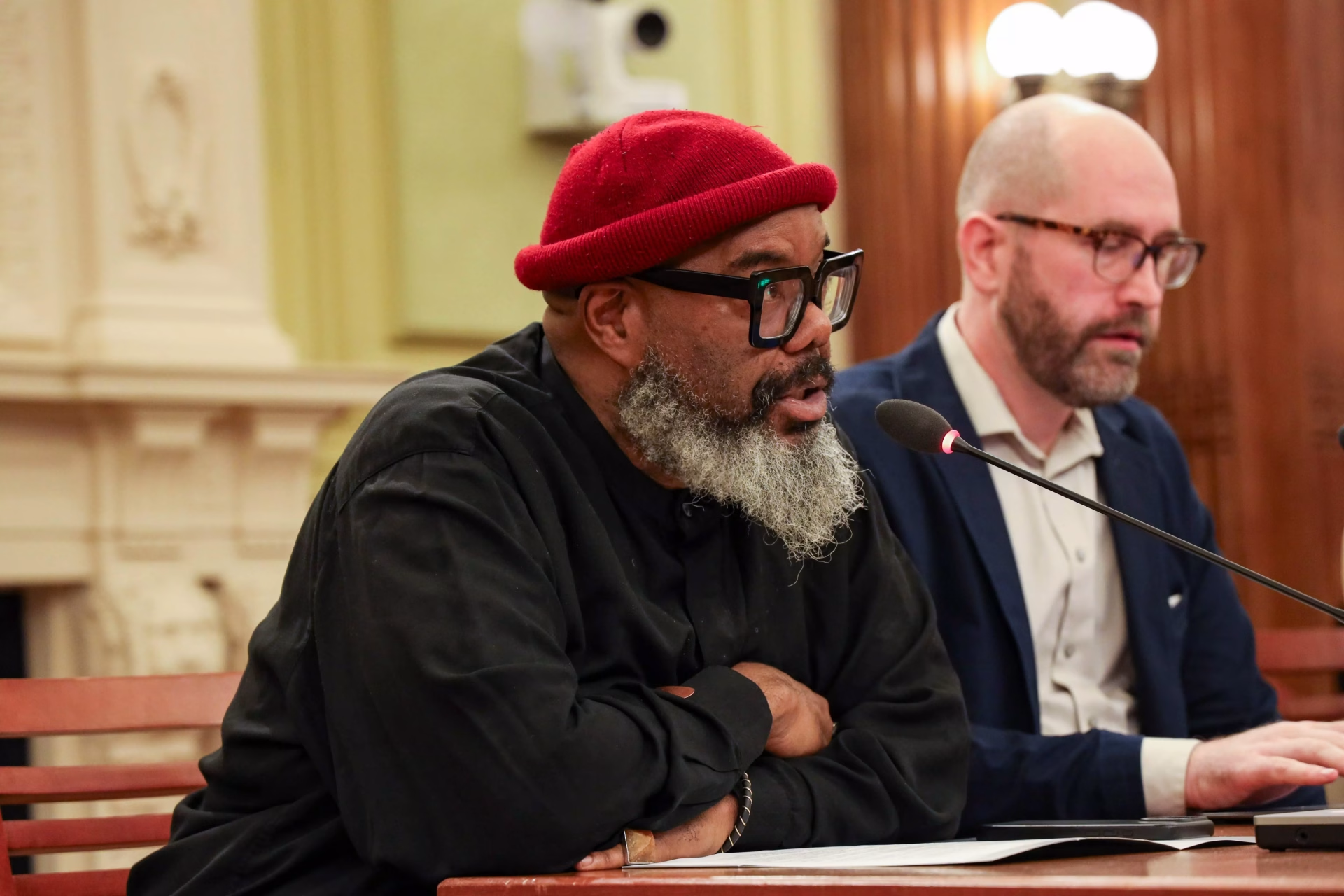
Last month, GRAMMY-nominated artist and Governor of the Recording Academy's Washington, D.C. Chapter KOKAYI testified in favor of the Restricting Egregious Scalping Against Live Entertainment (RESALE) Amendment Act of 2025 before the Washington, D.C., City Council. Introduced in April, the RESALE Act proposes some of the strongest ticketing reforms in the nation targeting unfair and deceptive resale practices.
Specifically, the RESALE Act aims to protect artists, venues, and concertgoers in Washington, D.C., from price gouging and ticketing fraud through price caps, disclosure and price itemization provisions, and registration requirements for resellers. If passed, the bill would cap resale ticket prices at 10 percent above face value, making Washington, D.C., the second jurisdiction to do so after Maine. The RESALE Act would also require sellers to disclose and itemize the total price of the ticket, including fees and taxes, upfront upon selection and mandate that resellers soliciting 50 or more tickets per year register with the Department of Licensing and Consumer Protection.
When resellers swoop in and buy up all the tickets, only to flip them for three, five, or 10 times the price, it creates the illusion that the artists are the ones cashing in. But let me be really clear: We are not.
A lifelong Washingtonian, KOKAYI's testimony before the Washington, D.C., City Council focused on his personal experiences with ticket sellers — both as a concertgoer and as a performer. "I'm an artist and a fan. I've stood in actual lines for shows and have been in these digital lines, where when I started with a ticket advertised at $45, when I click 'checkout,' suddenly it's $82," he said. "I'm hit with 'processing fees,' 'convenience fees,' 'delivery fees,' and at this point, I'm wondering if there's a 'your internet or your fingers were too slow' fee. This isn't just annoying — it's deceptive.
"When resellers swoop in and buy up all the tickets, only to flip them for three, five, or 10 times the price, it creates the illusion that the artists are the ones cashing in. But let me be really clear: We are not."
Representatives from the Academy-backed Fix the Tix coalition, the National Independent Venue Association, SAG-AFTRA, the Music Artists Coalition, and the Future of Music Coalition testified in favor of the RESALE Act. Representatives from local venues, including the 9:30 Club, Black Cat, the Howard Theatre, and Union Stage, also submitted testimony supporting the bill.
KOKAYI closed his testimony by reflecting on the human cost of upsold tickets. "I've spent over 30 years performing, collaborating, teaching, and traveling, and I've seen how music brings people together. But I've also seen how predatory ticketing drives them apart, when that kid is calling their parents to give up $500 more dollars because the better seat that was $100 in the beginning that puts them up close, they couldn't get that online because a reseller bought up the front rows to sell to the highest bidder .... It's about watching people get Beyoncé-fresh, boots, cowboy hats and clear bags, standing outside the venue in tears when that scanned ticket that they purchased online through the reseller is nonexistent or fake. That's playing with love."
The Recording Academy continues to champion policies that empower artists and fans alike, federally and locally. Want to get involved? Visit our Music Advocacy Action page to connect with your representatives, check our Recording Academy Advocacy page regularly to stay up to date on issues affecting music people, and follow our Recording Academy Advocacy Facebook page for updates on progress and next steps.
