
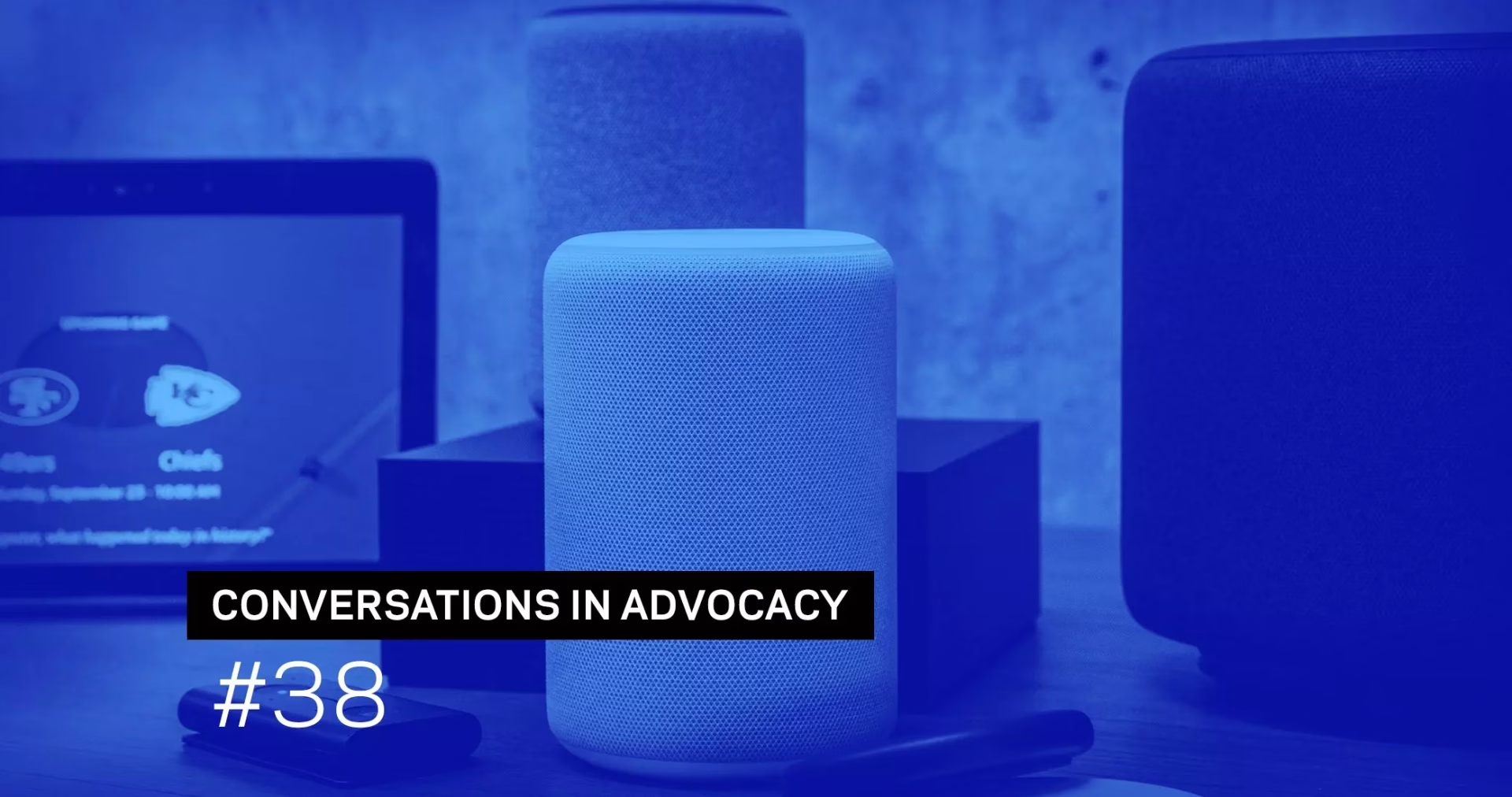
“Alexa, how can I help music creators?” —Conversations In Advocacy #38
In the land of new gadget technology, there's nothing more convenient than to be able to play music, get info on the weather, search places to eat and do many more actions that surround our lives with voice control.
<blockquote class="twitter-tweet" data-lang="en"><p lang="en" dir="ltr">Check out the all-new Echo devices that make it even easier to bring the convenience and functionality of Alexa to your home and car. Learn more: <a href="https://t.co/yobm1FjSXO">https://t.co/yobm1FjSXO</a> <a href="https://t.co/SswRk4w1U9">pic.twitter.com/SswRk4w1U9</a></p>— Amazon Echo (@amazonecho) <a href="https://twitter.com/amazonecho/status/1042883350300712960?ref_src=twsrc%5Etfw">September 20, 2018</a></blockquote>
<script async src="https://platform.twitter.com/widgets.js" charset="utf-8"></script>
The "smart speaker" has been the leader in this arena and according to Nielsen, the interest in this technology is only growing. While smart speakers like the Amazon Echo and Google home devices can help you shop, turn appliances on and off and more, users most regularly use it for playing music. 90 percent say they use it to stream music at least once weekly, continuing to make home stereos, reliant on old-fashioned radio signals, a thing of the past.
A smart speaker can be defined as "a speaker capable of anything beyond just emitting sound," according to WhatHifi.com and are wireless speakers that have a voice-control option and Artificial Intelligence also known as AI. The technology is being used in tandem with mobile devices, with 53 percent of people synching data to stream audio.
The shift in home user listening patterns could be a boon for artists and songwriters who stand to benefit the most from an increase in digital consumption of music. Traditional AM/FM radio played over a home stereo has never compensated performers and musicians with royalty payments, while their web-based alternatives and other digital platforms do pay artists fair rates. And with the recent passage of the Music Modernization Act, songwriters will now benefit from better compensation for digital streams played from smart speakers.
According to Nielsen, the trend isn’t likely to go away any time soon. Nielsen found that the embrace of smart speakers grew to 24 percent in the U.S., up two percent from the last quarter. The study was conducted on 2,000 U.S. consumers and will be done every quarter, according to TechCrunch.
Thank Your Lawmakers For Completing This Historic Achievement
