It's summer! For musicians, that means warmer weather and time for summer music festivals, family vacations, and other opportunities to travel and bring your instrument along for the ride. If you've booked a flight on a commercial airline to your destination, now's the time to refamiliarize yourself with the federal rules for flying with a musical instrument.
Thankfully, after much lobbying by members of The Recording Academy and other music organizations, the U.S. Department of Transportation issued new regulations for flying with musical instruments early last year, in accordance with the FAA Modernization And Reform Act Of 2012 (Public Law No: 112-95). Those new rules went into effect March 6, 2015, for travelers using any domestic carrier, and provide for the safe transport of musical instruments by air.
Where once there was confusion caused by different rules according to different carriers and different airports, now musicians have federal guidelines that apply across the board. So now musicians can grab their axe and go.
Here are the three primary accommodations for travelers with instruments included in the regulations:
-
- Small instruments as carry-on baggage
Instruments such as a guitar, violin or trumpet should be packed securely in a carrying case and be small enough to stow in the overhead compartment or under the seat like any other carry-on baggage. As long as the instrument fits, the airline must accept it and cannot charge additional fees.
- Small instruments as carry-on baggage
-
- Large instruments as in-cabin cargo
For an instrument that may be too large to stow in the overhead bin but too valuable or delicate to check as baggage, travelers may purchase a second seat to stow the instrument as in-cabin cargo. This is an acceptable option as long as the instrument is in a carrying case and can be safely secured to a standard airline seat. However, if an airline does not have a program that provides for the purchase of a separate ticket for cargo, the airline does not have to specifically accommodate a musical instrument.
- Large instruments as in-cabin cargo
-
- Large instruments as checked luggage
If an instrument is too large to carry on or occupy its own seat, an airline must accept the instrument as checked baggage as long as it complies with federal size and weight guidelines. Specifically, the sum of the length, width and height of the instrument (including the case) cannot exceed 150 inches and the weight of the instrument cannot exceed 165 pounds. If the instrument exceeds these measurements, the airline may still accept it but the airline is not required to do so and the instrument may be subject to additional fees.
- Large instruments as checked luggage
To take advantage of these new regulations, keep in mind these important tips:
-
Make your travel plans as far in advance as possible. Familiarize yourself with the airlines' travel and carry-on policies. Remember that the size of overhead bins vary with different aircraft. Know the dimensions of your instrument to make the best decision on how to transport it. Let the airline know you will be traveling with an instrument and specify which of the three ways you plan to transport the piece.
-
Overhead storage space is at a premium and is available to all passengers on a first-come, first-served basis. Airlines are only required to treat a musical instrument like any other piece of carry-on luggage, so while an airline cannot discriminate against your musical instrument, it has no obligation to prioritize it either. If you plan to carry on your instrument, make sure you arrive at the gate early for flights with zone boarding. Even better, enroll in your airline's frequent flier or loyalty program to take advantage of early check-in and priority boarding privileges.
-
If you are buying a separate seat for your instrument, you must book the seat directly beside you. Let the airline know you are traveling with an instrument in the second seat. Make sure you know the exact dimensions (height, width, weight) of your instrument and share that information with the airline as well. Then confirm your seat assignments to be sure you have two seats together. While airlines may not charge more than the seat price for an oversized instrument, there may be a fee for obtaining pre-flight seat assignments. Also, don't bring bungee cords or your own paraphernalia to strap your instrument into the seat. The flight crew will have appropriate equipment to safely secure the instrument.
-
If you plan to check your instrument with regular baggage, make sure you know its dimensions and have it securely packed. Arrive early to provide plenty of time for baggage check-in. Musical instruments checked as baggage can be charged the same fees as other checked baggage, but they may not be charged more.
-
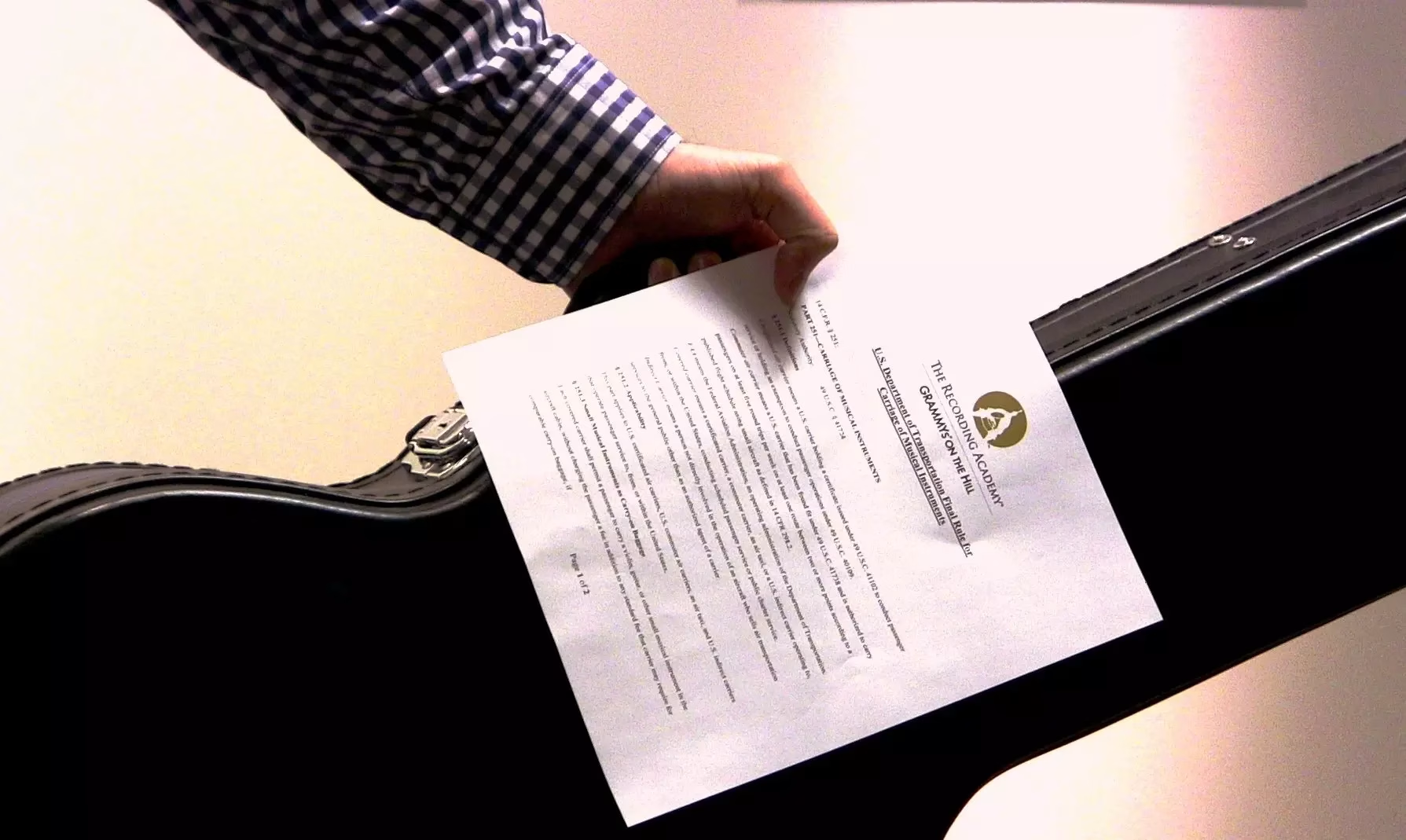
Print out a copy of the Final Rule Regarding Carriage Of Musical Instruments. Keep it with you when you travel for easy reference if you encounter an airline employee who is unfamiliar with the new rules. If an airline employee attempts to dispute your plans for traveling with your instrument, stay calm and ask for a customer service supervisor. Don't challenge or become hostile with the flight crew. For serious disputes, file a complaint with the Department of Transportation and with the airline.
Enjoy your summer travel plans!
For additional information, visit:
Printable Copy of the Federal Rule
Press Release from the U.S. Department of Transportation
FAQs Provided by the U.S. Department of Transportation
Full Text of Final Rule as Printed in the Federal Register