
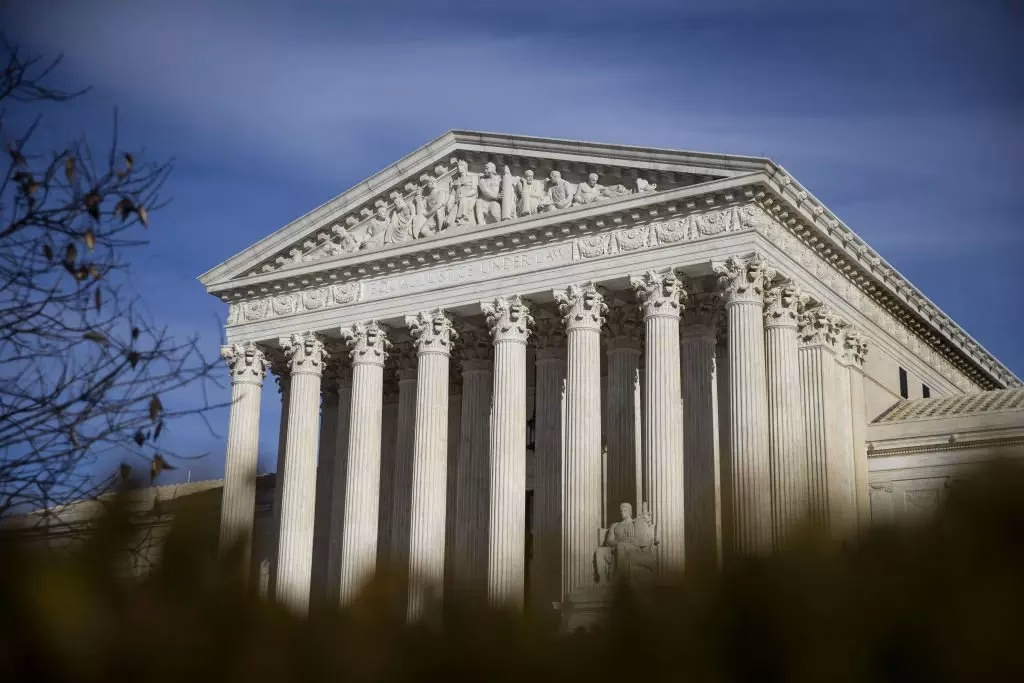
On March 4, the U.S. Supreme Court unanimously affirmed a lower court ruling that narrowed the definition of making a "registration" with the Copyright Office, requiring federal processing to be completed by the agency before permitting the judiciary to deem that a work has been registered. Justice Ruth Bader Ginsburg wrote the opinion in the case titled Fourth Estate Public Benefit Corp. v. Wall-Street.com, LLC.
While some provisions for pre-registration copyright enforcement exist, the logic of her ruling makes clear that a strict interpretation of the statute prevents mere copyright applications for registration from being given the same status as those completely processed by the Copyright Office itself. The delay this forces on the music community is likely to be damaging, and new litigation can be expected to address the need for more robust enforcement provisions during what is now clarified as the pre-registration period.
The Copyright Alliance, Authors Guild, and RIAA all expressed their unhappiness with the outcome.
"We are disappointed in the Supreme Court's ruling requiring the Copyright Office to issue a registration certificate before meaningful action may be brought by creators to enforce their rights in court," said RIAA Chairman/CEO Mitch Glazier. "This ruling allows administrative backlog to prejudice the timely enforcement of constitutionally based rights and prevents necessary and immediate action against infringement that happens at internet speed. Given this ruling, the Copyright Office must also work at internet speed to ensure adequate enforcement protects essential rights."
After celebrating the signing of the Music Modernization Act into law on Oct. 11, the Recording Academy's District Advocate Day provided a defining moment of its own, looking ahead to pressing issues that the MMA did not address. One of these is the incomplete modernization of the Copyright Office itself. These include digitization of legacy tasks and upgrading of the agency's infrastructure, two separate modernizations that are mid-way and challenging.
Another pending issue builds on years of effort to secure a small claims enforcement channel for independent songwriters and artists unable to afford the costs of federal litigation. These reforms or important to ensure that the Copyright Office is able to adequately support the copyright industries that provides so much value to the United States economy. The Fourth Estate ruling itself points to the gap that the RIAA's Glazier called out as needing to be addressed, namely "timely enforcement" versus "delays."
Key concluding language in Ginsburg's ruling reads, "Delays in Copyright Office processing of applications, it appears, are attributable, in large measure, to staffing and budgetary shortages that Congress can alleviate, but courts cannot cure." For example, if the average processing time for an application is seven months, blame Congress because the Court's hands are tied by its own strict interpretation of how "registration" must be defined.
One potential alternative is to apply for status within a category of claimants who can bring enforcement actions before distribution and before registration is "made" and completed. It seems likely potential plaintiffs will explore how far this category can be stretched, perhaps applying for pre-registration status to sue at the same time they apply for copyright registration. The gap between this lengthy, expensive process and intellectual property protection is unfortunate, but the Supreme Court has decided.
Now that the MMA has passed, modernization continues to be an important issue, now for the Copyright Office in particular. Justice must serve the timely enforcement needs of America's intellectual property owners. The delay this unanimous ruling imposes must focus our attention on how we will work with lawmakers and music stakeholders in the future to ensure that intellectual property is protected.
Celebrating District Advocate Day Engagement & Looking Ahead
