After surveying the copyright landscape, the U.S. Copyright Office (USCO) has unveiled what it believes to be the best practices for the Mechanical Licensing Collective—nearly 160 pages' worth.
The USCO just published "Unclaimed Royalties: Best Practice Recommendations for the Mechanical Licensing Collective," a list of operational recommendations for the MLC, which absorbed more than $420 million worth of unpaid royalties from digital service providers (DSPs) last February.
Before diving into the entire document, it's worth remembering one key part of 2018's Music Modernization Act, specifies the MLC must "hold accrued royalties associated with particular musical works (and shares of works) that remain unmatched for a period of not less than 3 years after the date on which the funds were received."
In effect, the USCO recommends that the launch of this window be delayed. The USCO says the MLC should apply the three-year period from the time the unmatched usage appears in the claiming portal, not just when funds are received. This, the report states, is in the spirit of meticulousness and thoroughness as opposed to sheer speed. And even then, the report recommends that the decision to distribute unclaimed royalties be tied to specific criteria.
The Recording Academy has long entreated that the MLC should hold on to royalties as long as possible to match them to the right songwriter, including holding them longer than the statutory minimum amount of time. USCO agrees with this and proposes holding the first distribution of unclaimed royalties for at least five years, which—as equity for music creators goes—is a major win.
The need for accurate, correct data also aligns with the Academy's mission, specifically that of the Producers & Engineers Wing. This symbiosis of values is apparent in the frequent citation of the Recording Academy throughout the USCO study.
For example, the report quotes the Academy's Managing Director of Advocacy & Public Policy, Todd Dupler, as saying, "[I]f you're going to err, you should err on waiting a little bit too long to give songwriters a chance to find their money as opposed to doing it a little bit too early before they don't." Then, it replies: "The Office agrees with commenters and recommends that if the MLC is going to err, it should err on the side of holding unclaimed royalties longer."
In their commitment to engage and educate songwriters wherever they are, the Academy has partnered with the MLC for a series of chapter-by-chapter webinars. As such, this development marks only their latest confluence between the two entities.
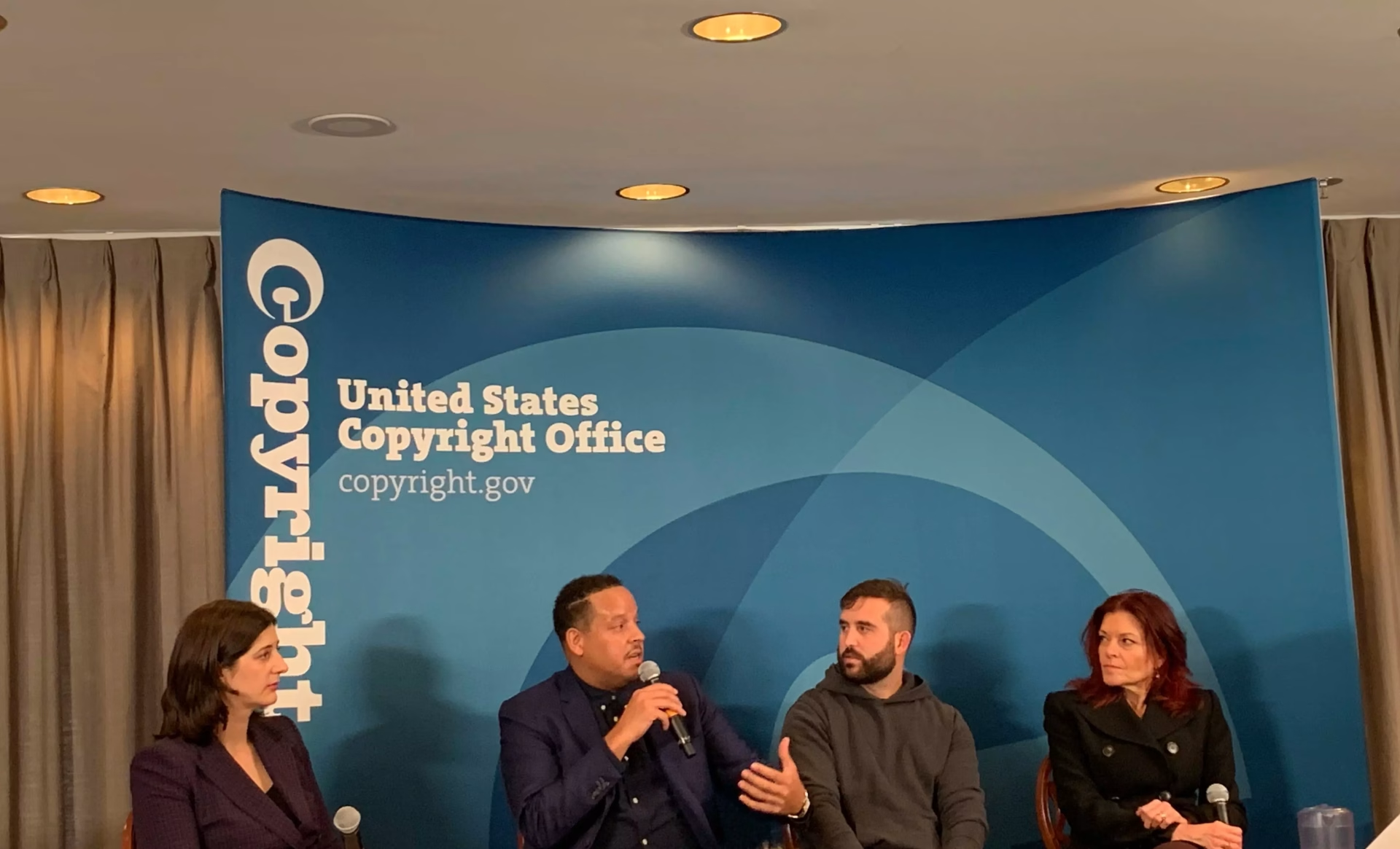
In December 2019, Dupler—along with then-Academy Trustee Ivan Barias from the Academy's Philadelphia Chapter—participated in the USCO's kickoff symposium for the unclaimed royalty study. In August of the following year, the Academy filed official comments for the study. Then, in March of 2021, Dupler participated in the Copyright Office's virtual roundtable.
The Recording Academy is thrilled to hear that its voice has been heard by the Copyright Office and looks forward to a continued relationship with the MLC to carve out a fairer future for music creators.
American Music Fairness Act Builds Support In Washington & With Local Radio