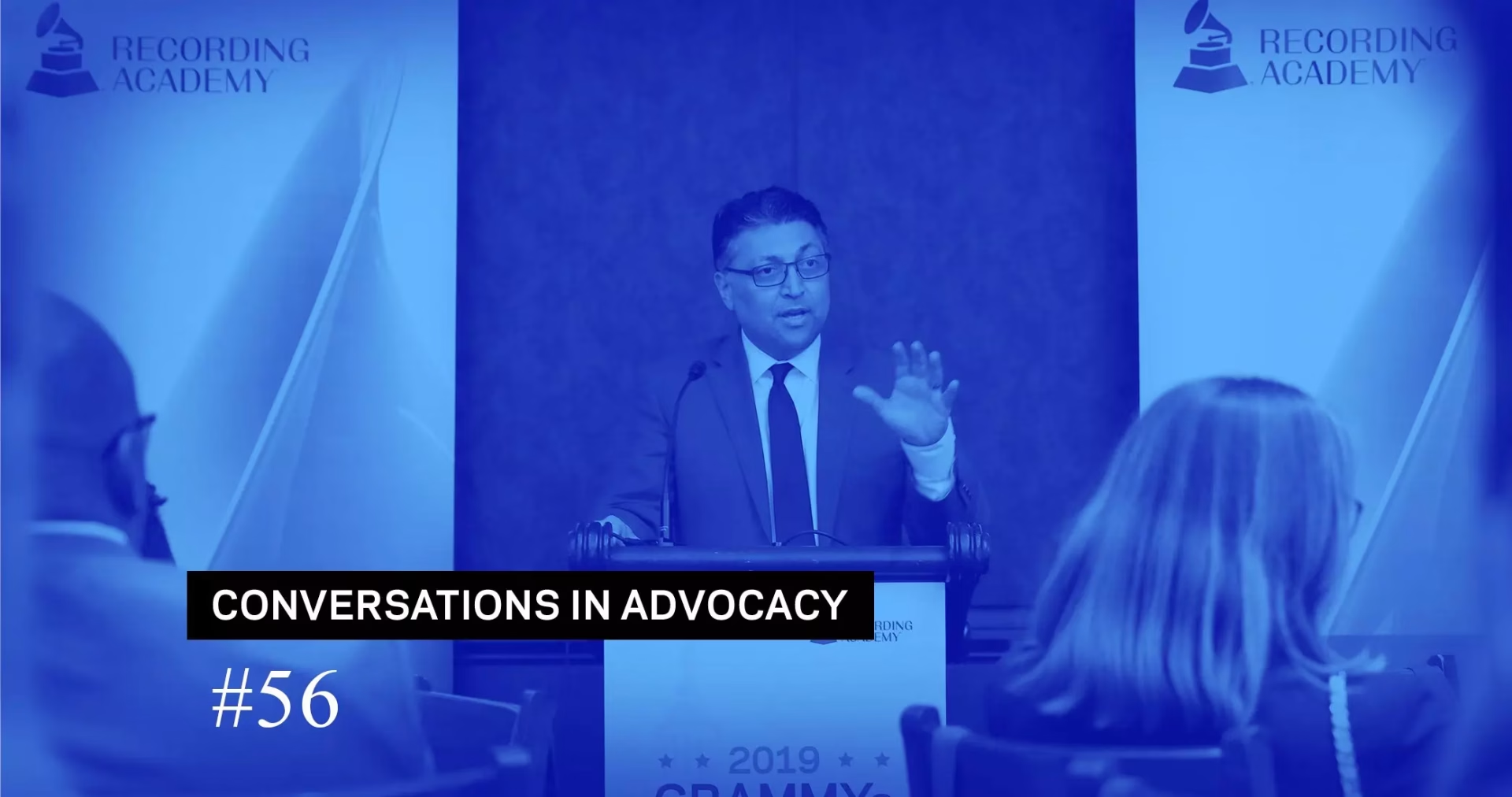
“On behalf of all the music creators hindered by decades old consent decrees, the Recording Academy supports the DOJ and Makan Delrahim for initiating this review." –Daryl Friedman, Conversations In Advocacy #56
On June 5, the U.S. Department Of Justice announced it will do a thorough review of the ASCAP and BMI consent decrees to determine if they should be modified, maintained or eliminated. These consent decrees have been in place since the 1940s and still govern how the performing rights organizations operate in 2019. The Recording Academy was quick to voice support for this review of the consent decrees.
“On behalf of all the music creators hindered by decades old consent decrees, the Recording Academy supports the DOJ and Makan Delrahim for initiating this review," said Daryl Friedman, Recording Academy Chief Industry, Government and Member Relations Officer. In April, Delrahim joined the Academy during GRAMMYs on the Hill to discuss the changes in the music ecosystem, and we look forward to continuing that conversation with the DOJ to ensure a future with more equity for our songwriter members.”
<blockquote class="twitter-tweet" data-lang="en"><p lang="en" dir="ltr">Two months after addressing consent decrees at <a href="https://twitter.com/hashtag/GRAMMYsOnTheHill?src=hash&ref_src=twsrc%5Etfw">#GRAMMYsOnTheHill</a>, Makan Delrahim announces much-needed review of <a href="https://twitter.com/ASCAP?ref_src=twsrc%5Etfw">@ASCAP</a>/<a href="https://twitter.com/bmi?ref_src=twsrc%5Etfw">@BMI</a> consent decrees. <a href="https://twitter.com/RecordingAcad?ref_src=twsrc%5Etfw">@RecordingAcad</a> songwriters welcome <a href="https://twitter.com/TheJusticeDept?ref_src=twsrc%5Etfw">@TheJusticeDept</a> review! <a href="https://t.co/wNbBMOALp1">pic.twitter.com/wNbBMOALp1</a></p>— GRAMMY Advocacy (@GRAMMYAdvocacy) <a href="https://twitter.com/GRAMMYAdvocacy/status/1136365568464957442?ref_src=twsrc%5Etfw">June 5, 2019</a></blockquote><script async src="https://platform.twitter.com/widgets.js" charset="utf-8"></script>
Delrahim, the assistant attorney for the antitrust division, also spoke to the importance of revisiting the consent decrees in light of the evolving industry.
"The ASCAP and BMI decrees have been in existence in some form for over seventy-five years and have effectively regulated how musicians are compensated for the public performance of their musical creations," Delrahim said in a statement. "There have been many changes in the music industry during this time, and the needs of music creators and music users have continued to evolve. It is important for the Division to reassess periodically whether these decrees continue to serve the American consumer and whether they should be changed to achieve greater efficiency and enhance competition in light of innovations in the industry."
Several organizations added their voices of support for the review, including ASCAP, BMI, The National Music Publishers Association and The Nashville Songwriters Association International. The move also met opposition from the MIC Coalition, made up of various trade groups of music licensees such as the National Association of Broadcasters (NAB), who voiced their support of keeping the decrees as-is.
<blockquote class="twitter-tweet" data-lang="en"><p lang="en" dir="ltr">Today, the DOJ announced its long-anticipated review of the BMI and ASCAP consent decrees. Read ASCAP CEO <a href="https://twitter.com/Beth_ASCAP?ref_src=twsrc%5Etfw">@Beth_ASCAP</a>'s comment <a href="https://t.co/TEascLjE0J">https://t.co/TEascLjE0J</a> <a href="https://t.co/FCkEFA0tVI">pic.twitter.com/FCkEFA0tVI</a></p>— ASCAP (@ASCAP) <a href="https://twitter.com/ASCAP/status/1136344759210000384?ref_src=twsrc%5Etfw">June 5, 2019</a></blockquote><script async src="https://platform.twitter.com/widgets.js" charset="utf-8"></script>
The DOJ also outlined a number of questions it will explore, and also called for public comments, setting a deadline of July 10 for any interested parties to provide opinions or information.
How It Really Works: Songwriter Sam Barsh On Success In The Streaming Age