"We have a short window of time this morning, where we're going to download a lot of information into your brain." So told Todd Dupler, the Recording Academy's Chief Advocacy & Public Policy Officer, early in the morning of May Day, to a small, still-waking-up, but attentive crowd at the Hamilton Live in Washington, D.C.
After Michael Lewan — the Recording Academy's Managing Director of State and Federal Advocacy — laid down some logistical ground rules, the throng set forth into the pre-summer mugginess to advocate for two crucial policy needs.
The first is calling on Congress to protect the image, likeness and voice of individual creators from AI fakes through legislative measures such as the No AI FRAUD Act in the House of Representatives and the Senate's No FAKES Act discussion draft.
The second is reforming the live event ticket marketplace to better protect artists and fans through legislation including the Fans First Act and a similar House bill, the TICKET Act.
After the morning briefing, groups with advocates went to the U.S. Capitol for dozens of meetings with bipartisan and bicameral legislators to seek their support for these important issues and bills. Throughout the morning, Academy members met with Senate Majority Leader Chuck Schumer (D-NY), House Majority Leader Steve Scalise (R-LA), House Minority Leader Hakeem Jeffries (D-NY), Senators Marsha Blackburn (R-TN), Shelley Moore Capito (R-WV) and Peter Welch (D-VT), along with multiple House Chairs and Ranking Members, and other influential leaders.
After these initial meetings, the GRAMMYs On The Hill 2024 advocates stopped by the historic Nancy Pelosi Cannon Caucus Room to park, dine on lunch, and meet with more key champions.
After introductory remarks from Lewan, the No AI Fraud Act's lead sponsor, Rep. María Elvira Salazar (R-FL) — who Lewan praised as "the brains behind it" — took the podium. "Your identity is in danger because of artificial intelligence," Salazar asserted.
And she drilled down into why — which involved portents far afield from music peoples' rights.
"Did you know that right now, someone with not very good intentions, can grab the image and voice and likeness of your daughter or so, and transfer that information to make pornography?" Salazar said. "Someone produces your voice and likeness and insults a boss, and you may be fired."
Rep. Madeleine Dean (D-PA), Salazar's lead co-sponsor of the No AI Fraud Act, echoed the congresswoman's sentiment. "It's not just about the use of your likeness," she said. "You have the right to ask permission to get compensated for it.
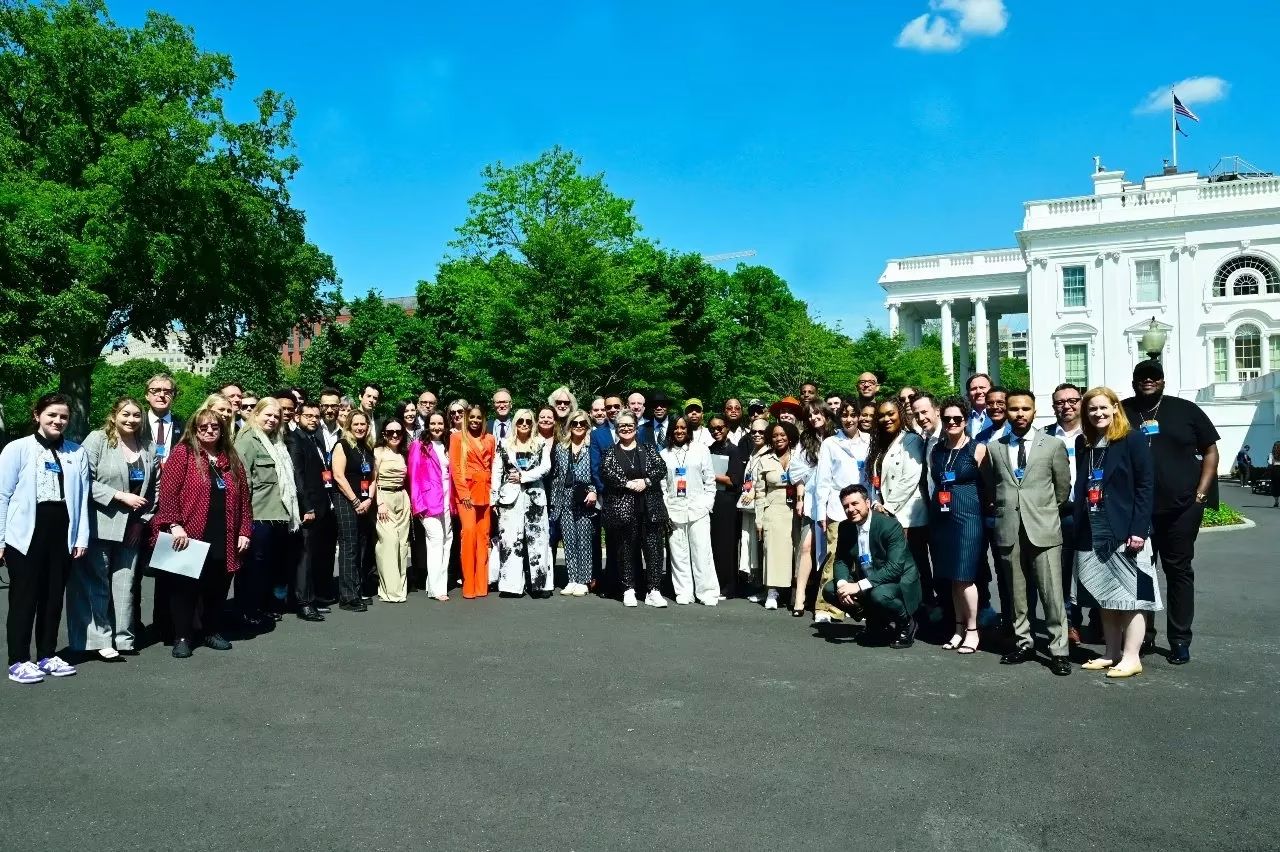
Following the lunch briefing, the 60 plus advocates headed back across the nation's capital to 1600 Pennsylvania Avenue for a special roundtable discussion with senior members of the Biden-Harris Administration. While at the White House, advocates were briefed on AI policy, ticket reforms, the National Endowment for the Arts, and the president's work on gun violence, before a special conversation with Press Secretary Karine Jean-Pierre.
And with that, with another successful Advocacy Day in the bag, music advocates went home assured that they'd made a phenomenal difference in the music landscape.
To those who would abuse the ticketing system — meet the true music fans. And, to those who'd leverage artificial intelligence against real peoples' autonomies — meet human power.
The 2024 GRAMMYs On The Hill Awards were sponsored by City National Bank and benefited the GRAMMY Museum.
How The House's No AI FRAUD Act And Tenn.'s ELVIS Act Will Protect Human Creativity