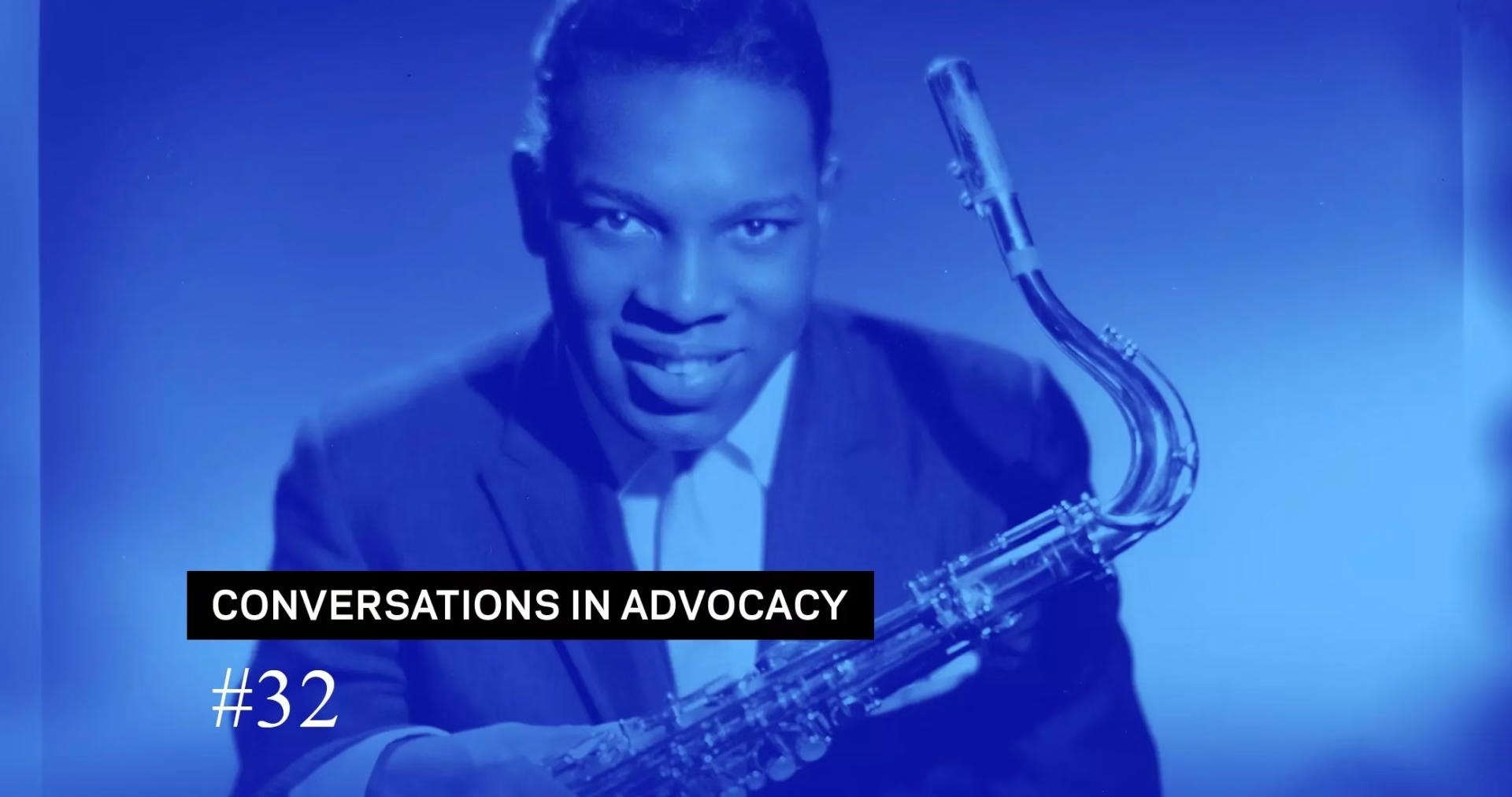
“When it comes to respect, SiriusXM has none for yesterday’s classic musicians and singers” -Conversations In Advocacy #32
Legendary artists, such as the late Aretha Franklin, have long been well-documented as being short-changed by the loopholes of copyright law, which only require internet and satellite radio to pay the writer and publisher for the songs they play, not the performers. In the case of Franklin's 1967 mega-hit "Respect," the distinction has always been painfully clear, as the song was famously written by the great Otis Redding and, even though it was totally reborn in her hands, Franklin received nothing from spins her version has received. Not fair.
But the case of "Respect" is merely one instance of unfair copyright law for performers of that era. In fact, from countless far-less-famous backing musicians to the one-hit wonders of the '50s and '60s have all missed out on collecting royalties for digital radio play.
<iframe width="620" height="349" src="https://www.youtube.com/embed/NX-Yu4rrvLQ" frameborder="0" allow="autoplay; encrypted-media" allowfullscreen></iframe>
Why? Because outdated federal copyright law exempts digital radio services from paying performer royalties on songs recorded before 1972, leaving so many musicians empty handed while internet and digital radio platforms continue to profit off these treasured hits.
Groups of that era who never achieved the continued success beyond their biggest hit, include such as the Tokens with 1961's “The Lion Sleeps Tonight,” the Kingsmen with 1963's “Louie Louie,” which was inducted into the GRAMMY Hall Of Fame in 1999, and the Troggs with 1966's “Wild Thing.” For these one-hit wonder artists, there is a stark miss-match between the unmistakable sound of their iconic hit records and lack of due payment for their performances even when they continue to be broadcast out to millions of listeners daily.
<iframe width="620" height="349" src="https://www.youtube.com/embed/UECLtRL6jKg" frameborder="0" allow="autoplay; encrypted-media" allowfullscreen></iframe>
Additionally, countless musicians who played on the biggest hits of the era are also left out in the cold by the loopholes of the law like the late Eddie Willis, who died this past week. As a member of Motown's legendary backing band The Funk Brothers, Willis played guitar on a number of hits including the Marvelettes' "Please Mr. Postman" (1961), which was inducted into the GRAMMY Hall Of Fame in 2011, and Stevie Wonder's 1967 classic "I Was Made To Love Her."
While superstar artists such as Franklin were able to develop lasting careers beyond a single hit, and earn an income through a variety of channels, the pre-1972 exemption took a much tougher toll on acts with less longevity and the musicians who stayed behind the scenes. And while Franklin no doubt missed out on large quantities of royalties from "Respect," so did the unsung musicians who played on the recording such as the Muscle Shoals rhythm section players or saxophonist King Curtis, who played the song's remarkable key-shifing solo.
<iframe width="620" height="349" src="https://www.youtube.com/embed/fzPXozDgvYs" frameborder="0" allow="autoplay; encrypted-media" allowfullscreen></iframe>
Fortunately, we are now at a point of great progress and potential in the battle to right these copyright wrongs. The Music Modernization Act stands to fix this baseless pre-1972 exemption and close the loophole for digital radio services, ensuring fair pay for all performers. The landmark bill has already passed unanimously in the House of Representatives and the Senate Judiciary Committee, and now is the time for music creators and consumers alike to take a stand for the musicians who played on the records we love so much.
Contact Your Senators: Tell Them To Support Comprehensive Music Reform