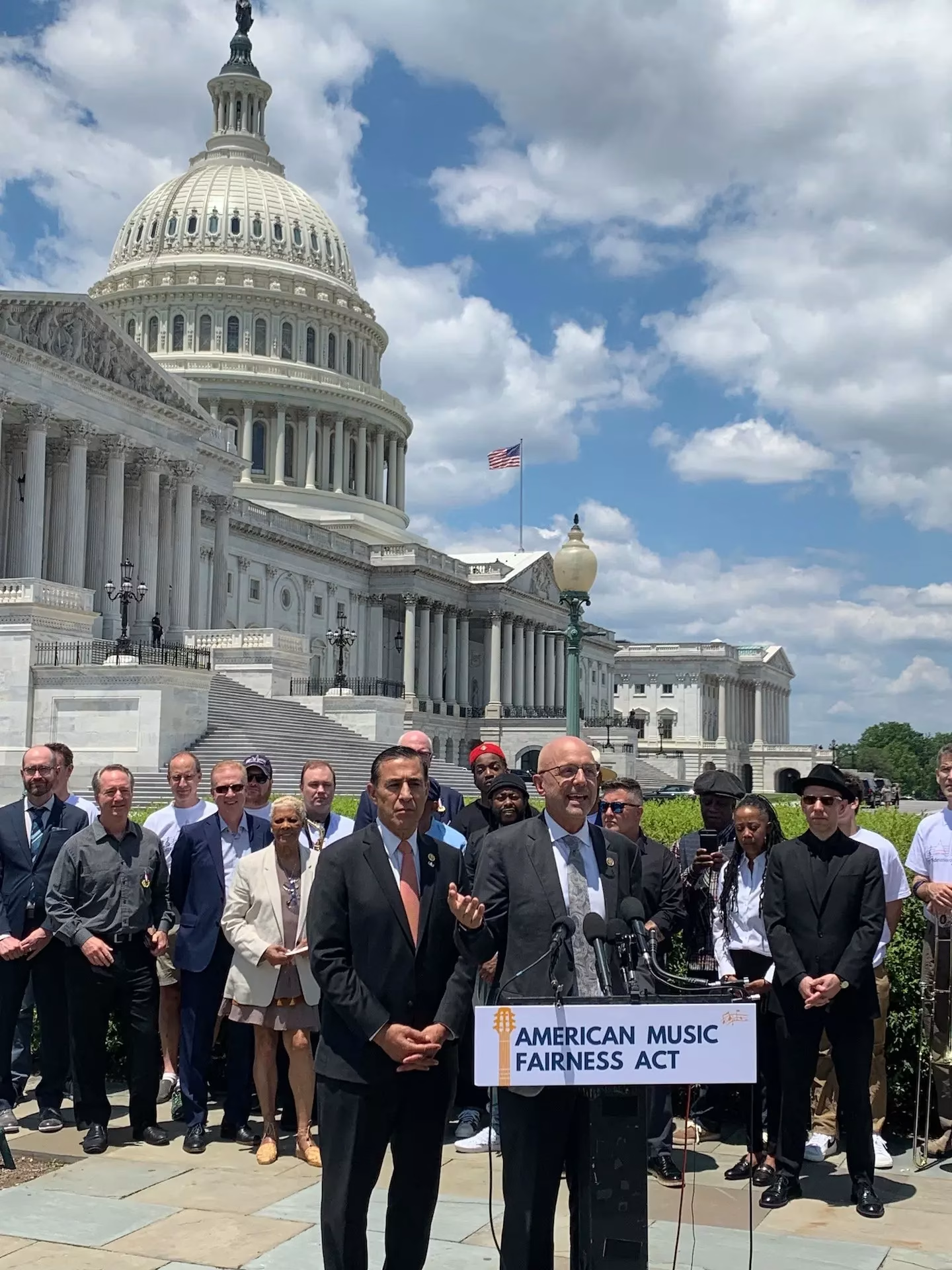
On Thursday, June 24, U.S. Representatives Ted Deutch (D-FL) and Darrell Issa (R-CA) introduced the American Music Fairness Act, a new bill to ensure that artists, performers, producers, and music creators are fairly compensated when their songs are played on terrestrial radio stations.
"We commend this bipartisan bill led by Reps. Deutch and Issa, and we thank them for joining us in the fight for fair pay," said Harvey Mason Jr., CEO of the Recording Academy®. "Artists create music that can bring us together and heal us, and they deserve to be paid when their work is played on FM/AM radio."
Currently, and historically, terrestrial (AM/FM) radio stations do not pay artists for the music they play on the radio in the United States. This is because of an antiquated loophole in copyright law that allows AM/FM radio stations to play music while rightly compensating the songwriter, but not also the artists who perform the songs or the studio professional behind the sound recording. The AMFA also includes protections for songwriters to ensure the new right does not encroach on songwriter royalties.
In 2019, music broadcasters made over $10 billion by selling ad revenue, yet did not pay artists for the product – the music – that generates this revenue. The American Music Fairness Act rights this wrong by requiring major radio stations to fairly compensate all artists for their property.
The American Music Fairness Act also works to ensure that AM/FM stations are no longer the only music platforms that do not compensate artists for their music. It is long overdue for terrestrial radio stations to pay royalties to artists just like streaming services, satellite radio, online radio, and every other platform that profits off copyrighted content. The American Music Fairness Act would establish fair market value for radio performance royalties similar to how the law currently works for other music platforms.
Additionally, the American Music Fairness Act will protect small, local broadcasters with dedicated protections and exemptions. Recognizing that consolidation in the radio industry and the COVID-19 pandemic have impacted small and local radio stations that provide invaluable services to our communities, Reps. Deutch and Issa worked to ensure that truly small and local radio stations are treated differently than Big Radio conglomerates.
Under the American Music Fairness Act, radio stations that fall under $1.5 million in annual revenue and whose parent companies fall under less than $10 million in annual revenue overall would be exempt and pay a special rate of less than $2 per day ($500 annually) to play unlimited music. Other exemptions under the bill would apply to public, college and other noncommercial stations as well as super-small stations in general, who would pay as little as $10 per year.
Finally, the American Music Fairness Act supports American artists whose music is popular in other countries with a performance right. The AM/FM radio loophole currently harms American artists when foreign radio stations play their music overseas. Foreign countries routinely hold royalties that should go to US artists due to the lack of American terrestrial performance copyright.
Moreover, the US is one of the only countries that do not require a performance copyright for terrestrial radio. That means there are hundreds of millions of U.S. dollars, owed to American artists, being left on the table around the world. The American Music Fairness Act would ensure that foreign countries pay US artists when their songs are played overseas.
In conclusion, fairness and equity are bedrock American principles. As the country recovers from a year and a half of tremendous personal loss and economic suffering, it is vital that Congress protect the livelihoods of those who create the music we know and love.
Congress: It's Time To Side With Music Creators Over Big Radio