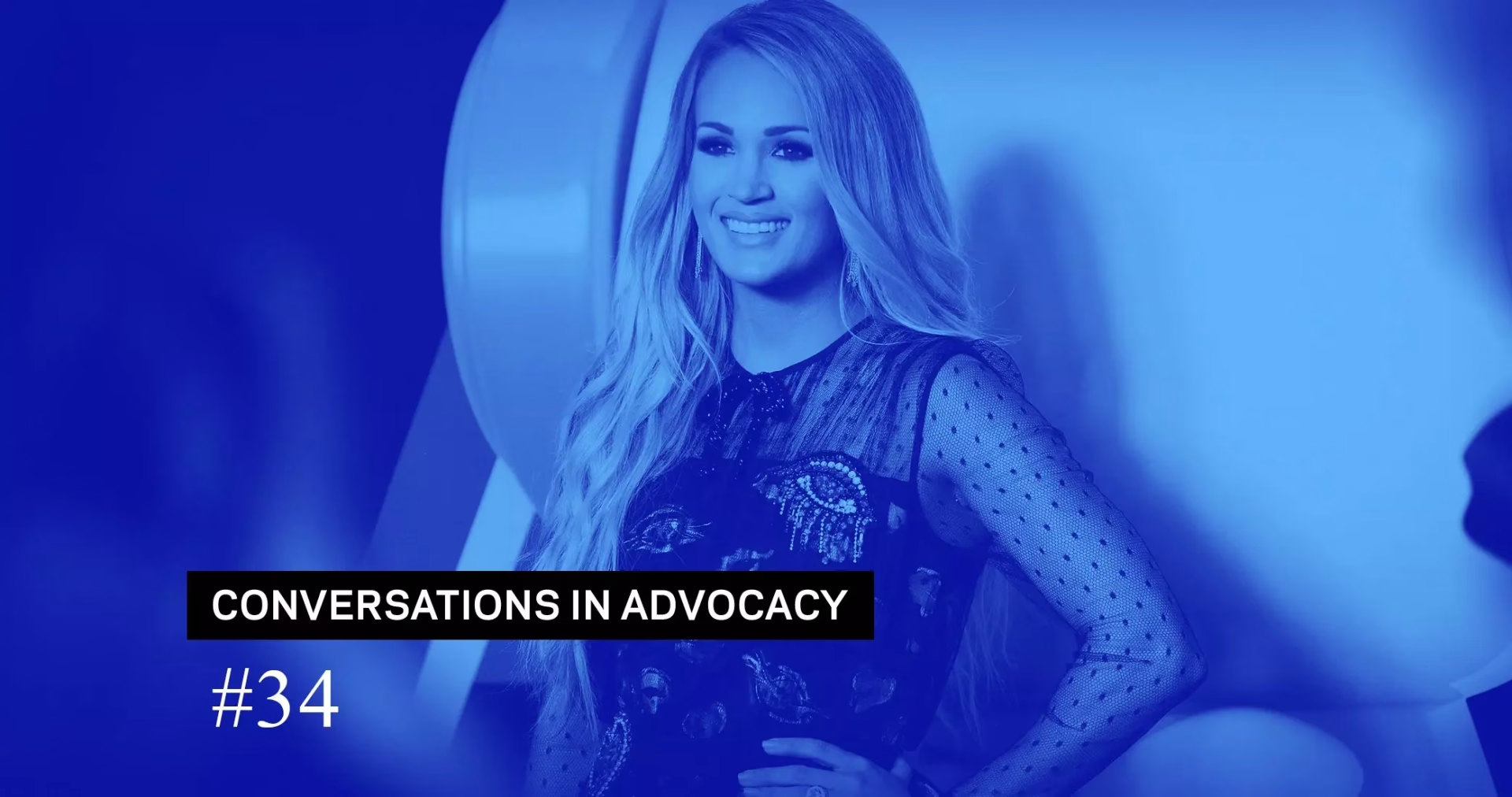
“Already not getting paid and now barely getting played? If I were a female country artist, I’d be looking elsewhere than radio.” - Conversations In Advocacy #34
Carrie Underwood made headlines this week as the latest country music star to call out the lack of female representation on country radio. But for many women in the industry, this isn't news, it's a continuous reality they have had to deal with for years.
<iframe width="620" height="349" src="https://www.youtube.com/embed/kzQ50oDT0Ao" frameborder="0" allow="autoplay; encrypted-media" allowfullscreen></iframe>
Artists like Maren Morris and Miranda Lambert have also called out gender inequities in country stemming from the notion that females, a majority of the country audience, would rather hear men on the radio. Underwood showed support for women in country and their struggle for radio play in an interview with Elaina Smith on Nash Country Daily's "Women Want To Hear Women" podcast. She mentioned how the lack of women has only gotten worse throughout the years.
"Even when I was growing up, I wished there was more women on the radio, you know. And I had a lot more that there are today."
And she's right. Data shows the dwindling numbers of women in country since the '90s. According to the Guardian, major labels then brought 41 new solo female artists and 67 new male artists to radio. Although there were less women than men, women had more hits—44 percent of women had hits in the top 20 compared to 42 percent of men.
In 2015, the idea that women don't make for successfully ratings made headlines as the now-infamous "Tomato-gate" when Keith Hill, a radio consultant known to some as the "leading authority" in the business, said that "If you want to make ratings in country radio, take females out."
And things have only gotten worse since then. In 2017, the Tennessean published a report that said the percentage of female only songs on the radio in 2017 dropped to 10.4 percent, down from 13 percent in 2016.
Worse still, as broadcast radio continues to refuse to pay performance royalties based on the argument that radio play helps break new artists, the alarming statistical and anecdotal evidence of country radio's gender bias is further proof that broadcast radio is out of touch in supporting the very artists who supply their programming. It's time for the industry to address the issues artists such as Underwood raise to create a fair system for everyone.
Contact Your Senators: Tell Them To Support Comprehensive Music Reform
"Conversations in Advocacy" is your weekend digital tip sheet on music advocacy and the policies that affect music makers and their craft. New installments post every Friday.