
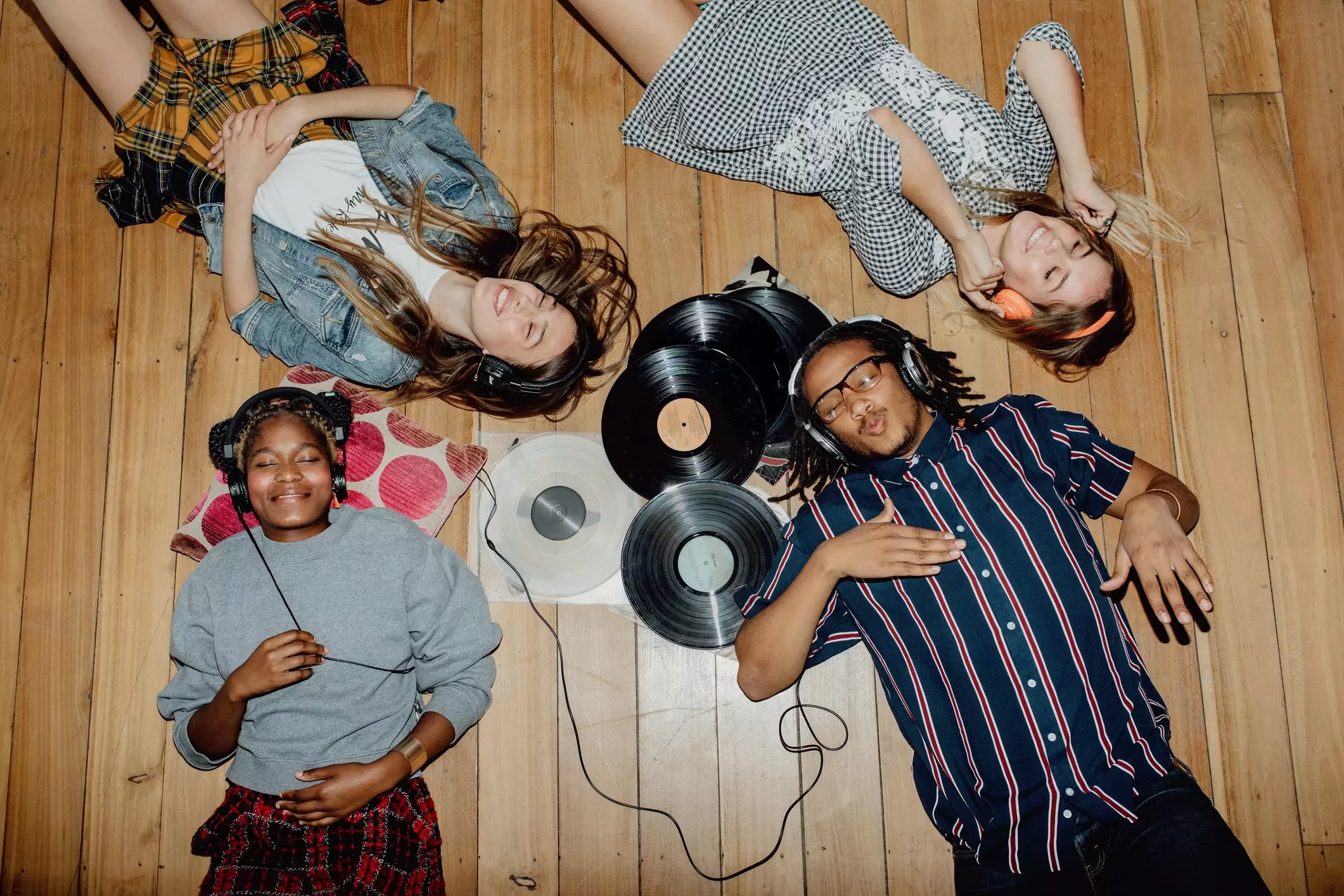
The recorded music industry grew by 8.6% in 2019, according to the IFPI. Before the pandemic, global ticket sales for concerts amounted to $25bn, according to PwC. We enjoy a sector that has grown, pre COVID-19, at more than twice the rate of the rest of the economy. As the crisis has impacted the business, it has not hampered our access to, and use of, music. Its ubiquity is as prevalent as it has ever been. Global Citizen utilized musicians to raise $127m for the World Health Organization, many of them Recording Academy members. Music Instrument sales are surging. Even the World Economic Forum is singing music’s praises, declaring that Beethoven can help us combat social isolation.
But while we’re all listening to more music, or using it to connect with friends, how music functions in governance is in crisis. The sector is in significant decline. Over 1000 music venues in the U.S. are threatened with closure. 92% of U.K.’s independent music festivals are threatened. Many of these businesses and their staff do not qualify for assistance programs. This is because there is a disconnect between our usage of music—enjoying what is created—and creating systems to support, remunerate and regulate those responsible for it: the creators. If this crisis demonstrates the importance music has to all of us, then we must change how it is treated in governance.
This happened nationally in the United States in regards to copyright, with the passage of the Music Modernization Act. Some music businesses are also benefiting from CARES. But at a local level, there’s next to no governance, policy or intentional strategies to support music making, music businesses and music ecosystems. This crisis gives us an opportunity to change that.
That’s why I am launching #BetterMusicCities, a campaign to ensure that music—in all its forms and functions—is represented in civic decisions around recovery. Music—as an amenity and an economy—can play an active role in recovery, but to do so it requires a city being intentional with how it supports, governs and interacts with music. This is because music ecosystems are interlinked. A more robust music education system produces more songwriters; such demand increases the value and need for professional recording studios or music venues. More content increases the chances of some of it being commercially successful, which generates direct and indirect economic benefit and taxable receipts for the city, and so on.
But we lack a blueprint. A handful of cities—Austin, Nashville, Seattle, New York, Chicago—have music officers, or public support structures to support musicians. The U.S. alone has 310 cities over 100,000 people and thousands more smaller than that. If music had a voice across a city, town or region’s economic development structure, a wider set of incentives, employment initiatives or training schemes could be created. If music was intentionally strategized in tourism, more artists would be included in campaigns and paid for it. If music was part of an inclusive growth, health and wellbeing framework, most after-school music programs would exist, more music would be included in care homes and more community festivals would emerge. All this requires a strategy regardless of size, location or social structure. This is why I have written a Music Cities Resilience Handbook.
The handbook outlines nine strategies all cities create a better music ecosystem as part of a recovery plan. They are:
- Put Artists To Work: Incentivise Creation From Crisis
- Convert Creativity Into Community Investment Vehicles
- Create a City Music Registry
- Start A Cultural Infrastructure Plan
- Create Emergency Preparedness Plans (Venue, Event, City-wide)
- Ensure Music, Arts and Culture Language Is Included In Policy Frameworks
- Commit to Genre Agnosticism
- Plan and Develop a Night Time Economy Policy
- Set-Up City-Wide Artist Compensation Policies, Music Liaison Services & Fair Play Schemes
The principles are simple. Ensure that artists—no matter the discipline—are paid fairly for their work. This can be done by working with PROs to create a local music registry, setting up a city-wide artist compensation policy, or committing to fair play and fair ticketing practices. It requires cities to democratize any support offered to the sector, so no genres are prioritized over others. It requires deliberate, specific and intentional policy to be written, voted on and enshrined in council ordinances, frameworks and resolutions, outlining what one’s music ecosystem is, how it is best supported and how to best manage it. It requires a city or place to map—and keep updated—its cultural infrastructure so residents and policymakers know what they have, where it is and how it fits together.
This is an ambitious framework, but it is doable. It requires a change in mindset. We need to prioritise the external value of music, rather than focusing on its internal value. If we outline the value of music to society, to our health and wellbeing and to the economy as a whole, it’ll demonstrate a need to reform the relationship between music and cities—to create a new set of music cities who embrace music as a recovery tool.
Think about music like a public park. Parks are for everyone, but they require investment, maintenance and structure. Some parts can be closed off for private endeavours, while others satisfy certain sections of the population, such as playgrounds. But we all accept parks are part of life and that they need to be paid for. We all use parks, like we all listen to music. If we value music—across genre, discipline and sector—we should be treating it both as an amenity and an economy. This requires policy, process and structure.
The report is your guide. Join me to help build #BetterMusicCities.
How The Global Coronavirus Pandemic Is Directly Impacting Songwriters, Musicians And Artists
